
US deploys third carrier to Middle East as Hormuz shipping risks escalate
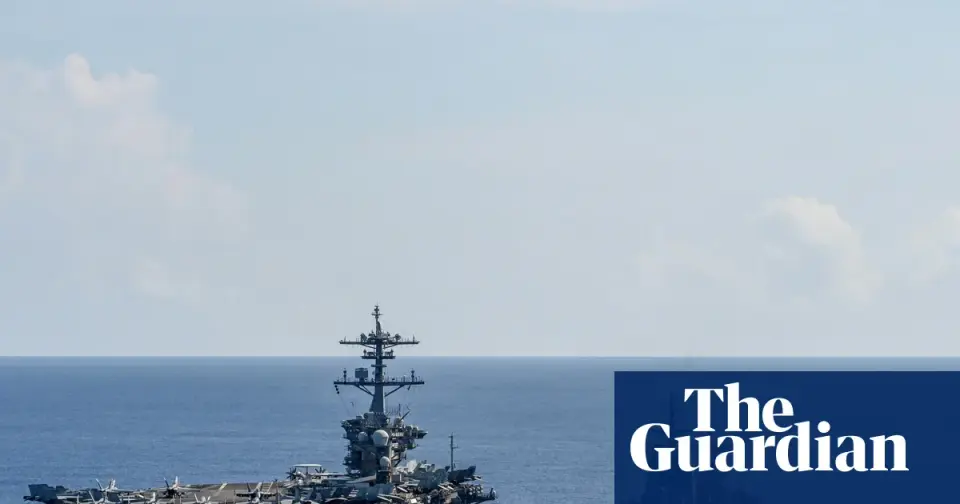
The USS Theodore Roosevelt has arrived in the Middle East, restoring the US naval presence to three aircraft carriers. This deployment adds thousands of troops to the region as President Trump maintains a naval blockade on Iran while diplomatic talks stall. Simultaneously, commercial shipping in the Strait of Hormuz faces heightened risks from mines and projectiles, with traffic levels remaining significantly below pre-war norms.
Key points
- The USS Theodore Roosevelt arrived in the Middle East on Monday, joining the USS George HW Bush and USS George Washington to form a three-carrier force, the first such concentration since 2003.
- The deployment includes thousands of additional troops and is part of a broader naval blockade of Iranian shipping, which US Central Command says has redirected 150 merchant vessels and disabled five since June.
- Commercial traffic through the Strait of Hormuz remains below one-third of pre-war levels, with six oil tankers damaged by mines and another struck by a projectile since Sunday.
- President Trump has oscillated between threatening new strikes on Iran and declaring the conflict 'militarily effectively over,' while negotiations stall over nuclear program demands and the naval blockade.
- The arrival follows midterm elections where Republicans suffered major losses, partly attributed to the unpopularity of the war, leading VP JD Vance to publicly break with Trump over the conflict.
Background
The US began increasing its military presence in the Middle East in October 2026, deploying a third carrier strike group and additional air-defense batteries ahead of the midterm elections. Previous coverage noted that the USS Theodore Roosevelt had stopped in Japan for exercises in October before proceeding to the region. The current deployment follows a months-long stalemate in the Iran war, which began over eight months ago.
How outlets are covering it
The Guardian emphasizes the dramatic show of military might and the political fallout from the midterm elections, noting Vance's public break with Trump. AP News focuses on the operational details of the carrier arrival and the immediate hazards to shipping in the Strait of Hormuz, including specific incidents of tankers catching fire. Both sources agree on the arrival of the Roosevelt but differ in emphasis: The Guardian highlights the political context and Trump's shifting rhetoric, while AP News provides more granular details on the maritime incidents and other regional developments in Yemen and Lebanon.
Why it matters
The arrival of a third carrier signals a sustained US military commitment to the region despite diplomatic stalemates and domestic political backlash. The continued risks to shipping in the Strait of Hormuz, a critical waterway for global oil and gas, could have significant economic implications. The political rift between Trump and Vance over the war may influence future US foreign policy decisions.
What to watch
The US may resume strikes on Iran if diplomatic talks fail, though Trump has expressed doubt about the necessity of new major strikes. The naval blockade is expected to continue, potentially leading to further disruptions in global oil markets. The US and France are working to reach a consensus on the future of the UN peacekeeping force in southern Lebanon, which is set to continue with modifications after its current mandate expires.
- Third US aircraft carrier brings thousands more troops to Middle East The Guardian
- USS Roosevelt arrives in Middle East: Is the US-Iran war about to resume? Al Jazeera
- Third U.S. aircraft carrier arrives in Middle East as Iran blockade continues The Washington Post
- USS Theodore Roosevelt Now in the Middle East, Lincoln’s Last Escorts Finally Home USNI News
- Third American aircraft carrier arrives in the Middle East, and other Mideast news AP News
Want the full story? Read the original reporting
Read on The Guardian