
US strikes three Iranian oil tankers after IRGC missile attacks on Navy ships
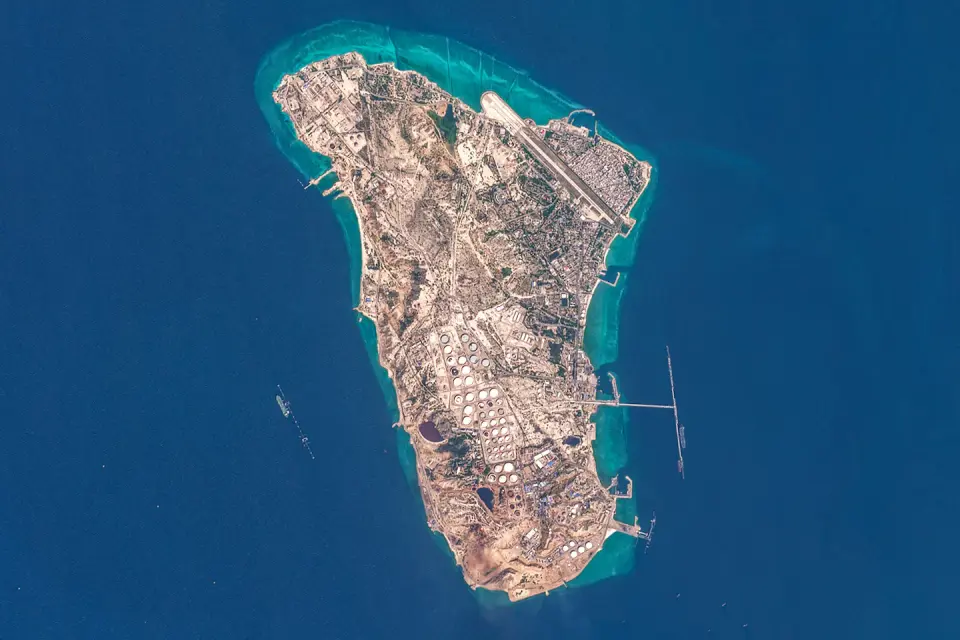
The U.S. military struck three Iranian oil tankers on September 5, 2026, in retaliation for Iranian ballistic missile attacks on two U.S. Navy warships. U.S. Central Command confirmed the strikes disabled vessels near Kharg Island and Jask, while destroying a third in the Gulf of Oman. Iran’s IRGC claimed the missiles forced U.S. ships to flee, but the U.S. characterized the action as a proportional economic response to protect its naval assets. This escalation marks a significant intensification of the six-month conflict, with analysts warning that neither side is likely to back down without a political settlement.
Key points
- U.S. Central Command confirmed strikes on three Iranian oil tankers: one disabled near Kharg Island, one near Jask, and one destroyed in the Gulf of Oman.
- The strikes were a direct response to Iranian IRGC ballistic missile attacks on a U.S. aircraft carrier and a Navy destroyer.
- Iran’s IRGC claimed its missiles forced the U.S. warships to flee the conflict zone, while the U.S. framed the tanker strikes as an economic deterrent.
- Analysts describe the escalation as part of a broader strategy where both sides aim to impose costs to force the other to back down.
- The conflict is occurring amid a six-month-long war and a U.S. naval blockade that has halted Iranian crude exports from Kharg Island since late July.
Background
This escalation follows a period of heightened tensions in the Persian Gulf. In early August, the U.S. imposed a naval blockade that halted Iranian oil exports from Kharg Island, leaving its berths empty. Prior to that, a massive oil spill from the tanker Caroline Bezengi had threatened Oman’s coastline. The current strikes occur against a backdrop of stalled diplomatic talks and a closed Strait of Hormuz, with oil markets remaining volatile due to the ongoing conflict.
How outlets are covering it
The Washington Post and CNN reported the strikes as a direct U.S. military response to Iranian missile attacks, citing U.S. Central Command statements. Al Jazeera provided additional context, noting that the IRGC claimed its missiles forced U.S. ships to flee and that Iran vowed to respond to the tanker strikes. Al Jazeera also highlighted the broader strategic context, with Middle East expert Sina Azodi suggesting the conflict will continue until a political settlement is reached, as both sides aim to impose economic and military costs. The Washington Post emphasized the strategic importance of Kharg Island as Iran’s main oil terminal, while Al Jazeera noted the U.S. sanctions campaign as a 'slow-burn' strategy alongside immediate military actions.
Why it matters
The strikes on Iranian oil tankers represent a significant escalation in the U.S.-Iran conflict, directly targeting Iran’s primary oil export infrastructure. This action threatens to further disrupt global oil supplies and raise energy prices, given the strategic importance of the Strait of Hormuz and Kharg Island. The exchange of fire between the U.S. and Iran increases the risk of a broader regional conflict, with potential spillover effects into Lebanon, Syria, and Gaza, as noted in Al Jazeera’s coverage. The escalation also underscores the failure of diplomatic efforts to resolve the six-month-long conflict, with both sides signaling a willingness to endure further costs rather than back down.
What to watch
Iran has vowed to respond to the U.S. strikes on its oil tankers, potentially leading to further military exchanges in the Persian Gulf. The U.S. may continue its naval blockade and sanctions campaign, while Iran could seek to disrupt shipping routes or target additional U.S. assets. Diplomatic efforts, including talks involving Turkey, may resume, but analysts suggest that without a political settlement, the conflict is likely to persist. The situation will also influence global oil markets, with potential spikes in energy prices due to the threat to Iranian oil exports and the Strait of Hormuz.
- U.S. says it hit 3 Iranian oil tankers, including one near Kharg Island The Washington Post
- U.S. Strikes Three Iranian ‘Shadow Network’ Oil Tankers, Military Says The New York Times
- Iran war live: US says it hit 3 Iranian oil tankers after US ships attacked Al Jazeera
- U.S. Strikes Three Iranian Ships After Missiles Fired at American Aircraft Carrier WSJ
- US military strikes three Iranian tankers in retaliation for missile attacks CNN
Want the full story? Read the original reporting
Read on The Washington Post