
Mendelssohn’s Seasickness and the Acoustic Birth of Fingal’s Cave Overture
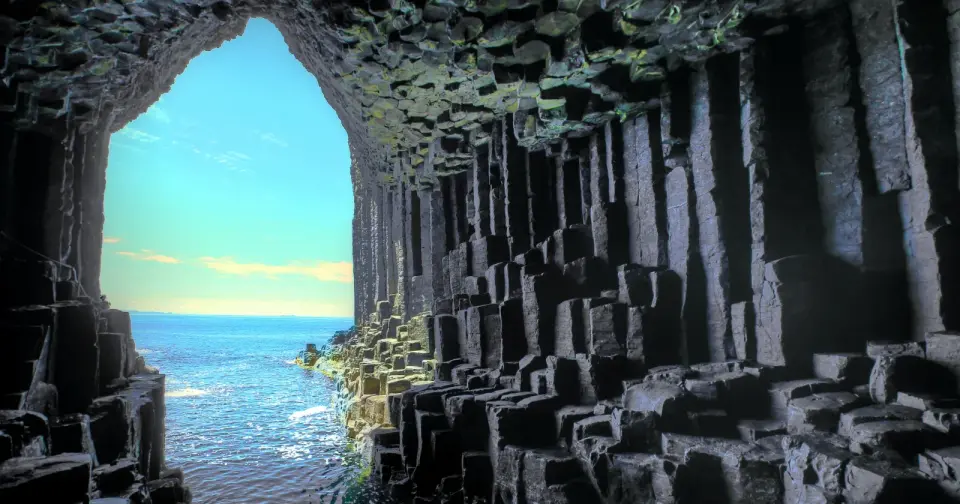
In August 1829, Felix Mendelssohn visited Fingal’s Cave on the Scottish island of Staffa, where the unique acoustics of 60-million-year-old basalt columns inspired his famous Hebrides Overture. The cave’s hexagonal structure, formed by cooling lava and eroded by the Atlantic, creates a diffuse reverberant field that Mendelssohn captured in a 21-bar sketch, later refined into Op. 26.
Key points
- Mendelssohn, suffering from severe seasickness, visited Staffa in 1829 and sketched 21 bars of music upon hearing the cave’s acoustics.
- Fingal’s Cave is a 70-metre-long, 18-metre-high sea cave formed from hexagonal basalt columns of the Palaeogene Mull volcanic centre.
- The cave’s acoustics are described as a 'diffuse reverberant field' due to sound reflecting off angular basalt walls, creating a slow-fading, organ-like resonance.
- The cave was named 'Fingal' by Joseph Banks in 1772, borrowing from James Macpherson’s Ossian poems, after he visited following Captain Cook’s voyage.
- Mendelssohn’s initial sketch, titled 'The Lonely Island,' was revised over three years into the Hebrides Overture, Op. 26, with the final score held at the Bodleian Library.
Background
This story intersects with broader themes of geological formation and cultural impact. While our archive covers fossil discoveries in volcanic caves in New Zealand, this piece focuses on how geological structures in Scotland influenced 19th-century music. The cave’s formation is linked to North Atlantic volcanism, similar to sites like Skye and Arran, and its acoustics have been studied using modern sine sweep recordings since 2014.
Why it matters
The story illustrates how natural geological formations can directly inspire artistic masterpieces, bridging geology, acoustics, and music history. It highlights the enduring impact of Mendelssohn’s work and the scientific curiosity surrounding Fingal’s Cave, which remains a national nature reserve and a subject of ongoing acoustic research.
What to watch
The Bodleian Library continues to preserve Mendelssohn’s autograph score, while the National Trust for Scotland maintains Staffa as a protected site. Future research may further explore the cave’s acoustic properties using advanced recording techniques, though current measurements are limited by environmental noise.
Want the full story? Read the original reporting
Read on Space Daily