Tag

Acoustics

All articles tagged with #acoustics

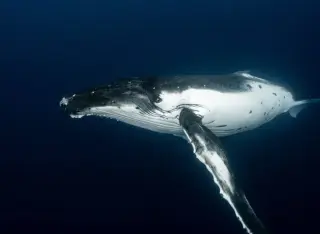
Whale Calls Debunk a Physics Paradox: It’s All About Wave Interference
physics-and-chemistry5 days ago

Whale Calls Debunk a Physics Paradox: It’s All About Wave Interference

An oceanographer noticed humpback calls near Massachusetts appeared to exceed the speed of sound, but the effect isn’t physics breaking — it comes from interference between the direct sound and its surface-reflected echo reaching the hydrophone, making the strongest signal peak appear to arrive faster. This observer-relative illusion aligns with special relativity concepts, and the researchers propose experiments to verify this underwater SR-like phenomenon, with potential applications to light-based tests.

Direct-and-Reflected Wave Interference Makes Energy Peak Early, But Information Still Travels at Light Speed
science12 days ago

Direct-and-Reflected Wave Interference Makes Energy Peak Early, But Information Still Travels at Light Speed

A PRE-study shows that interference between direct and reflected waves can reshape a pulse so its energy peak arrives sooner than the direct pulse, creating an apparent super-fast energy propagation in water. Crucially, this does not allow information to travel faster than light in a vacuum, and the authors suggest the same mechanism could, in principle, apply to light; experiments with sound or light are planned to test the idea.

Mars's Quiet Air Reveals a Two-Speed Soundscape
space19 days ago

Mars's Quiet Air Reveals a Two-Speed Soundscape

NASA's Perseverance microphone on Mars captured sounds showing a two-speed acoustic world: low-frequency sound travels about 240 m/s, high-frequency sound about 250 m/s due to the CO2-dominated, low-pressure atmosphere. Over distance, high notes arrive earlier but are attenuated and masked; this effect lets acoustic data probe Martian temperature, wind, and turbulence, providing a new way to study the planet's atmosphere.

The 52-Hertz Whale: A Signal That Challenges How We Listen
science1 month ago

The 52-Hertz Whale: A Signal That Challenges How We Listen

Researchers have tracked a baleen whale that calls around 52 Hz—far higher than known species—sparking the loneliest-whale tale, but scientists emphasize that this single signal does not prove isolation. It could be an unusual individual or a social life we can’t detect, and hydrophone data cannot reveal intention or replies beyond our listening range. The broader lesson: absence of an expected response may reflect our listening limits rather than the animal’s solitude.

Crowded Bats Sync Echolocation to Create a Quiet Echo Window
science1 month ago

Crowded Bats Sync Echolocation to Create a Quiet Echo Window

Greater Japanese horseshoe bats living in colonies gradually converge their echolocation call frequencies to a shared range, creating a 'silent spectral window' that reduces interference and improves prey detection. Lower-frequency bats shift upward more than higher-frequency bats, and adjustments occur mainly when there are noticeable differences between individuals.

MIT's Physics-Based Virtual Violin Lets Designers Hear Changes Before Crafting
technology3 months ago

MIT's Physics-Based Virtual Violin Lets Designers Hear Changes Before Crafting

MIT researchers built a physics-based computational violin that simulates realistic violin sound by modeling how vibrating strings interact with air, enabling luthiers to audition design changes (wood type, back-plate thickness) virtually before building. The current model handles pizzicato; bowing is more complex and will come later, representing the first physics-based foundation for violin sound.

Eyes Open and Eyes Open Video: Visual Cues Boost Hearing in Noise
science4 months ago

Eyes Open and Eyes Open Video: Visual Cues Boost Hearing in Noise

A study with 25 volunteers found that keeping eyes open and viewing related visuals enhances hearing in noisy environments, while closing eyes makes it harder to detect sounds. EEG data showed eye closure increases suppression of background noise, whereas visual input—especially videos—helps anchor auditory perception. Participants were tested under four visual conditions (eyes closed, blank screen, still image, video) with several target sounds in 70 dB noise, revealing progressively better detection with more engaging visuals. The work, published in The Journal of the Acoustical Society of America, suggests visual engagement can improve auditory sensitivity even in noisy settings.

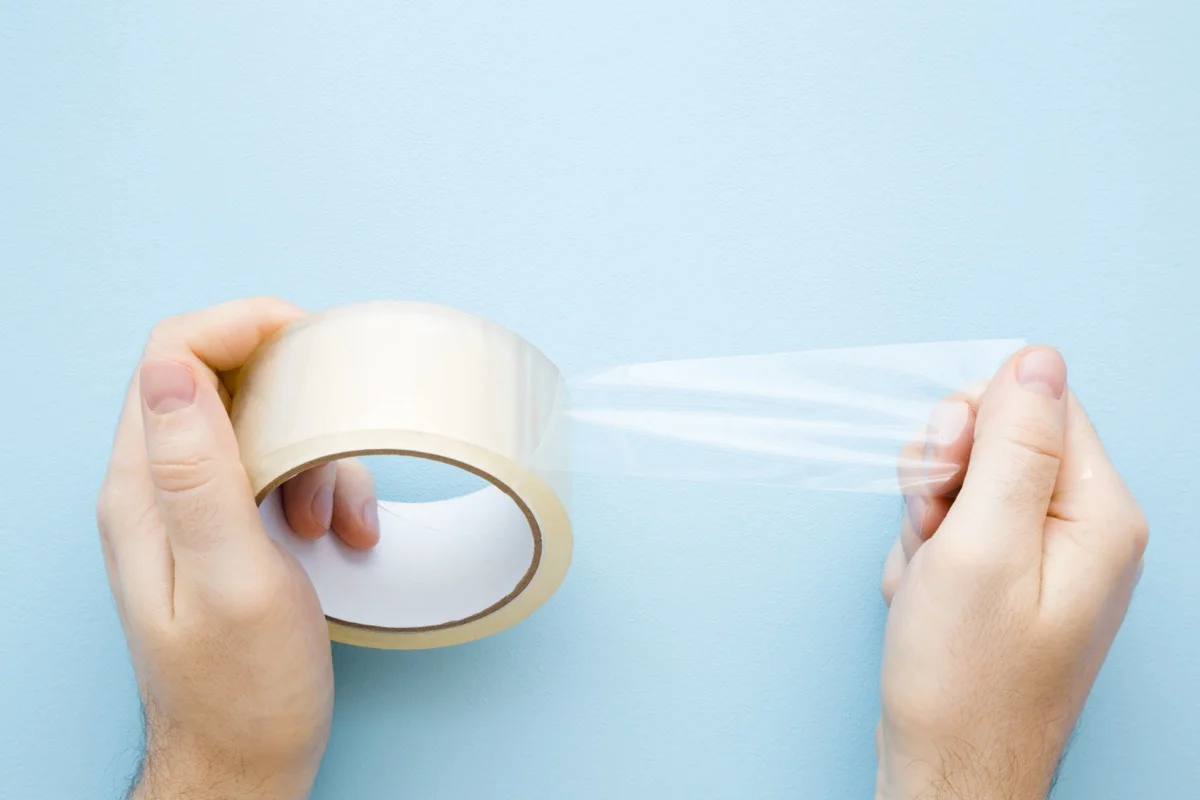
Tape Screech Demystified: Tiny Sonic Booms From Adhesive Cracks
science6 months ago

Tape Screech Demystified: Tiny Sonic Booms From Adhesive Cracks

Physicists explain Scotch tape’s open‑air screech as a sequence of tiny, sideways cracks in the adhesive that form as you peel. These cracks open nanoscopic gaps between tape and surface; air can’t rush in fast enough to fill them, so a pressure pulse travels with each crack to the tape’s edge and collapses into the surrounding air, producing the audible screech. High‑speed cameras and synchronized microphones linked each pulse to a crack reaching the edge. The same team noted earlier vacuum experiments can emit X‑rays with tape flown in a perfect vacuum, but the in‑air screech comes from the crack‑driven pressure pulses.

The Mystery of the 52-Hz Whale: A Solo Song from the Ocean's Quiet Giant
science6 months ago

The Mystery of the 52-Hz Whale: A Solo Song from the Ocean's Quiet Giant

A U.S. Navy hydrophone recorded a strange 52-Hz whale call in the Pacific starting in 1989, a frequency higher than typical baleen whales. Woods Hole researchers followed the single-singer call for about 12 years, naming the animal Blue 52, though its exact species and identity remain unknown. Theories include a malformation or a hybrid; there is no evidence the whale is truly lonely. The case popularized the idea of the “loneliest whale,” intertwined with concerns about how ship noise affects whale communication, and the animal has never been visually observed.

Unraveling the Mystery of South Fiji Basin's Oceanic Echoes
science1 year ago

Unraveling the Mystery of South Fiji Basin's Oceanic Echoes

In the 1980s, researchers in New Zealand recorded mysterious quack-like sounds in the South Fiji Basin, dubbed "Bio-Duck," which were initially thought to be non-biological. However, further analysis suggested they might be a form of communication between marine animals, possibly Antarctic Minke whales, although this remains unconfirmed. The sounds were recorded using a hydrophone array, revealing a pattern of alternating "speakers," suggesting a conversational nature. This research was presented at the 187th Meeting of the Acoustical Society of America.

"Apple's Audio Team Undergoes Leadership Shift for AirPods and HomePod"
technology2 years ago

"Apple's Audio Team Undergoes Leadership Shift for AirPods and HomePod"

Apple's acoustics team, responsible for audio technology in AirPods, HomePods, and other devices, will undergo leadership changes as longtime VP Gary Geaves steps down and is replaced by Ruchir Davé. The team has been working on spatial audio and is currently reporting to Matt Costello. Geaves will stay on as an advisor as he prepares to retire, and the team is expected to release updates to the AirPods lineup this year, with rumors of AirPods 4 and new AirPods Max. Additionally, iOS 17.4 is set to bring new features to the iPhone, including major App Store changes in the EU and Apple Podcasts transcripts.