
Gene body methylation acts as a genome defense and enables heritable regulatory variation in a cnidarian
TL;DR
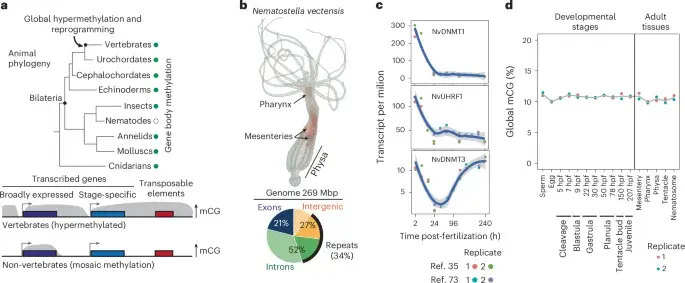
In the cnidarian Nematostella vectensis, gene body methylation (gbM) marks stably expressed genes and is not a driver of dynamic transcription. Loss of 5mC via a DNMT1 inhibitor or DNMT1/UHRF1 morpholinos leads to global demethylation, widespread chromatin opening, and ectopic intragenic transcription, including activation of young transposons. Importantly, methylation is selectively re-established in the germline and is not globally reset after fertilization, allowing heritable aberrant methylation states and generating regulatory variation across generations—supporting gbM as an ancient genome defense in animals.
Topics:scienceepigenetics#epigenetic-inheritance#epigenetics#gbm#gene-body-methylation#nematostella-vectensis#transposable-elements
Want the full story? Read the original reporting
Read on Nature