
Fifty Years Later, Oregon Town Embraces 1970 Whale Blast Disaster as Official Park
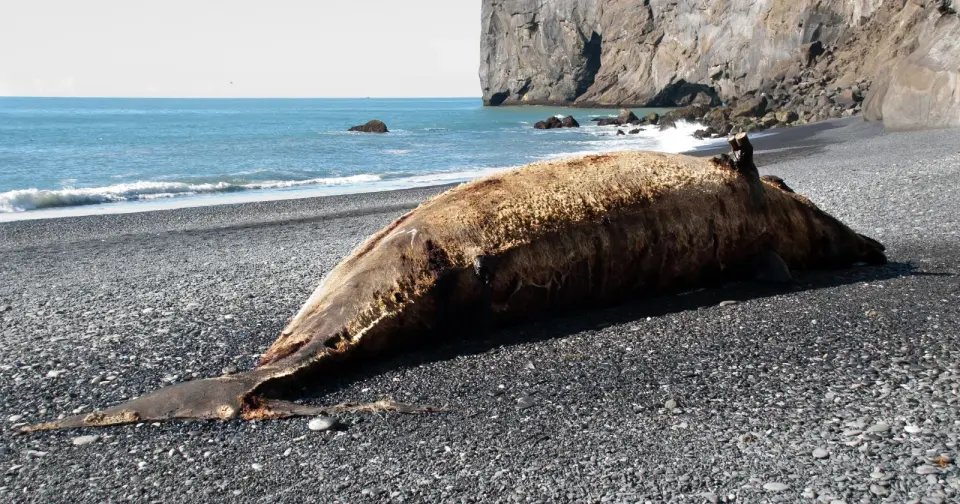
In November 1970, Oregon highway crews used half a ton of dynamite to remove a dead sperm whale from a Florence beach, resulting in a chaotic explosion that scattered blubber across the area. The incident, which crushed a spectator's car, became a viral internet legend and led to the creation of the Exploding Whale Memorial Park in 2020.
Key points
- A 45-foot, eight-ton sperm whale washed up dead near Florence, Oregon, in November 1970, causing significant odor and public interest.
- Oregon Highway Division engineer George Thornton decided to use 20 cases of dynamite to blast the carcass into the Pacific, ignoring warnings from a spectator with military demolition training.
- The explosion on November 12, 1970, failed to move the whale to sea; instead, it scattered debris in all directions, crushing a car a quarter mile away and injuring no one.
- The KATU news footage of the blast became one of the internet's first viral videos after humorist Dave Barry wrote about it in 1990.
- In June 2020, the city of Florence opened a park at the site and named it the Exploding Whale Memorial Park by public vote.
Background
This incident highlights the historical challenges of managing large marine carcasses on public beaches. While modern Oregon policy now mandates burial or composting for beached whales, the 1970 event remains a notable example of engineering miscalculation. The site's transformation into a public park reflects a shift from embarrassment to civic ownership of the local history.
Why it matters
The story illustrates the unpredictable consequences of applying standard engineering solutions to biological problems. It also demonstrates how local communities can reclaim negative historical events through public engagement and memorialization, turning a failed government operation into a lasting cultural landmark.
What to watch
No further action is expected regarding the whale carcass, as the site is now a public park. The incident serves as a historical case study in engineering and municipal management, with no new developments anticipated.
Want the full story? Read the original reporting
Read on Space Daily