
Nanotyrannus Fossil Set for Manhattan Auction
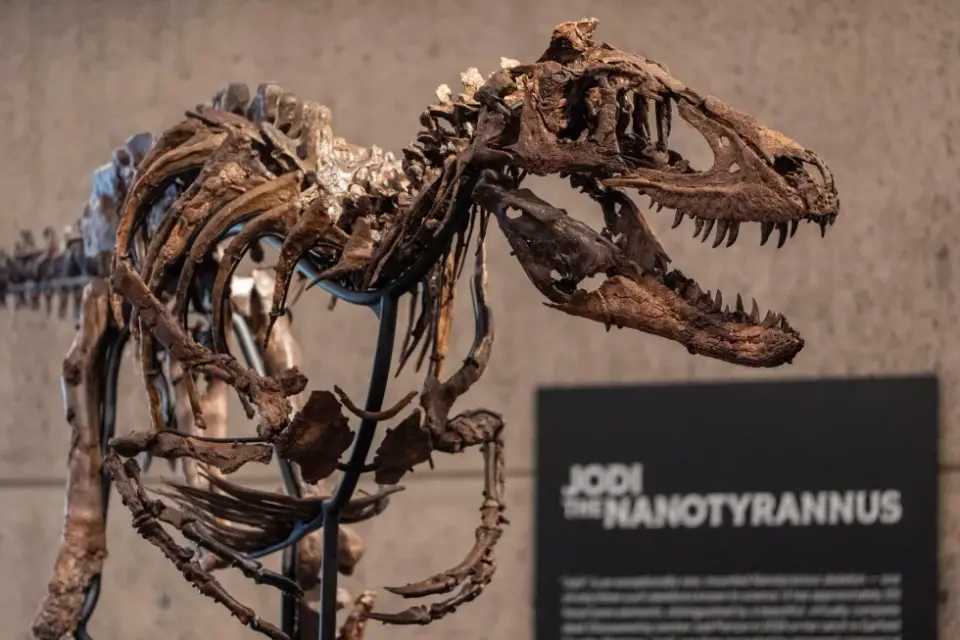
A rare Nanotyrannus fossil is scheduled to be unveiled at an auction house in Manhattan. The specimen represents a small tyrannosaurid dinosaur from the Late Cretaceous period. While specific details regarding the sale price or the buyer are not yet available, the event highlights the high value placed on rare paleontological specimens in the current market.
Key points
- A rare Nanotyrannus fossil is being unveiled at an auction house in Manhattan.
- The specimen is identified as a Nanotyrannus, a small tyrannosaurid dinosaur.
- The event takes place in Manhattan, a major hub for high-value auctions.
- No secondary sources were provided to corroborate or expand upon the AP News report.
- The rarity of the fossil is emphasized in the primary source title.
Background
Recent auction trends indicate a surge in interest for rare historical and scientific artifacts. For instance, a rare Apple I computer recently commanded estimates between $500,000 and $800,000, while a Tasmanian tiger relic sold for 85,000 pounds after being misidentified as a fox head. These events suggest a broader market appetite for unique, historically significant items, which may contextualize the upcoming sale of the Nanotyrannus fossil.
Why it matters
The auction of a rare Nanotyrannus fossil underscores the intersection of paleontology and high-value art markets. Such sales can provide significant funding for scientific research and museum acquisitions, while also raising questions about the commercialization of natural history specimens. The visibility of this event in Manhattan highlights the global demand for rare prehistoric artifacts.
What to watch
The auction is expected to proceed with the unveiling of the fossil. Potential buyers and collectors will likely attend the event, and the final sale price will determine the market value of such rare specimens. Further details regarding the provenance and condition of the fossil may emerge as the auction approaches.
Want the full story? Read the original reporting
Read on AP News