
"Robotic Dinosaurs Uncover Evolutionary Secrets of Feathered Prey"
TL;DR Summary
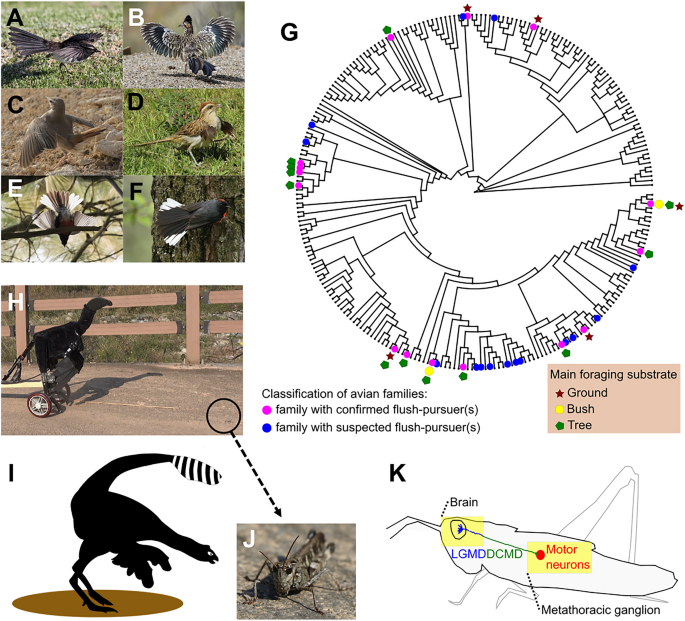
A study proposes the flush-pursue hypothesis, suggesting that early pennaraptoran dinosaurs may have used pennaceous feathers to trigger prey escape behaviors, similar to the foraging strategy seen in some modern birds. Behavioral and neurophysiological experiments using a Caudipteryx robot and grasshoppers support this hypothesis, indicating that the presence, location, and color contrast of proto-wings and caudal plumage influenced prey escape responses. The study suggests that the evolution of pennaceous feathers in dinosaurs may have been linked to exploiting prey escape behaviors, shedding light on the early function of these feathers.
Topics:science#caudipteryx#dinosaurs#flush-pursue-foraging#paleontology-evolutionary-biology#pennaceous-feathers#prey-escape-behaviors
- Escape behaviors in prey and the evolution of pennaceous plumage in dinosaurs | Scientific Reports Nature.com
- Scientists Use Robotic Dinosaur to Study Evolution of Wings The New York Times
- Scientists use robot dinosaur in effort to explain origins of birds’ plumage The Guardian
- Robot dinosaur tests theory about the evolution of feathers New Scientist
- Robot dinosaurs let loose to demonstrate hunting techniques New Atlas
Reading Insights
Total Reads
0
Unique Readers
18
Time Saved
59 min
vs 60 min read
Condensed
99%
11,836 → 90 words
Want the full story? Read the original article
Read on Nature.com