
Arlington Heights Firefighters Criticized for Unsafe Tactics in Downed Power Line Fire
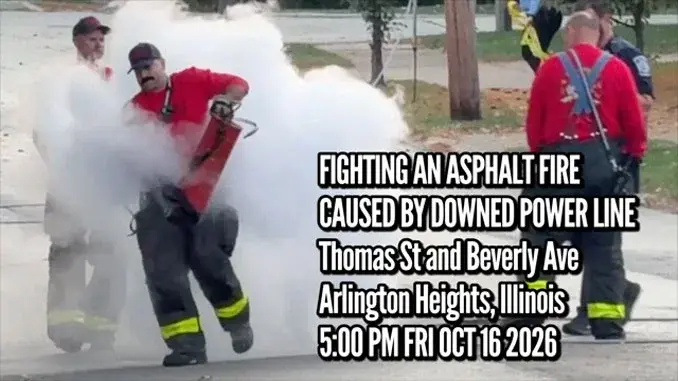
On October 16, 2026, a downed power line ignited asphalt on Thomas Street in Arlington Heights, Illinois. Firefighters from Engine 2 struggled to extinguish the fire, reportedly using an incorrect Class A water extinguisher instead of a Class B agent. The operation took approximately 20 minutes, exceeding safety exposure limits, and involved personnel without proper protective equipment. ComEd crews de-energized the line, leaving about 120 customers without power initially, though this number dropped to five within an hour. No injuries were reported, but the incident raised concerns regarding protocol adherence and hazardous material exposure.
Key points
- Incident occurred at 5:00 p.m. on October 16, 2026, on Thomas Street near Beverly Lane in Arlington Heights.
- A downed power line arced and melted asphalt, creating a deep hole in the street that continued to burn.
- ComEd crews arrived to de-energize the line; initial outage affected 120 customers, reducing to five within an hour.
- Thomas Street was closed between Hickory Avenue and Dryden Avenue/Lincoln Court during repairs.
- Firefighters from Engine 2 used a Class A Water Pump Can extinguisher, which is ineffective for petroleum-based asphalt fires.
- The extinguishing operation lasted about 20 minutes, exceeding the 15-minute NIOSH recommended exposure limit for hazardous vapors.
Background
This incident follows a pattern of infrastructure-related emergencies in the region. In September 2026, downed Amtrak wires in North Philadelphia halted three SEPTA rail lines, highlighting vulnerabilities in utility infrastructure. Additionally, a battery fire at the Moss Landing Power Plant in California reignited concerns about energy storage safety. Locally, Arlington Heights has been in the news regarding the Chicago Bears' potential stadium relocation, though that is unrelated to this utility incident. The current event underscores ongoing challenges in managing power outages and fire response protocols in urban areas.
Why it matters
The incident highlights critical gaps in fire department training and protocol adherence regarding specialized fires like asphalt. Using the wrong extinguisher class and lacking protective equipment not only prolongs response times but also exposes emergency workers to severe health risks, including carcinogenic fumes and steam explosions. It raises questions about the safety of public personnel at active hazard zones and the potential dangers of backfed power from residential battery systems like those installed by Base Power Company, which may not have adequate safety overrides for downed line scenarios.
What to watch
ComEd and local authorities are expected to review the incident report and assess any necessary protocol updates. ComEd has confirmed the reduction in affected customers from 120 to five, indicating the power grid has been stabilized. There is no immediate indication of further outages, but the incident may prompt a review of fire department training on Class B extinguishers and PPE usage for hazardous material fires. The status of Base Power Company's safety protocols in such scenarios remains under scrutiny, though no direct link to the fire's cause has been established.
Want the full story? Read the original reporting
Read on arlingtoncardinal.com