
"James Webb Space Telescope Discovers Doppelganger of Milky Way in Farthest Reaches of the Universe"
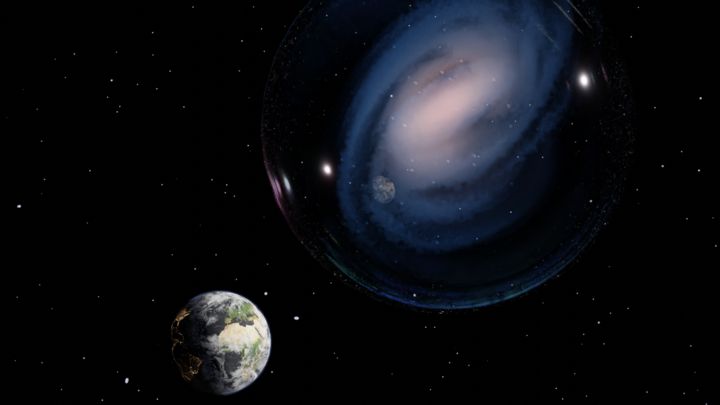
The James Webb Space Telescope (JWST) has discovered the most distant galaxy resembling the Milky Way, called ceers-2112, when the universe was just two billion years old. This spiral galaxy features a bar of stars and gas cutting across its heart, similar to the Milky Way. The presence of this bar challenges previous theories about the formation of barred galaxies in the early universe. The study also suggests that the evolution of ceers-2112 was dominated by ordinary matter rather than dark matter, contrary to expectations. The JWST's ability to collect more light than the Hubble Space Telescope allows for detailed observations of faraway galaxies, providing new insights into galaxy formation and evolution.
Reading Insights
0
14
4 min
vs 5 min read
87%
836 → 112 words
Want the full story? Read the original article
Read on Space.com