
Curaçao reef fish ignore slow threats, fleeing only when objects approach faster than 2 m/s
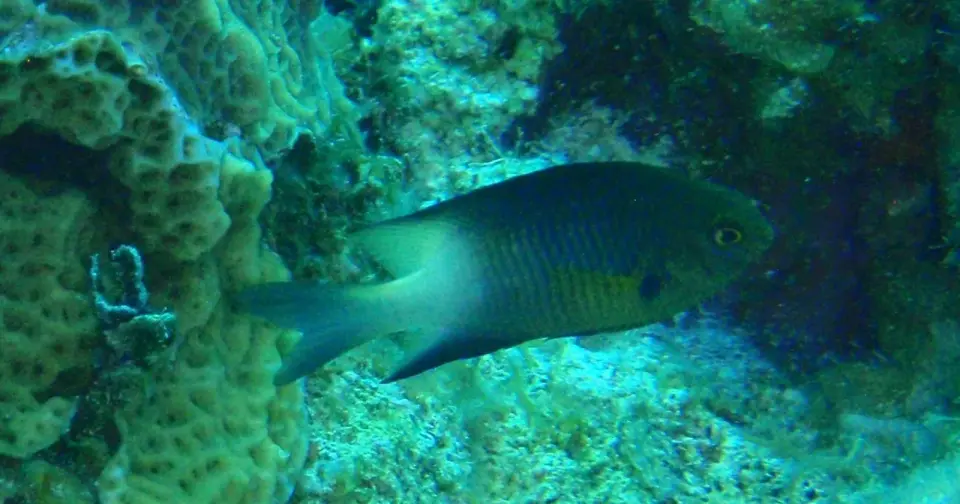
Researchers in Curaçao determined that reef fish ignore approaching objects until they move faster than 2 meters per second. This threshold aligns closely with the attack speeds of local predators, suggesting fish use a simple speed-based rule to conserve energy and avoid false alarms.
Key points
- Fish on Curaçao reefs do not flee from expanding visual stimuli moving slower than 2 meters per second.
- Escape responses (C-starts) occur sharply above this threshold, with most reactions happening at 3 meters per second or higher.
- Local bar jacks, a primary predator, were filmed attacking at speeds ranging from 2.7 to 9.0 meters per second.
- The study used 247 video recordings of bicolor damselfish and brown chromis reacting to an iPad displaying an expanding black disk.
- Brown chromis fled more often than territorial damselfish, likely due to their position further from coral shelter.
Background
This study adds to broader discussions on reef resilience and predator-prey dynamics. Previous coverage highlighted how environmental stressors, such as the 2023 urchin die-off and rising ocean temperatures, impact Caribbean reef ecosystems. Understanding how prey species filter threats helps explain survival strategies in these changing environments. Additionally, the finding complements earlier research on artificial reefs in Singapore, which showed that natural recruitment and structural complexity influence habitat use, further emphasizing the importance of behavioral adaptations in reef environments.
Why it matters
Identifying a specific speed threshold for escape responses reveals how prey animals balance vigilance with energy conservation. By ignoring slow-moving objects, fish avoid costly false alarms that waste feeding time. This insight helps ecologists model predator-prey interactions and understand how reef fish adapt to local threats. It also highlights the limitations of current research, as the study used a 2D screen rather than real predators, and did not test slow, non-accelerating threats. Understanding these behavioral rules is crucial for predicting how fish populations might respond to changing predator communities or environmental disturbances in the future.
What to watch
Researchers will likely investigate whether this 2 m/s threshold is innate or learned, and if it varies across different reef environments or species. Future studies may also test how fish respond to slow, non-accelerating threats, which could expose vulnerabilities in their current avoidance strategy. Additionally, expanding the research to include chemical cues and 3D predator models could provide a more comprehensive understanding of how reef fish assess danger in natural conditions.
Want the full story? Read the original reporting
Read on spacedaily.com