
Teenager’s Dumbbell Tests on Origami Shatter Weight-to-Strength Records for Disaster Shelters
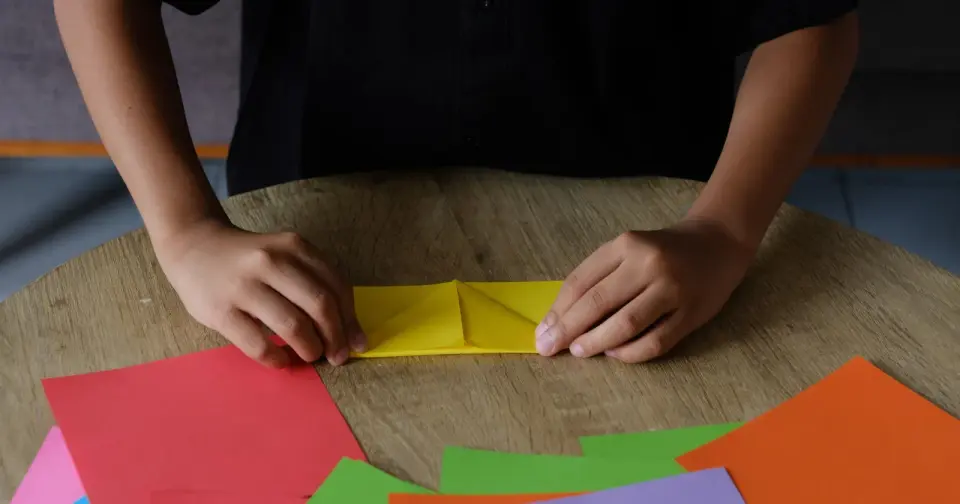
Miles Wu, a 14-year-old from New York City, won the $25,000 top prize at the Thermo Fisher Scientific Junior Innovators Challenge for a project testing the structural limits of the Miura-ori fold. By creating 54 variations of the pattern and loading them with dumbbells until failure, Wu identified a configuration that supports over 9,000 times its own weight. The design aims to create lightweight, flat-pack shelters for disaster zones, demonstrating that rigorous materials science can be achieved with basic equipment and systematic testing.
Key points
- Miles Wu, 14, from New York City, won the $25,000 top prize at the Thermo Fisher Scientific Junior Innovators Challenge, a national middle-school competition run by Society for Science.
- Wu tested 54 systematic variations of the Miura-ori origami pattern, a tessellation of parallelograms invented by Japanese astrophysicist Koryo Miura, which is known for its ability to collapse and deploy in a single motion.
- The winning configuration, characterized by smaller panels and steeper crease angles, supported more than 9,000 times its own weight before collapsing, a ratio comparable to a bag of flour carrying a car.
- The project utilized only paper and dumbbells, with Wu loading each folded structure until it failed to generate data on structural integrity and resilience.
- The design is intended for flat-pack disaster shelters that can ship compactly and deploy quickly, addressing logistics challenges in emergency response where structures are needed immediately at the end of broken supply chains.
- The experiment followed a rigorous materials science protocol, varying parameters one at a time and using failure as data to extract a generalizable design law rather than creating a single artifact.
Background
The Miura-ori fold has been used in engineering since 1995, when Japan deployed it in space for a solar array, and it remains relevant in satellite panels, maps, and stent designs. Origami engineering is currently a significant area of structural design research, with applications ranging from NASA solar arrays to foldable bridges. The Thermo Fisher Scientific Junior Innovators Challenge is the junior counterpart to the Science Talent Search, focusing on STEM access and innovation among middle-school students.
Why it matters
This achievement demonstrates that advanced materials science and structural engineering principles can be applied using accessible, low-cost resources, challenging the notion that significant scientific breakthroughs require specialized laboratory equipment. The potential application of the Miura-ori fold in disaster relief addresses a critical logistical bottleneck in emergency response, where the rapid deployment of sturdy shelters is often hindered by the weight and bulk of traditional materials. By identifying a design that is both strong and lightweight, Wu’s work offers a practical solution for improving the efficiency and effectiveness of disaster relief efforts, potentially saving lives in future emergencies.
What to watch
Miles Wu’s prize-announcement plans indicate a focus on developing the Miura-based shelter design for practical application in disaster zones. The next steps likely involve scaling up the design from paper prototypes to durable materials and testing the structures in real-world conditions. The success of this project may inspire further research into origami engineering for other applications, such as foldable bridges and deployable infrastructure, and could influence the design of future emergency response systems.
Want the full story? Read the original reporting
Read on Space Daily