
NASA Documentary Chronicles the 30-Year Odyssey of Europa Clipper
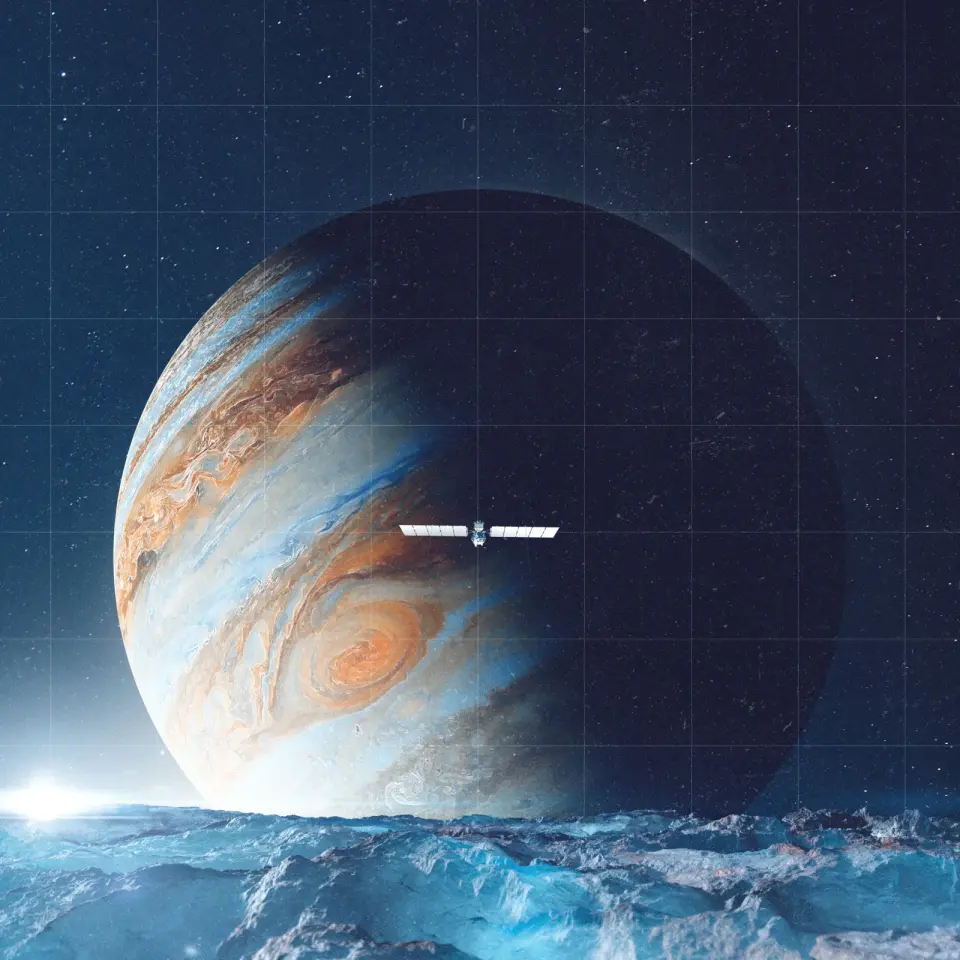
NASA released 'The Europa Concept,' a documentary detailing the 30-year effort to build and launch the agency's largest planetary spacecraft. The film, available on NASA+ since November 23, 2026, chronicles the mission's evolution from concept to its October 2024 launch, highlighting engineering challenges and the goal of assessing habitability on Jupiter's moon Europa.
Key points
- The documentary 'The Europa Concept' premiered on NASA+ on November 23, 2026, marking the 30-year timeline of the mission.
- Europa Clipper launched on October 14, 2024, and is currently two years into a five-year journey to the Jupiter system.
- The spacecraft is described as the largest NASA has ever engineered for a planetary mission, featuring nine science instruments.
- The mission aims to conduct 49 flybys of Europa to assess whether the subsurface ocean contains conditions suitable for life.
- Development began in 2013 at JPL, facing challenges including a global pandemic and severe weather near launch.
Background
Europa has been a subject of scientific interest since its discovery by Galileo Galilei in 1610. Previous missions, including Pioneer 10, Voyager 1, Galileo, Cassini, and Juno, provided initial data and detailed views of the moon. The current mission builds on these findings to investigate the potential for habitable environments in the solar system.
How outlets are covering it
NASA and JPL emphasize the documentary as a tribute to the ingenuity and teamwork required to overcome unforeseen crises, such as a Category 5 hurricane and tornadoes near Kennedy Space Center just before launch. Astrobiology Web highlights the scientific significance of the mission, noting that while the probe will not land, its remote sensors will characterize the ocean world. Foro3D provides a technical overview, specifying that the spacecraft will perform 49 approaches to Europa while avoiding Jupiter's intense radiation zones, with a planned Earth flyby on December 3, 2026, to gain a gravitational boost for arrival in April 2030.
Why it matters
The release of this documentary underscores the complexity and scale of modern deep-space exploration. It illustrates how long-term scientific goals require decades of persistence and collaboration across multiple NASA centers. The mission's success in reaching Jupiter will provide critical data on whether other worlds in the solar system can support life, potentially influencing future exploration strategies.
What to watch
Europa Clipper is scheduled to perform an Earth flyby on December 3, 2026, to gain a gravitational boost. It is expected to reach the Jupiter system in April 2030, where it will begin its series of 49 flybys of Europa. The documentary is set to be released on YouTube in the near future.
- The Europa Concept NASA (.gov)
- Europa Clipper heads for Jupiter after its Earth flyby Foro3D
- NASA+ Documentary Captures Europa Clipper’s Journey Astrobiology Web
- NASA+ Documentary Captures Europa Clipper’s Journey Into Deep Space NASA Jet Propulsion Laboratory (JPL) (.gov)
Want the full story? Read the original reporting
Read on NASA (.gov)