
Cytoplasmic rivalry between parental pronuclei governs zygote epigenetic fate
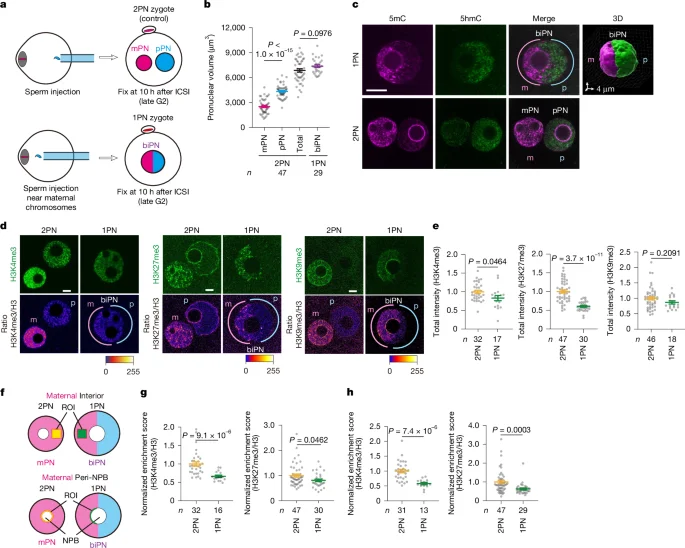
Mouse zygotes rely on a cytoplasm-forced competition between the two separate parental pronuclei to limit their size and preserve key epigenetic marks (H3K4me3, H3K27me3, H3K27ac). In one-pronucleus biparental zygotes, this competition is absent, the pronucleus enlarges, epigenetic regulation becomes dysregulated, and development to term is reduced. The defects can be partially rescued by introducing a competing pronucleus, reducing cytoplasm, or using drugs (TSA) or KDM5b knockdown to restore epigenetic marks, linking pronuclear volume control to developmental potential. The findings have implications for assisted reproduction where 1PN zygotes are used, underscoring that far from being a mere fertilization artifact, pronuclear separation actively shapes embryonic viability.
- Cytoplasmic competition between separate parental pronuclei in zygotes Nature
- Tug-of-War of Life: Fertilized Eggs Keep Two Separate Nuclei Neuroscience News
- The battle of the sexes in the egg: How early nuclear rivalry helps embryos develop properly Phys.org
- Parental Pronuclei Compete in Zygote Cytoplasm Bioengineer.org
Reading Insights
1
35
66 min
vs 67 min read
99%
13,304 → 104 words
Want the full story? Read the original article
Read on Nature