
New deformable boron phase exhibits million-fold conductivity boost
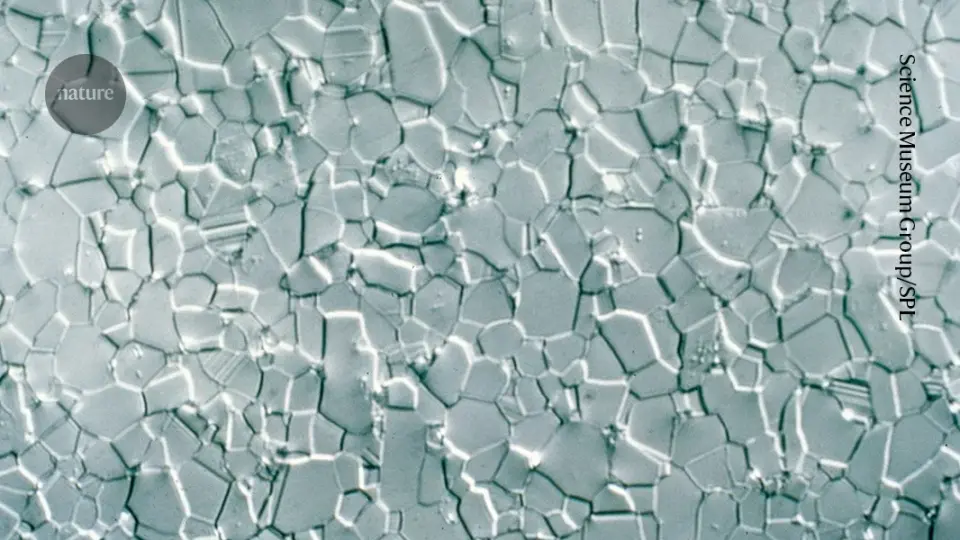
Researchers have synthesized a new boron allotrope, Imma-B60, which is deformable and one million times more conductive than typical boron materials. Created via a high-pressure sodium reaction followed by vacuum heating, this phase features open spaces that allow atomic slip, enabling the material to stretch 23% before breaking without returning to its original shape.
Key points
- Imma-B60 is a new boron phase reported in Nature Chemistry, distinct from previous superhard but poorly conducting allotropes.
- The material’s conductivity is over one million times higher than that of standard boron compounds.
- Synthesis involved reacting boron with sodium under high pressure, then heating at 900 degrees Celsius under vacuum to remove sodium impurities.
- The structure contains open spaces where sodium atoms were located, facilitating dislocation slip and allowing the material to deform plastically.
- The material can extend to 23% of its original length before breaking, but it does not return to its initial form after stretching.
Background
Boron has long been studied for its diverse bonding modes and multiple allotropes, though most known forms are superhard and poor conductors. The previous unusual boron allotrope discovery was in 2009, leaving a 16-year gap in new findings due to challenges in detecting light boron atoms and preventing reactions with other elements to form borides. This new discovery follows a 2009 breakthrough by Artem Oganov and colleagues, marking the first significant new allotrope in over a decade.
Why it matters
The discovery of Imma-B60 opens a new synthesis route for a family of materials, potentially overcoming the long-standing difficulty in producing pure boron allotropes. Its unique combination of high conductivity and deformability could lead to applications in advanced materials science, contrasting with the brittle, insulating nature of previous boron forms.
What to watch
Researchers will likely explore the broader family of materials accessible through this synthesis method. Further studies may investigate the practical applications of Imma-B60’s high conductivity and plasticity, as well as refine the synthesis process to improve scalability and purity.
Want the full story? Read the original reporting
Read on nature.com