Tag

Materials Science

All articles tagged with #materials science

Clear conductive nail polish could turn long nails into touchscreen styluses
technology18 days ago

Clear conductive nail polish could turn long nails into touchscreen styluses

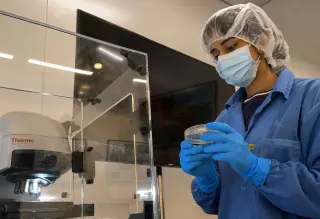
A Centenary College undergraduate, with a chemist supervisor, developed a clear, non-toxic conductive nail polish by combining ethanolamine and taurine to allow long fingernails to register on capacitive touchscreens. While a doped blob can be detected by a touchscreen, a thin layer currently doesn’t reliably activate the screen and ethanolamine evaporates quickly, limiting use to a few hours. The researchers are continuing to test other compounds to create a practical, commercially viable formula and address issues like toxicity and shade range.

Fresh findings shed light on the long-standing mystery of static electricity
science23 days ago

Fresh findings shed light on the long-standing mystery of static electricity

A Nature feature explains that static electricity (triboelectric charging) is more complex than once thought: past contacts bias how charge is exchanged between identical materials, and carbon-containing surface molecules can steer the direction of charging. Using levitated samples and precise measurements, researchers are teasing apart factors like surface chemistry, contact history, surface area, and impact velocity. The growing understanding could improve energy-harvesting devices and reduce dangerous discharges, signaling a shift from simple rules to a multi-factor picture of triboelectricity.

China produces pure hexagonal diamond and claims superior hardness over regular diamond
physics-and-mathematics27 days ago

China produces pure hexagonal diamond and claims superior hardness over regular diamond

Chinese researchers created small, pure hexagonal diamond (lonsdaleite) samples and demonstrated that it is stiffer and harder than cubic diamond and more oxidation-resistant; the 1.5 mm samples were formed by compressing organized graphite at about 20 GPa for 10 hours and heating to roughly 1,300–1,900°C, with the work published in Nature, indicating a feasible bulk production method and potential industrial applications in drilling, cutting, and thermal management.

Ocean-friendly packaging: plant-based cmcsp plastic dissolves in seawater within hours
environment1 month ago

Ocean-friendly packaging: plant-based cmcsp plastic dissolves in seawater within hours

Researchers in Japan developed a plant-based plastic called cmcsp, made from cellulose, that stays strong during use but dissolves completely in seawater within hours, leaving no microplastics and offering a potential new packaging option. The material forms a cross-linked network stabilized by salt bridges and a plasticizer; seawater ions disrupt these bonds to trigger dissolution, with a thin barrier coating slowing breakdown during use. While the approach shows promise and can be processed in water-based systems, scaling, recycling dissolved components, and real-world disposal remain challenges, and it is not a universal solution to plastic pollution.

3D-Printed Cemented Carbide Outshines Steel in Hardness
technology1 month ago

3D-Printed Cemented Carbide Outshines Steel in Hardness

Hiroshima University researchers used additive manufacturing to produce tungsten carbide–cobalt cemented carbide via 3D printing, achieving hardness above 1,400 HV—far harder than common steels. The method softens alloy elements rather than fully melting them, delivering a tougher, more wear-resistant metal with less waste, with potential uses in repairing cracks and strengthening construction; the research will be published in the April 2026 issue of the International Journal of Refractory Metals and Hard Materials.

New glass-plastic hybrid material defies conventional wisdom
science2 months ago

New glass-plastic hybrid material defies conventional wisdom

Scientists at Wageningen University & Research unveiled compleximer, a glass-plastic hybrid that combines plastic-like toughness with glass’ moldability. It stays bound via physical charge interactions rather than chemical cross-links, allowing high-temperature shaping and self-healing when heated with a hairdryer. The fossil-based version exists now, but biobased variants are in development to enable easier repair and potential biodegradability, offering a greener alternative to traditional plastics.

CU Boulder Unveils Global-Unique Plasma Tunnel for Hypersonic Reentry Testing
space2 months ago

CU Boulder Unveils Global-Unique Plasma Tunnel for Hypersonic Reentry Testing

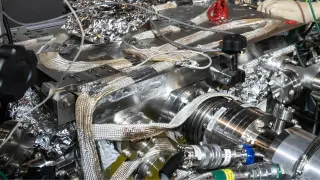
Researchers at the University of Colorado Boulder have built a plasma tunnel that mimics the extreme heat and pressure of reentry, reaching up to 9,000°F to test materials, heat shields, and sensors under hypersonic conditions; the facility can also reproduce Mars-like CO2 atmospheres, and scientists are exploring magnetic control of the plasma to potentially steer reentry, which could improve future spacecraft safety and maneuverability.

Nuclear Deflection Could Work as Last-Resort Asteroid Defense, Study Finds
science2 months ago

Nuclear Deflection Could Work as Last-Resort Asteroid Defense, Study Finds

A new Nature Communications study suggests a nuclear deflection could be a viable last-resort method to steer an Earthbound asteroid, because iron rocks can strengthen under extreme stress and dissipate energy in real time. Experiments at CERN’s HiRadMat irradiated a Campo del Cielo meteorite sample, revealing non-destructive, real-time deformation including strain-rate dependent damping, which helps explain why some models underestimate asteroid resistance. The work emphasizes that deflection strategies must depend on asteroid composition and may favor a stand-off nuclear detonation near the surface over a direct blast, with more research needed across different asteroid types.

Scientists Uncover How Quasiparticles Disrupt Electrical Conductivity
science5 months ago

Scientists Uncover How Quasiparticles Disrupt Electrical Conductivity

Physicists have identified polarons—quasiparticles formed by electrons and atoms—as the cause behind the loss of electrical conductivity in certain quantum materials, specifically in a thulium-based compound. This discovery, made through detailed measurements and modeling, could advance the development of new materials like room-temperature superconductors.