
Vega-C Launches FLEX and Sentinel-3C to Advance Climate and Vegetation Monitoring
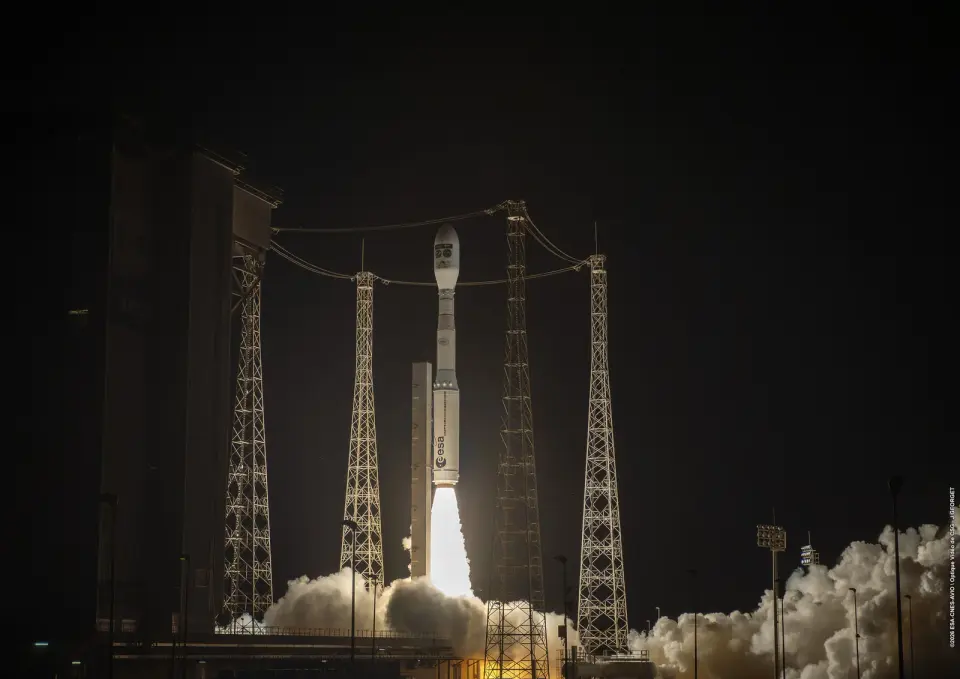
On September 15, 2026, a Vega-C rocket launched the FLEX and Sentinel-3C satellites from French Guiana. FLEX will measure plant photosynthesis, while Sentinel-3C will monitor oceans and climate. Both satellites are now in orbit and undergoing commissioning.
Key points
- Vega-C flight VV30 lifted off at 03:21 UTC on September 15, 2026, from Europe’s Spaceport in Kourou, French Guiana.
- Sentinel-3C was deployed first, followed by FLEX approximately one hour later, using a secondary adapter called Vespa.
- FLEX is ESA’s first satellite designed to measure photosynthetic activity via fluorescence to assess plant health and carbon cycles.
- Sentinel-3C is the third in its series, continuing long-term monitoring of oceans, land, ice, and atmosphere for the Copernicus program.
- Both satellites are currently in the launch and early orbit phase, with mission controllers verifying system health and performance.
Background
This launch follows earlier developments in Europe’s Earth observation capabilities, including the integration of wildfire visualization tools in the Copernicus Browser using Sentinel-2 data. The successful deployment of FLEX and Sentinel-3C extends the continuity of data collection for climate and environmental monitoring, building on previous missions like Sentinel-3A and 3B.
How outlets are covering it
ESA emphasizes the scientific innovation and international cooperation behind FLEX and Sentinel-3C, highlighting their roles in understanding plant health and environmental monitoring. SpaceNews focuses on the successful launch and the operational handover between ESA and Eumetsat for Sentinel-3C. Spaceflight Now provides technical details on the launch sequence and the satellites’ instruments, while Le Monde underscores the satellites’ role in detecting extreme weather events linked to climate change. All sources agree on the successful launch and the importance of these missions for environmental and climate monitoring.
Why it matters
The successful launch of FLEX and Sentinel-3C strengthens Europe’s capacity to monitor environmental and climate changes. FLEX’s ability to measure plant photosynthesis will provide critical insights into ecosystem productivity and the carbon cycle, while Sentinel-3C will ensure continuous data collection for ocean and atmospheric monitoring. These missions support long-term climate research and disaster risk management, addressing urgent environmental challenges.
What to watch
Mission controllers will conduct the launch and early orbit phase to verify the health and performance of both satellites. Once fully operational, Eumetsat will assume responsibility for Sentinel-3C, while FLEX will remain under ESA’s control. FLEX will initially orbit in tandem with Sentinel-3A, and Sentinel-3C will later replace Sentinel-3A in this formation to enhance data collection.
- FLEX and Sentinel-3C launched European Space Agency
- Vega launches two Earth science satellites SpaceNews
- Avio launches pair of climate monitoring European spacecraft to study plants, oceans and atmospheric changes Spaceflight Now
- Europe successfully puts two satellites into orbit Le Monde.fr
- Vega C rocket launches 2 European Earth-observing satellites to orbit from South America (video) Space
Want the full story? Read the original reporting
Read on European Space Agency