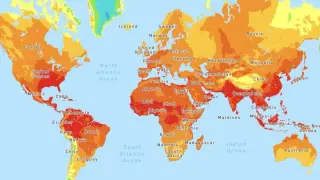
October 2026 was the warmest on record globally, driven by a historic El Niño. 2026 is projected to be the second-warmest year ever, with 2027 likely to surpass 2024. The event has pushed global temperatures above the 1.5°C pre-industrial threshold for the second consecutive year.
September 2026 was the second-warmest on record globally, driven by a strengthening El Niño. While 2026 is currently the second-warmest year-to-date, forecasts suggest it may tie 2024 for the hottest year, with 2027 expected to surpass it.
On September 15, 2026, a Vega-C rocket launched the FLEX and Sentinel-3C satellites from French Guiana. FLEX will measure plant photosynthesis, while Sentinel-3C will monitor oceans and climate. Both satellites are now in orbit and undergoing commissioning.
August 2026 tied July 2023 for the hottest month ever recorded, with global temperatures reaching 1.65C above pre-industrial levels. The EU’s Copernicus service confirmed record sea surface temperatures and a hottest Northern Hemisphere summer. While a strengthening El Niño contributed, scientists emphasize that fossil fuel emissions remain the primary driver of this unprecedented heat, which has already caused widespread wildfires, crop failures, and infrastructure damage.
August 2026 was the joint-hottest month on record globally, matching July 2023, with average temperatures reaching 1.65°C above pre-industrial levels. The EU’s Copernicus service attributed this to fossil fuel emissions and a strengthening El Niño. Western Europe experienced its warmest summer on record, while global greenhouse gas emissions hit a new high in 2025.
August 2026 marked the warmest and most humid month in recorded history, with global temperatures reaching 1.65°C above pre-industrial levels. This milestone, driven by fossil fuel emissions and a strengthening El Niño, led to unprecedented atmospheric moisture and extreme weather events worldwide.
Global ocean surface temperatures reached a new record high of 21.1C in August, driven by a strengthening El Niño and long-term human-caused warming. This unprecedented heat, occurring months before the typical seasonal peak, is fueling extreme weather, sea-level rise, and widespread marine heatwaves.
Global sea surface temperatures reached a new all-time high of 21.1C in August 2026, driven by a strengthening El Nino and long-term fossil fuel emissions. This record, set in the northern hemisphere summer, is unusual as oceans typically peak in March or April. The heat is linked to intensified storms, marine heatwaves, and reduced carbon absorption capacity.
A 7.7-magnitude earthquake struck Indonesia’s Flores island on August 14, 2026, killing at least 47 people and triggering a brief tsunami warning. The European Commission has offered satellite mapping via its Copernicus program to aid search and rescue operations, while Indonesia’s disaster agency reports widespread structural damage and ongoing recovery efforts in remote, mountainous areas.
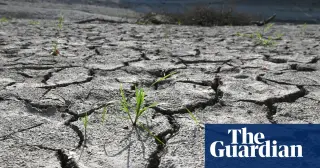
Global sea temperatures hit a record 20.96C in July 2026, surpassing 2023 levels. Western Europe experienced its hottest June and July on record, driving severe droughts and wildfires. Scientists attribute the intensification to human-driven warming compounded by developing El Niño conditions.
Global ocean temperatures reached a record high in July 2026, while Western Europe endured its hottest June and July on record. These extremes, driven by human-caused warming and developing El Niño conditions, have triggered severe droughts, massive wildfires, and critical water shortages across the continent.
The Copernicus Browser, a free service providing access to European Space Agency satellite data, has integrated a dedicated wildfire visualization layer. This update, which went live on August 4, 2026, simplifies the process for users to monitor active fires using high-resolution Sentinel-2 imagery. The new feature displays active fires in white or yellow, burning vegetation in red, and burned landscapes in dark brown or black. Previously, users had to manually add a custom script to achieve this visualization. The integration was pushed by Simon Proud, a mission scientist at the European Space Agency, and announced in a Discord channel run by the investigative journalism group Bellingcat. This development coincides with a record-breaking wildfire season in Europe and North America, where high-resolution satellite data is increasingly vital for tracking blazes in regions like Washington, Oregon, Canada, France, and Spain.
Global ocean surface temperatures in June hit record highs, with Copernicus Climate Change Service recording about 20.86°C and Copernicus Marine Service about 21°C outside polar regions, signaling a potential new warming phase as El Niño approaches; scientists say the warming is driven by greenhouse gas emissions and could bring more temperature records and heat waves in the US and Europe, where over 46 million people are under extreme heat alerts and Europe has logged thousands of heat-related excess deaths.
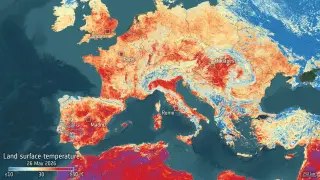
Sentinel-3 satellite data show a continent-wide heat wave across Europe, with temperatures up to about 40°C (104°F) in Southern Europe and around 35°C (95°F) in London, highlighting climate-change-driven extremes observed from space.
Europe experienced one of its hottest years in 2025, with near-universal above-average temperatures, record wildfires, drought, and glacier loss; a strong El Niño is expected to push global temperatures higher into 2027, making 2026 likely the second-warmest year on record.