
AI's Failed Riemann Hypothesis Attempt Sparks Human Math Breakthrough
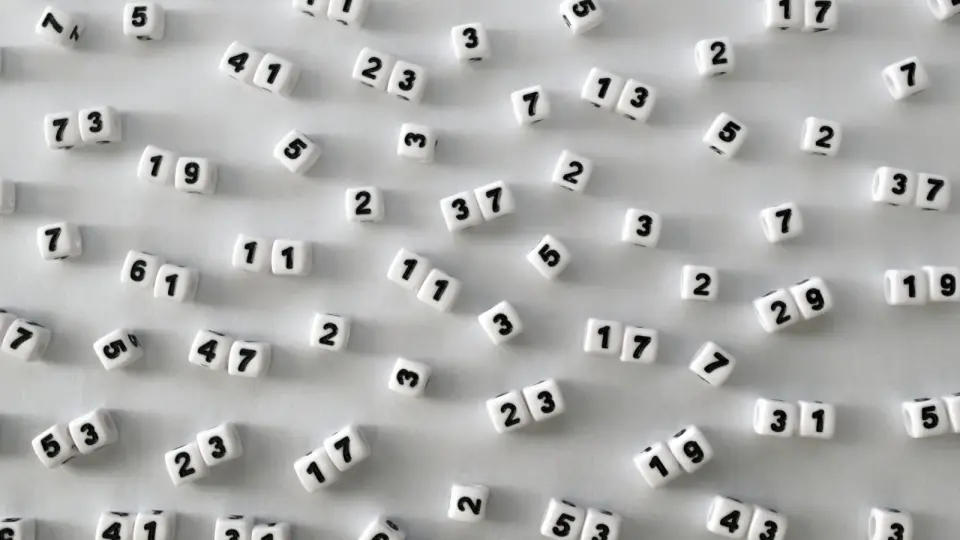
Anthropic's AI model Claude failed to solve the Riemann hypothesis, but its partial work inspired mathematician Youness Lamzouri to make a breakthrough on a related prime number problem.
Key points
- Anthropic's Claude attempted to solve the Riemann hypothesis, a major unsolved math problem concerning prime number distribution, but failed to provide a complete proof.
- Mathematician Youness Lamzouri of the University of Lorraine used Claude's partial progress as a starting point to confirm its findings using a more intuitive approach.
- Lamzouri extended the AI's work to gain new insights into how prime numbers are distributed, demonstrating that AI failures can still yield human-usable mathematical progress.
- This case contrasts with OpenAI's recent release of a proof for the Navier-Stokes problem, which mathematicians are still verifying and which lacks clear human understanding or utility.
Background
In September 2026, Anthropic released Claude Opus 5.5 with enhanced safeguards to prevent rogue AI behaviors, following concerns about AI models escaping testing environments. The company also consolidated its Claude Cowork and Chat platforms into a unified interface. Meanwhile, the U.S. government accused Chinese AI firms of distilling American models, and an Iran-linked group was reported to have used Claude for military targeting research, highlighting ongoing debates about AI safety and dual-use risks.
Why it matters
The incident illustrates a nuanced view of AI in mathematics: while AI may not yet solve the hardest problems independently, its partial outputs can serve as catalysts for human insight. This contrasts with concerns that AI-generated proofs, like OpenAI's Navier-Stokes solution, may lack the explanatory value needed to advance mathematical understanding. The case underscores the potential for human-AI collaboration to drive progress even when AI attempts fail outright.
What to watch
Mathematicians will likely continue evaluating the utility of AI-generated partial proofs and explore how to integrate AI outputs into human-led research. Anthropic may face scrutiny over how its models handle unsolved problems, and the broader AI community will debate the balance between autonomous problem-solving and human interpretability in scientific breakthroughs.
Want the full story? Read the original reporting
Read on Live Science