
Burn Tests Reveal Wide Flammability Gaps in Common 3D Printing Filaments
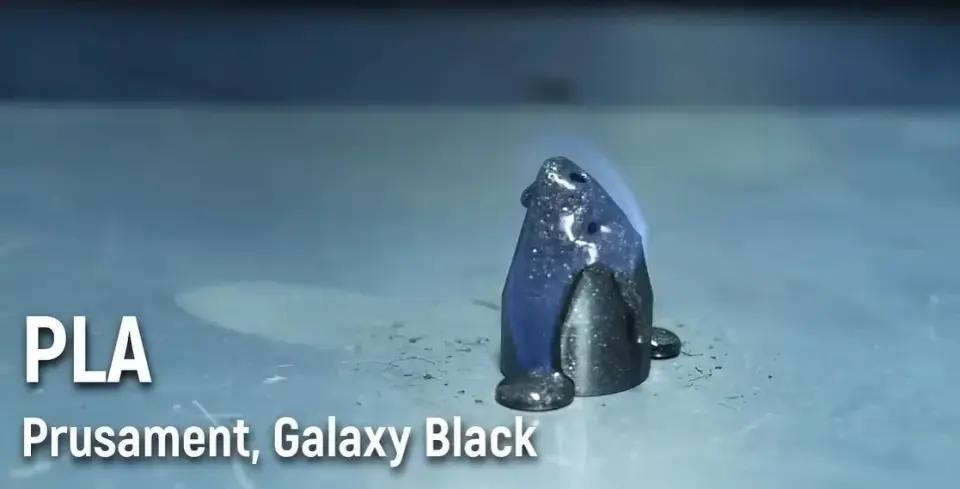
A recent experiment by Maker’s Muse tested the flammability of common 3D printing filaments, including PLA, PETG, ABS, ASA, TPU, and PEBA. Results showed significant differences: standard PLA burned readily, while high-temperature PLA self-extinguished. PETG and regular TPU proved the most resistant to ignition, whereas ABS, ASA, and HIPS burned aggressively with sooty flames. The study highlights that additives, not just base material, dictate fire behavior, with PETG and TPU emerging as safer choices for fire-prone environments.
Key points
- Maker’s Muse conducted controlled burn tests on PLA, PETG, ABS, ASA, TPU, and PEBA filaments using open flames and blowtorches.
- Standard PLA burned easily due to high carbon content, but variants like Elegoo PLA+ and Prusa Galaxy Black PLA showed different ignition thresholds and burn characteristics.
- High-temperature PLA (HTPLA) actively resisted burning and self-extinguished after blowtorch exposure, unlike standard PLA.
- PETG and regular TPU were the least flammable materials tested, with TPU only melting rather than igniting under blowtorch heat.
- ABS, ASA, and HIPS burned aggressively with sooty yellow flames, while foam TPU was the most aggressive burner among all samples.
- Additives in filaments were identified as the primary factor influencing flammability, not just the base polymer type.
Background
This experiment follows recent 3D printing innovations focused on thermal properties, such as the 2026 development of omnidirectional heat-cloaking lattices by University of Illinois researchers and 3D-printed diving suits for cockroaches. While those projects addressed heat management and environmental adaptation, this burn test directly addresses fire safety risks for 3D-printed parts in real-world applications.
Why it matters
Understanding flammability differences is critical for selecting materials in safety-critical applications, such as electronics enclosures, automotive parts, or consumer products exposed to heat. The findings warn that 'biodegradable' or 'standard' PLA may pose higher fire risks than expected, while PETG and TPU offer better resistance. This data helps makers and engineers avoid accidental fire hazards and make informed material choices for durability and safety.
What to watch
Further testing may focus on how specific additives and infill densities affect burn rates and smoke toxicity. Researchers may also explore fire-retardant coatings for 3D-printed parts or develop standardized flammability ratings for filaments to guide consumer and industrial use.
Want the full story? Read the original reporting
Read on Hackaday