
Orbital Photos Reveal Global Shift from Orange Sodium to White LED Streetlights
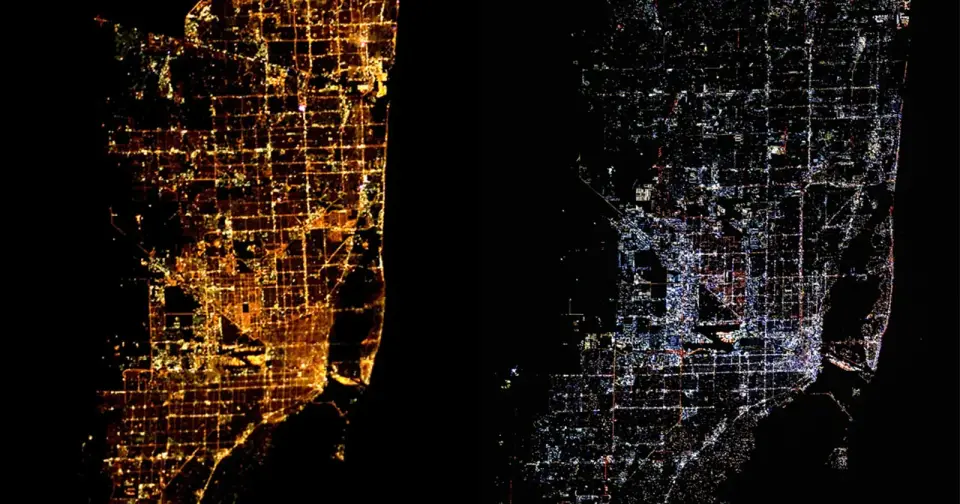
NASA astronaut Don Pettit has released a series of before-and-after photographs taken from the International Space Station, documenting the global transition of city street lighting from warm sodium vapor to bright white LEDs over the past 15 years. The images, spanning from 2003 to 2025, show major metropolitan areas like Chicago, Mexico City, and Seoul shifting from an orange glow to a cooler, white hue. Pettit attributes this change to energy savings and environmental concerns, noting that while LEDs are cheaper and easier to control, they have altered the aesthetic and atmospheric feel of cities for both observers on the ground and photographers.
Key points
- NASA astronaut Don Pettit, who has been on the ISS since 2002, documented the global LED transition across four missions, photographing every major city on Earth.
- The shift from sodium vapor to LEDs was primarily driven by cost efficiency, as LEDs are cheaper to operate and easier to control than gas discharge lamps.
- Cities like Chicago, Mexico City, Sao Paulo, and Seoul have visibly changed from orange to white lighting between 2003/2011 and 2024/2025.
- Hong Kong remains an exception, maintaining sodium vapor lighting, while nearby Shenzhen has fully transitioned to LEDs.
- Critics and photographers have lamented the loss of the warmer sodium vapor hue, which was preferred for its aesthetic quality in film and photography.
- Initial LED installations in cities like Los Angeles used a 4,000K color temperature, which locals found too clinical, prompting officials to adjust the lighting to a warmer 3,000K.
Background
This development follows broader trends in urban infrastructure modernization and energy efficiency. While our archive contains unrelated stories on space technology and consumer electronics, the current story highlights a significant environmental and aesthetic shift in global urban lighting that has been ongoing for over a decade. The transition reflects a global move toward energy-saving technologies, even as it sparks debate about the visual and atmospheric impact on cities.
Why it matters
The shift to LED lighting has profound implications for energy consumption, urban aesthetics, and even public health, as the change in light color temperature can affect sleep patterns and mood. The visual evidence from space underscores the scale of this transition, which has been largely driven by economic and environmental factors but has also raised concerns among artists and residents about the loss of the warmer, more natural glow of sodium vapor lights.
What to watch
Cities may continue to adjust LED color temperatures to balance energy efficiency with aesthetic and health considerations. Further research into the long-term effects of LED lighting on human health and wildlife may influence future urban planning and lighting standards.
Want the full story? Read the original reporting
Read on PetaPixel