
Printed artificial neurons connect with living brain tissue, signaling a new era in brain-inspired hardware
TL;DR
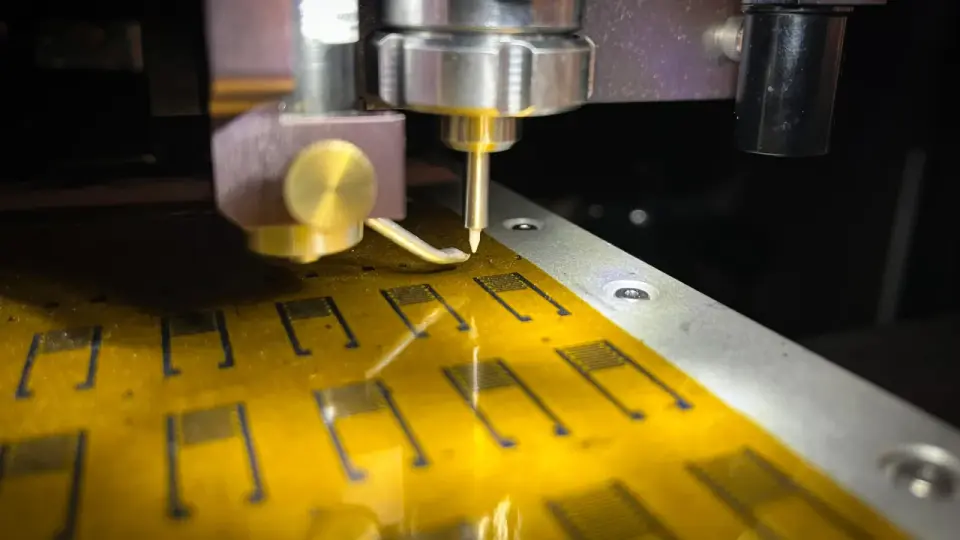
Northwestern University researchers have printed flexible artificial neurons using MoS2 memristive nanosheets on a polymer substrate that generate neuron-like spikes and can directly activate living brain cells in mouse brain slices, marking a step toward brain–machine interfaces and energy-efficient AI hardware. The low-cost aerosol-jet process creates complex firing patterns, and the work, published in Nature Nanotechnology, suggests future devices could perform advanced tasks with far less power than today’s silicon systems.
Topics:sciencetechnology#brain-computer-interfaces#energy-efficient-ai#mos2-memristive#neuroprosthetics#printed-electronics#technology
- Artificial neurons successfully communicate with living brain cells ScienceDaily
- memristive nanosheet networks for spiking neurons with multi-order complexity Nature
- Printed neurons communicate with living brain cells Northwestern Now News
- 3D-Printed "Honeycomb" Sensors Match Your Unique Neural Map Neuroscience News
- Scientists Grow Electronics Inside the Brains of Living Mice SingularityHub
Want the full story? Read the original reporting
Read on ScienceDaily