
"Revolutionizing Human-Machine Interaction with Carbon-based Sensors"
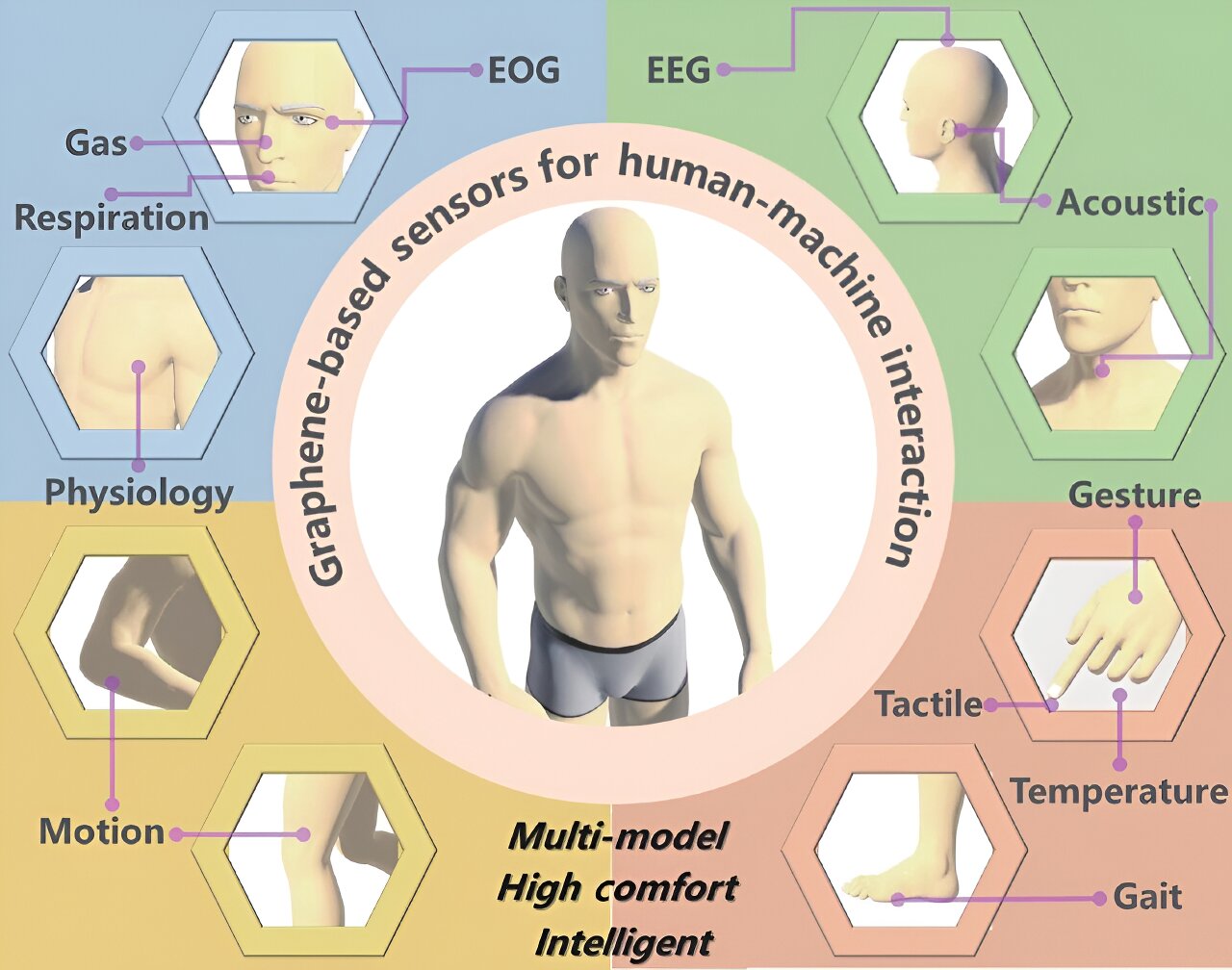
Carbon-based sensors made from graphene are being developed to enable seamless human-machine interaction (HMI). These small, lightweight sensors can measure various bodily signals, including brain waves, eye movement, temperature, and gestures. They have potential applications in the metaverse and wearable healthcare technologies. The unique properties of graphene, such as conductivity, flexibility, and light weight, make it an ideal material for HMI sensor development. The research team aims to create sensors that can interface with different parts of the body, enabling improved comfort and intelligence. The review paper published by the team outlines the progress made in graphene-based sensors and highlights the potential for future developments in multi-modality and improved data collection and response in healthcare.
Reading Insights
0
12
3 min
vs 4 min read
85%
751 → 115 words
Want the full story? Read the original article
Read on Phys.org