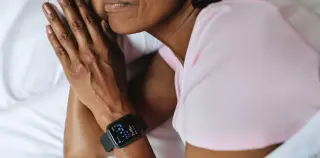
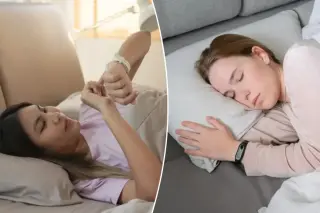
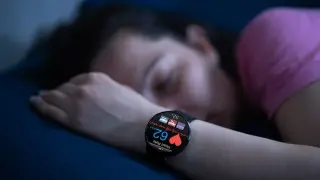
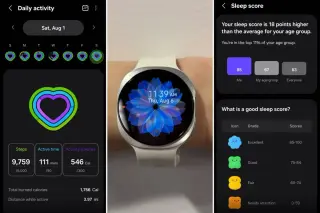
Consumer sleep trackers accurately measure total sleep duration but fail to capture brain activity or subjective sleep quality. While they overestimate sleep by roughly 17 minutes due to 'quiet wakefulness,' they can still help users identify long-term trends and improve their perception of rest, even if actual sleep metrics remain unchanged.
A large study of 95,559 UK Biobank participants found that higher REM sleep is associated with a significantly lower risk of 83 diseases, including Parkinson’s, dementia, and heart failure. Deep sleep also reduced risks for seven conditions, while sleeping 6–8 hours nightly offered the lowest overall disease risk. The study, published in PLOS Medicine, highlights sleep architecture as a key health indicator but notes it cannot prove causation.
Meta has officially launched the Muse Charm, a keychain-sized hardware device designed to run its popular Muse AI assistant without requiring a smartphone. Announced at the Meta Connect keynote, the device features a small screen, fingerprint sensor, and microphones, with a planned release by December. The company also introduced new Muse capabilities, including live video chat, real-time voice conversations with custom voices, and a dedicated email address for each user’s agent. Additionally, Meta revealed new audio-only smart glasses starting at $349 and a slimmer VR headset priced at $1,299 for next spring. These moves signal a strategic convergence of Meta’s previous investments in virtual reality and artificial intelligence, aiming to position Muse as a ubiquitous personal superintelligence. The company also introduced privacy features like 'Private Processing' for AI glasses and a confidential virtual machine option for the assistant, addressing concerns about data security.
A large-scale study of 95,559 UK Biobank participants found that higher REM sleep is associated with a reduced risk of 83 diseases, while 6-8 hours of nightly sleep offers the lowest overall disease risk. Deep sleep also lowered risks for seven conditions, including type 2 diabetes, whereas short sleep and irregular patterns increased risks for various disorders. The findings, published in PLOS Medicine, highlight the importance of sleep architecture, not just duration, for long-term health, though causality cannot be established.
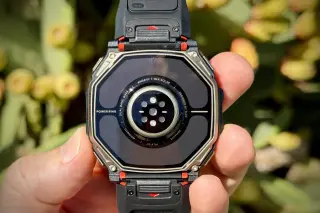
Amazfit’s T-Rex Dual Solar pairs an AMOLED display with front and rear solar panels and introduces a Solar Boost mode, offering a novel power trick but only modest real-world gains. The watch is largely a T-Rex Ultra 2 with a smaller battery and display, a 50m depth rating, and a higher price, and overheating can limit solar benefits. In practical use, solar helps only a few percent of battery life (roughly 2–3% in smartwatch time; up to around 14% in certain sunny scenarios), making it more of a tech showcase than a compelling power solution for most users.
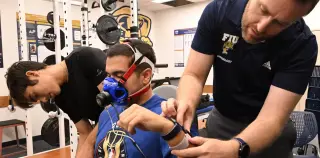
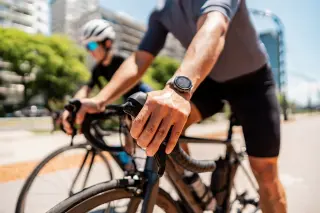
A Florida International University study tested four popular smartwatches (Apple Watch Series 8, Garmin Forerunner 955, Samsung Galaxy Watch5, Fitbit Sense 2) against a metabolic analyzer during controlled cycling with 58 adults and found substantial calorie-estimation errors across all devices, increasing with higher body fat percentage (often 50–100% or more). Apple had the smallest systematic bias; Garmin and Samsung overestimated more; Fitbit produced several implausible readings. Skin tone did not significantly affect error. Practical takeaway: treat calorie counts as estimates and rely on trends, heart rate, and other metrics, as wearable accuracy is influenced by body composition and may improve over time.
A National Science Foundation–funded study tested Apple, Garmin, Samsung and Fitbit smartwatches on 58 participants while researchers used precise metabolic measurements, finding that wearables overestimate calories burned by roughly 15–25 percent—meaning these devices can exaggerate energy expenditure and should be treated with caution for weight management.
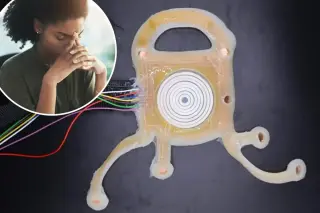
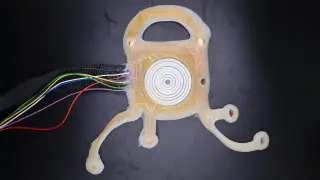
UT Austin researchers developed NEUSLeeP, a soft skin patch worn at night that uses gentle ultrasound and electrodes to stimulate deep brain regions and boost REM sleep. In a 28-person study, wearers reached REM 43 minutes faster and stayed in REM about 16 minutes longer, with improved heart-rate variability and mood-related brain changes. Published in Nature Communications, results suggest a noninvasive method to reduce daytime stress and potentially help insomnia, PTSD and depression, though larger trials are needed.
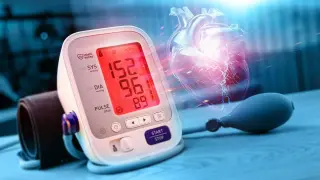
A wearable device monitored hormones around the clock and uncovered nocturnal bursts of aldosterone in people with primary aldosteronism, a common but often missed cause of high blood pressure. This explains why single blood tests can miss the disorder and points to dynamic, continuous hormone monitoring as a means to improve early diagnosis and treatment.
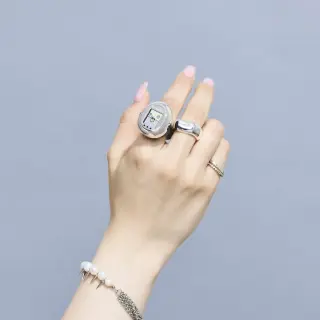
Bandai marks Tamagotchi's 30th anniversary with a 28mm wearable ring featuring a 0.56-inch color display, three metallic finishes, two side buttons, and charging via an accompanying case; it revives 30 characters plus a secret egg and is Japan-exclusive.
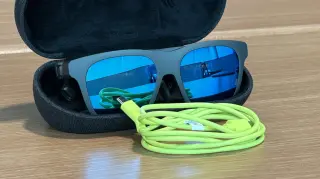
Adam Doud reviews the XReal Xbx a01+ AR glasses, praising a 147-inch-equivalent floating display, light 62 g weight, and up to 1600 nits brightness, all for $299. The device plugs into a phone or PC (no built-in battery) and uses a fixed floating window rather than a true tracked screen, with two lens styles, simple controls, and built-in speakers; ideal for travelers seeking a portable theater or on-the-go desktop experience, though screen placement can require adjustment and audio may benefit from headphones.
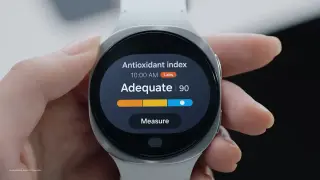
Samsung's Galaxy Watch features an Antioxidant Index that estimates your antioxidant level by measuring carotenoids in the skin using the BioActive sensor. By placing a thumb on the back LEDs, the watch analyzes blue-light absorption and returns a 0–100 score, categorized as Very low, Low, or Optimal, and viewable in the Samsung Health app. While it provides a quick snapshot of diet-related antioxidant status and can track trends, it doesn't capture all antioxidants in the body and can be influenced by factors like activity, sleep, stress, UV exposure, and diet; meaningful changes may take weeks to register.
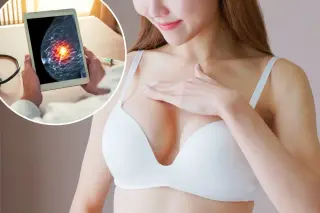
A French-Swiss research team developed the PHI-BRA smart bra, a 30-minute wearable that combines skin-surface thermography and electrical impedance spectroscopy, analyzed by AI, to screen for early signs of breast cancer. While not a replacement for mammograms, it could provide an accessible screening option between medical visits as clinical trials continue and researchers look to scale the technology.
A New York Post review of the Samsung Galaxy Watch9 highlights its health-focused features—real-time heart-rate tracking, vibration nudges for movement, and the Fitness Index that compares users’ fitness to peers—along with sleep coaching, body composition scans, Vitals metrics, ECG and blood pressure. It emphasizes the watch’s AI-assisted insights and goal-driven workouts, while noting these metrics are informational and work best with Galaxy/Android devices.
UT Austin researchers developed a soft wearable patch (NEUSLeeP) that uses ultrasound and real-time brain monitoring to noninvasively target REM sleep, making users enter REM 43 minutes faster and stay about 16 minutes longer in a 28-person study, with evidence of improved heart-rate variability and changes in emotion-related brain circuits, hinting at benefits for stress and mood regulation and potential applications for PTSD, depression, and insomnia; larger trials and commercialization are planned.