
VSC Timing and Track Design Cost Norris Spanish GP Win
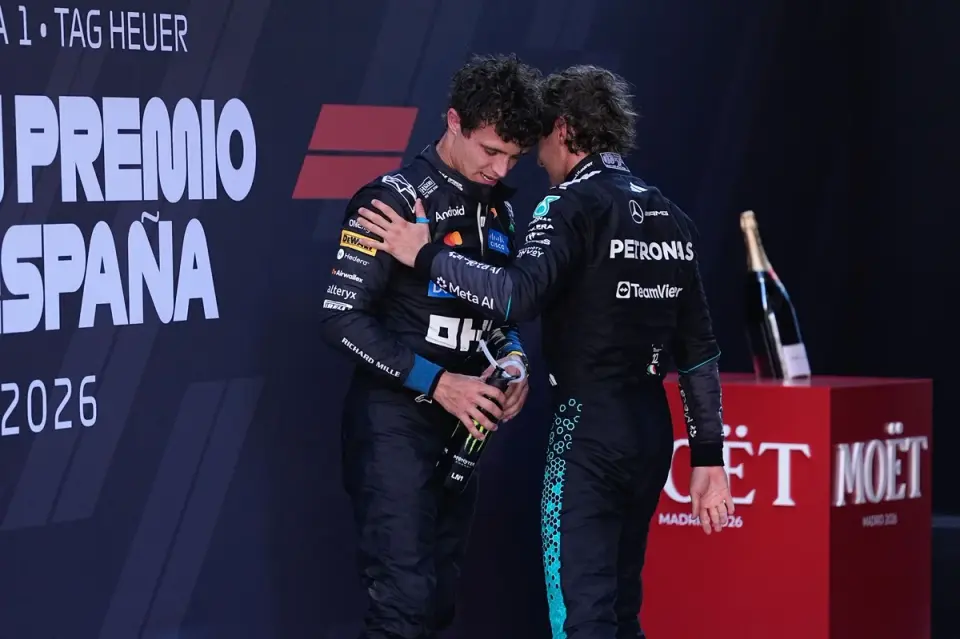
Lando Norris lost the 2026 Spanish Grand Prix due to a poorly timed Virtual Safety Car (VSC) and the overtaking difficulties of the new Madring circuit. Norris led by 6.2 seconds before Lance Stroll’s brake failure triggered a VSC. Norris missed the pit window by two seconds, forcing him to stop under green flags while rivals pitted under caution. A slow pit stop and the track’s lack of overtaking zones left him stuck in third, allowing Kimi Antonelli to win and extend his championship lead to 81 points.
Key points
- Norris led the race by 6.2 seconds on lap 14 before Lance Stroll stopped at Turn 20 due to brake failure, triggering a VSC.
- Norris passed the pit entry two seconds before the VSC was called, missing the opportunity for a cheap pit stop.
- Antonelli and Verstappen pitted under the VSC, while Norris stopped under green flags, losing significant time.
- Norris’s pit stop was delayed by a slow wheel change, adding further time to his deficit.
- The Madring circuit’s design prevented overtaking, leaving Norris stuck behind Verstappen until the finish.
- Antonelli won the race, extending his championship lead to 81 points, while Norris finished third.
Background
Norris had claimed pole position for the Spanish Grand Prix with a final-lap masterclass, beating Antonelli by 0.011 seconds. The Madring circuit, F1’s newest track, had been criticized by drivers for its overtaking difficulties even before the race. Norris’s previous victory in Miami 2024 had benefited from a safety car, highlighting the strategic impact of caution periods.
How outlets are covering it
Motorsport.com emphasizes the mathematical misfortune of Norris’s timing, noting that McLaren’s decision to pit was correct given tire degradation, but the VSC’s short duration was critical. BBC highlights Norris’s frustration with the VSC rules and the track design, quoting his criticism of the circuit’s layout. The Guardian focuses on Antonelli’s championship momentum and the lack of overtaking opportunities, noting that Norris’s pace advantage was negated by the track’s design. All sources agree that Norris’s loss was due to a combination of bad luck and strategic constraints, with Antonelli acknowledging that Norris deserved the win.
Why it matters
The incident raises questions about VSC protocols and track design in F1. Norris’s loss impacts the championship standings, with Antonelli extending his lead to 81 points. The Madring circuit’s overtaking difficulties may prompt changes in future track designs or VSC rules to ensure fairness in race outcomes.
What to watch
The FIA may review VSC protocols to ensure all drivers have equal opportunities to pit under caution. McLaren will analyze their pit stop operations to improve efficiency. The next race is the Azerbaijan Grand Prix, where Norris is scheduled to test the McLaren MCL-HY hypercar.
- The step-by-step story of how Lando Norris' Spanish GP miss played out under the VSC Motorsport.com
- Antonelli clinches Madrid victory over Verstappen and Norris Formula 1
- Spanish Grand Prix: How VSC cost Lando Norris race win - and should F1 change the rules? BBC
- Lando Norris hits out at F1 Virtual Safety Car rule after losing 'deserved' Spanish GP win ESPN
- Kimi Antonelli holds off Max Verstappen during Madring debut to win F1 Spanish GP The Guardian
Want the full story? Read the original reporting
Read on Motorsport.com