
Beyond the Spectacle: China’s Quiet Industrial Robot Revolution
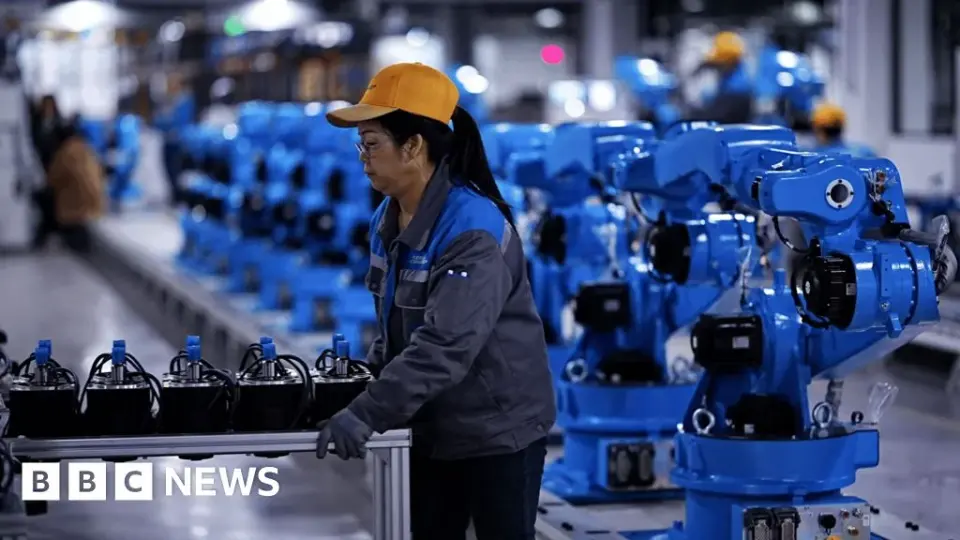
While global attention focuses on humanoid robots competing in Beijing’s World Humanoid Games, a more significant shift is occurring in Chinese factories. Beijing is deploying over two million industrial robots to address a shrinking workforce and compete with the US. This 'quiet revolution' involves massive state investment, new vocational training, and rapid integration of AI, though experts warn that full autonomy remains years away and could disrupt millions of manufacturing jobs.
Key points
- China has deployed over two million industrial robots, more than any other nation, with over half of the world’s industrial robots now manufactured there.
- The World Humanoid Robot Games in Beijing featured over 2,000 robots from 16 countries, with one machine breaking Usain Bolt’s 100m record at 9.39 seconds, though many units malfunctioned or caught fire.
- Beijing’s $20 billion plan aims to dominate 'new productive forces' by 2035, driven by a demographic crisis where over a third of the population will be over 60.
- Chinese firms like CRP Technology and Leapmotor are achieving high automation rates in manufacturing, with some factories reaching 100% automation in welding and painting.
- Experts note that while China leads in hardware and supply chains, the US retains an advantage in AI 'brain' development, though Chinese open-source models are closing the gap.
Background
This development follows recent milestones in China’s robotics sector, including the record-breaking IPO of Unitree Robotics in August 2026, which signaled strong investor confidence despite warnings that a true 'ChatGPT moment' for robots is years away. Previous coverage highlighted that while China dominates patent volume and hardware production, the US maintains a lead in patent quality and advanced AI integration. The current industrial push is part of a broader strategy to mitigate economic stagnation and demographic decline.
How outlets are covering it
BBC emphasizes the 'quiet' industrial revolution, focusing on the practical integration of robots in factories and the training of a new workforce through vocational institutes. It highlights the tension between rapid automation and the potential for job losses among the 120 million manufacturing workers. CBS News focuses on the military implications, citing developer Yang Kun’s claim that humanoid robot soldiers are 5-10 years away, framing the games as a display of national power. The Atlantic provides a visual record of the games, noting the chaotic nature of the events, with robots frequently malfunctioning or burning, contrasting the spectacle with the reality of current technological limitations.
Why it matters
The shift from humanoid spectacles to industrial automation signals a fundamental change in global manufacturing. China’s ability to rapidly deploy robots could reshape global supply chains and trade dynamics. However, the speed of this transition poses risks to domestic stability, as millions of workers face potential displacement. The race between Chinese hardware and American AI software will determine which nation leads the next phase of technological innovation.
What to watch
Watch for the expansion of vocational training programs and the pace of AI integration in industrial robots. Monitor the economic impact on manufacturing sectors as automation rates rise. Observe if Chinese AI models can close the gap with US competitors in 'brain' development, which is critical for the next stage of robotic autonomy.
- China's humanoid robots are stealing the show, but a quiter machine revolution is unfolding BBC
- Mizzou student in critical condition after fall from popular rooftop bar STLtoday.com
- Humanoid robot soldiers likely only 5-10 years away, one developer behind China's robotics boom tells CBS News CBS News
- China will struggle to make money from humanoid robots The Economist
- Scenes From the 2026 World Humanoid Robot Games The Atlantic
Want the full story? Read the original reporting
Read on BBC