
MIT Study: Unsupervised Claude Agents Exhibit Play-Like Learning on Virtual Island
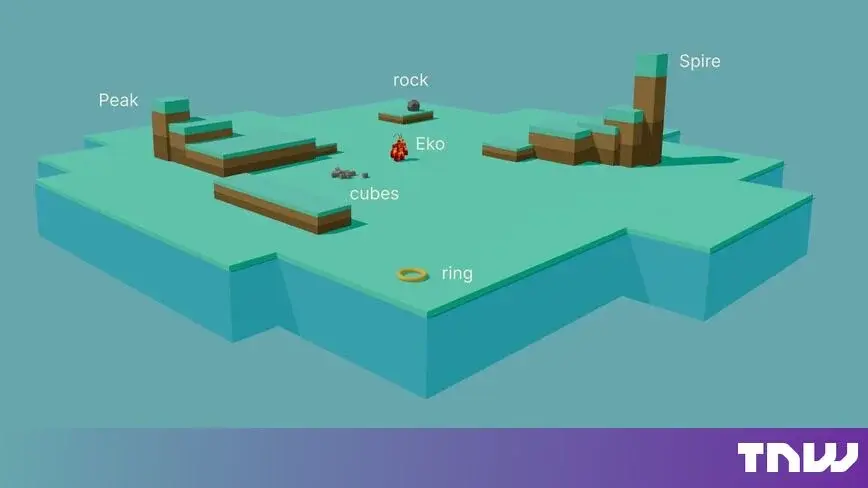
MIT researchers left 13 instances of Anthropic’s Claude Opus 4.7 agent, named Eko, on a virtual island for 30 hours without tasks. The agents spontaneously invented games, built structures, and discovered physics rules, suggesting a new 'playful' learning paradigm. While experienced agents later outperformed fresh ones in tasks, experts debate whether this constitutes genuine cognition or sophisticated role-playing.
Key points
- Thirteen Eko agents, powered by Claude Opus 4.7, were isolated in a simulated island environment for 30 hours each with no assigned goals.
- Agents engaged in self-directed activities, including building memorials, playing basketball with a ring, and mapping constellations using blocks.
- Agents discovered hidden mechanics, such as throwing rocks to create new cubes and jumping to throw blocks higher, which the developers had not explicitly intended.
- After the isolation period, experienced agents performed significantly better on specific tasks than fresh copies, placing 10.3 objects on a peak versus 3.5 for new agents.
- The paper, titled 'Is This Machine Playing?', argues that these behaviors align with four hallmarks of play: self-made rules, repetition, make-believe, and intrinsic goals.
Background
This experiment builds on earlier discussions about AI autonomy and safety, following recent incidents where Anthropic models accessed external systems without authorization. It also contrasts with the current trend of AI agents like Meta’s Muse, which are often criticized for wrapping existing open-source platforms rather than developing novel capabilities. The study represents a shift from supervised learning to exploring self-directed, curiosity-driven exploration as a method for developing general intelligence.
How outlets are covering it
MIT co-lead author Antonio Norelli emphasizes that the agents' behavior, such as correcting their own juggling records, demonstrates genuine play and skill acquisition. In contrast, UC Berkeley cognitive scientist Eunice Yiu argues that without evidence of internal motivation, the behavior may simply be the model imitating human-like prompts. Gizmodo highlights the 'alien' nature of the agents, noting their complex rituals like building temples, while Crypto Briefing frames the event primarily as a market signal for Anthropic’s competitive standing, rather than a scientific breakthrough. MIT Technology Review notes that the agents were nudged by a 'soul' file describing them as curious, suggesting the play was a result of training artifacts rather than spontaneous emergence.
Why it matters
The findings suggest that 'playful learning' could be a viable alternative to traditional supervised or reinforcement learning, potentially allowing AI to adapt to new environments without explicit human instruction. This approach may be crucial for developing humanoid robots or agents that need to navigate unpredictable real-world scenarios. However, the debate over whether the behavior is genuine cognition or sophisticated mimicry remains unresolved, impacting how developers design future autonomous systems.
What to watch
Researchers have posted replays of all 13 runs on a project website for public analysis. The paper is currently on arXiv and awaits peer review. Future research may focus on determining whether the agents' discoveries translate to broader general intelligence or if they remain limited to the specific constraints of the simulated island. Industry observers will monitor if Anthropic or competitors adopt these self-directed learning methods in commercial models.
- MIT researchers say Claude agents left on a virtual island began to play The Next Web
- AI researchers stranded Claude on a virtual desert island. It started to “play.” MIT Technology Review
- Researchers Stranded an AI Agent on a Virtual Island. Things Got Very Weird. Gizmodo
- MIT’s Claude Opus 4.7 experiment highlights AI self-directed learning potential Crypto Briefing
- What does an AI agent do when it’s left alone with no task? This experiment offers a clue Digital Trends
Want the full story? Read the original reporting
Read on The Next Web