Tag

Machine Learning

All articles tagged with #machine learning

AI-Driven Stool Test Detects 90% of Colorectal Cancers, Offering Non-Invasive Screening
health-and-medicine23 hours ago

AI-Driven Stool Test Detects 90% of Colorectal Cancers, Offering Non-Invasive Screening

Researchers at the University of Geneva used artificial intelligence to map gut microbiota subspecies and develop a stool-based test that identified about 90% of colorectal cancers, approaching colonoscopy’s 94% detection rate. If validated in ongoing trials, this non-invasive method could replace routine screening with colonoscopies reserved for positives, while expanding screening accessibility.

Nature peer‑reviews AI Scientist, signaling progress and limits in autonomous science
technology16 days ago

Nature peer‑reviews AI Scientist, signaling progress and limits in autonomous science

Nature published a peer‑reviewed update on Sakana AI’s AI Scientist, a system that uses LLMs to search literature, generate hypotheses, run experiments, and draft papers. The tool submitted three original AI‑generated papers to a leading ML conference, with one accepted, but the authors tempered claims of fully automating science and included an automated reviewer. They stress AI should assist human scientists, while flagging risks like originality dilution as autonomous research advances.

New Blood Biomarker Panel Maps How Fast You Age
science16 days ago

New Blood Biomarker Panel Maps How Fast You Age

Researchers from the University of Konstanz analyzed 362 blood parameters in 3,300 people aged 35–74 and used machine learning to distill two gender-specific panels of 10 biomarkers each that best predict biological age. The blood test estimates an individual’s bioage relative to chronological age and was validated in groups known to age faster or slower (Down syndrome, smokers, hormone-therapy users). Some biomarkers appear to drive aging while others simply indicate it, offering new health insights and potential use in evaluating anti-aging therapies and disease risk.

The AI astronomer: MadEvolve’s rewrite of cosmology
technology19 days ago

The AI astronomer: MadEvolve’s rewrite of cosmology

Space.com reports on MadEvolve, an AI framework that uses Large Language Models as mutation operators within evolutionary programming to iteratively mutate and improve cosmology code. By evaluating new program variants with physics-based metrics, it has delivered substantial gains over human-crafted baselines—such as reconstructing the universe’s initial conditions—and even uncovered thousands of anomalies in archival Hubble data. Built as a general framework, MadEvolve could extend to other scientific fields, signaling a future where AI acts as a tireless, collaborative researcher in astronomy and beyond.

Teen Scientist Uncovers 1.5 Million Hidden Cosmic Objects in NEOWISE Data
science20 days ago

Teen Scientist Uncovers 1.5 Million Hidden Cosmic Objects in NEOWISE Data

A Pasadena high-school student, Matteo Paz, and Caltech researchers used an AI model called VARnet to scan NASA’s NEOWISE infrared sky data, processing about 200 billion detections to flag roughly 1.5 million variable-object candidates. The full catalog, to be published in 2025, could reveal new quasars, variable stars, and transient events, though many candidates will require follow-up observations to confirm their nature. The approach combines wavelet decomposition, irregular time-series analysis, and a convolutional neural network for classification, with potential applications beyond astronomy.

AI-led study pegs uncounted Covid deaths at about 155,000 in early pandemic
health21 days ago

AI-led study pegs uncounted Covid deaths at about 155,000 in early pandemic

A Science Advances study using artificial intelligence-derived analysis of death certificates estimates about 155,000 additional Covid-19 deaths occurred in 2020–2021 outside hospitals and were not counted in official tallies, suggesting roughly 16% of Covid-19 deaths were uncounted. The undiagnosed deaths disproportionately affected Hispanic and other people of color in the South and Southwest, due to factors like limited testing outside hospitals, variable death investigations, and political dynamics surrounding reporting.

Aging in Steps: Behavior Predicts Lifespan in Killifish
science28 days ago

Aging in Steps: Behavior Predicts Lifespan in Killifish

Researchers monitored 81 African turquoise killifish from adolescence to death, identifying 100 behavioral building blocks and showing that by early adulthood, differences in sleep and movement predict total lifespan. Shorter-lived fish nap more during the day and swim slower, while longer-lived fish stay active during daylight. Aging appears as 2–6 rapid transitions rather than a smooth decline, with coordinated changes in liver gene activity related to protein production and cellular maintenance aligning with the predictive behavioral shifts. The work suggests behavior can be a sensitive, noninvasive readout of aging and hints wearables could reveal human aging trajectories and potential intervention windows.

Nim reveals the limits of AlphaZero-style AI training
technology28 days ago

Nim reveals the limits of AlphaZero-style AI training

A study shows AlphaZero-style self-play that excels at chess and Go falters on Nim, an impartial game, because winning depends on learning a parity function rather than pattern-based associations. As Nim boards grow, the AI’s improvements stall or collapse, even with random exploration, indicating a fundamental limitation of current self-play training for tasks requiring symbolic reasoning. The finding raises concerns about applying such training to math problems and other rule-based challenges, highlighting a tangible failure mode in AI learning.

Earth’s Day Lengthening Hits Unprecedented Pace as Oceans Grow
climate-change28 days ago

Earth’s Day Lengthening Hits Unprecedented Pace as Oceans Grow

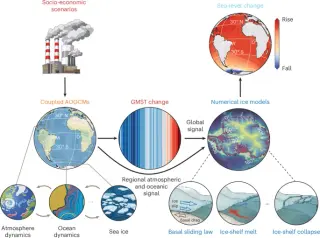
A new study using benthic foraminifera fossils and a physics‑informed deep‑learning model finds Earth’s rotation is slowing at its fastest rate in millions of years due to climate-driven continental‑ocean mass redistribution. From 2000–2020, the length of a day increased by about 1.33 milliseconds per century, the most rapid slowdown since the Late Pliocene. The extra ocean mass near the equator drags on Earth’s rotation, and researchers say by the end of the 21st century climate change could affect day length even more than the Moon, with even millisecond changes impacting precise navigation.

AI uncovers predictable patterns in bacterial evolution
science1 month ago

AI uncovers predictable patterns in bacterial evolution

Researchers analyzed thousands of E. coli genomes and trained a random-forest model to predict whether accessory genes appear based on other genes in the genome. They found reliable predictability for a substantial portion of the accessory genome, with some gene families co‑occurring and others mutually exclusive, suggesting structured evolutionary dynamics beyond random mutation. The work, led by James McInerney, Alan Beavan, and Maria Rosa Domingo-Sananes, has implications for diagnostics, antibiotic resistance surveillance, and the design of genetic constructs, though not all genes are predictable; the full study was published in Proceedings of the National Academy of Sciences (PNAS).

AI-Driven Reboot of Scholarly Publishing
technology1 month ago

AI-Driven Reboot of Scholarly Publishing

Tyler Cowen asks for ideas on how AI should transform academic journals; commenters propose AI-led triage and grading, disclosures of AI use, open-access reforms, machine-readable submissions with supporting artifacts, transparent AI pipelines, auditing, and new funding models, while skeptics caution that AI cannot fully replace human reviewers or authorship, highlighting both opportunities and risks in rethinking scholarly publishing.

AI Pushes Block to Halve Its Workforce, Redefining White-Collar Roles
technology1 month ago

AI Pushes Block to Halve Its Workforce, Redefining White-Collar Roles

A Block machine-learning engineer watched AI tools take on more of his work as the company laid off over 4,000 employees—nearly half its staff. CEO Jack Dorsey framed the cuts as a shift to smaller, AI-enabled teams. The engineer, who anticipated potential redundancy, sees the broader trend as AI-driven layoffs likely to appear in waves across large companies, even as he remains confident in finding new work given strong demand for ML skills; Block offered severance of at least 20 weeks’ pay plus an extra week per year of service.

PSSR2 on PS5 Pro Sets Stage for PS6-Style Visual Leap
technology1 month ago

PSSR2 on PS5 Pro Sets Stage for PS6-Style Visual Leap

Digital Foundry views the PS5 Pro’s second-gen PSSR as delivering a dramatic uplift in image quality (with ray-traced GI and reflections) and a system-level toggle that could upgrade many existing games, potentially extending the cross-gen period; while PS6 is anticipated to bring a larger leap with ML/RT tech from Project Amethyst, the PS5 Pro acts as a testing ground for Sony’s evolving ML/RT pipeline that may carry into the next generation.