
Japanese Game Studios Maintain 97% Staff Retention Amidst Western Layoff Crisis
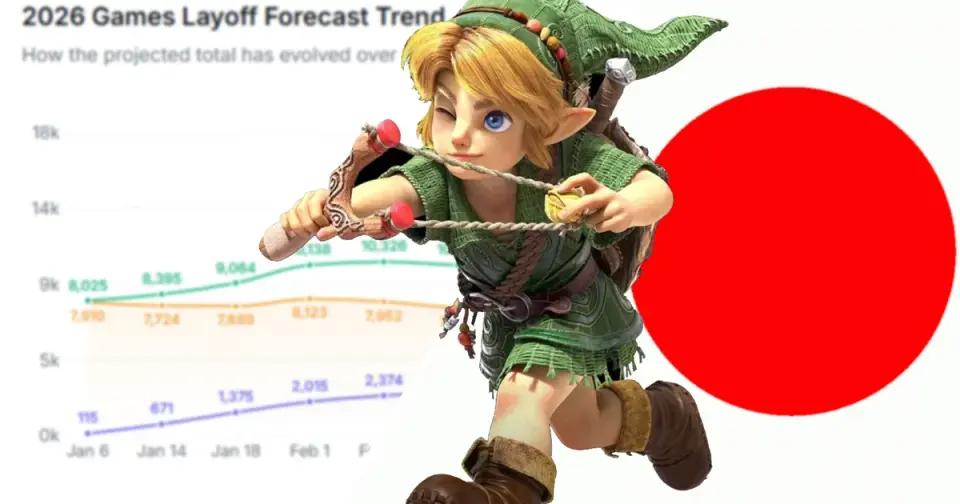
Amir Satvat, creator of the ASGC Games Industry Layoffs Tracker, argues that Japanese studios avoid mass layoffs by maintaining smaller teams, lower executive salaries, and a focus on established IPs rather than live-service trends. While 96% of global game industry job losses in 2026 occurred in North America and Europe, Japanese firms like Nintendo, Capcom, and Konami report staff retention rates exceeding 97%.
Key points
- Amir Satvat, who has tracked game industry layoffs since 2022, states that 96% of all job losses in the sector between 2022 and 2026 occurred in North America and Europe.
- Satvat notes that Japanese studios such as Nintendo, Capcom, and Konami maintain staff retention rates of 97% or higher, contrasting sharply with Western counterparts.
- Japanese studios typically have smaller, leaner teams and avoid the 'live-service' trend and mega-blockbuster models that require 500-person teams, reducing financial risk.
- Executive compensation in Japan is significantly lower than in the West; for example, Nintendo’s president earned $2 million, compared to EA’s CEO Andrew Wilson, who earned $38.6 million last year.
- Satvat compares the current state of the Western game industry to the 1983 crash, noting that over half of global layoffs in a 12-to-18-month period were concentrated in California.
- Despite 57,628 job losses globally between 2022 and 2026, Satvat estimates that 18,000 to 25,000 new jobs are created annually, suggesting the industry is growing modestly overall.
Background
The current wave of layoffs in the video game industry has been described by Epic Games CEO Tim Sweeney as the worst disruption since the 1980s. This instability follows a period of massive investment in AI systems and data centers, which has led to significant job cuts at major Western studios including Microsoft, Take-Two, and Electronic Arts. In contrast, Japanese studios have maintained stability by focusing on smaller teams and lower executive compensation, a strategy that has allowed them to weather the industry's current downturn more effectively than their Western counterparts.
How outlets are covering it
Eurogamer and Kotaku both highlight Satvat's argument that Japanese studios' success stems from smaller teams, lower executive salaries, and a focus on established IPs. GamingBolt adds that Satvat's tracker shows 66% of layoffs between 2022 and 2026 occurred in North America, affecting 79% of the industry's workforce. GamesBeat, however, focuses on the broader question of how studios can avoid layoffs, citing examples of indie studios like Jackbox Games and Rebellion Entertainment that have maintained stability through lean operations and a focus on their own talents and limitations. While Satvat's analysis emphasizes the structural differences between Japanese and Western studios, GamesBeat suggests that there is no single 'secret method' to avoiding layoffs, but rather a combination of factors including pragmatism, portfolio design, and a focus on the studio's own history and purpose.
Why it matters
The stark contrast between Japanese and Western game industry stability highlights the risks of the current Western model, which relies on large teams, high executive compensation, and live-service trends. Satvat's analysis suggests that smaller, leaner teams and a focus on established IPs may be more sustainable in the long run, offering a potential model for Western studios to follow. This is particularly relevant as the industry faces a potential recession, with Satvat comparing the current situation to the 1983 crash. The data also underscores the importance of location and culture in shaping a studio's sustainability, as Western and Eastern studios differ vastly in their approach to layoffs and hiring.
What to watch
Satvat's analysis suggests that the current wave of layoffs in the Western game industry may continue, as the industry faces a potential recession. However, the modest growth in the industry overall, with 18,000 to 25,000 new jobs created annually, suggests that there may be opportunities for growth in certain areas. The focus on smaller teams and lower executive compensation in Japan may offer a model for Western studios to follow, as they seek to avoid the risks of the current model. The industry will likely continue to grapple with the challenges of AI investment and data centers, which have led to significant job cuts at major Western studios. The future of the industry will depend on its ability to adapt to these challenges and find sustainable models for growth.
- Why do Japanese studios suffer fewer layoffs? Because they have smaller teams and don't pay their execs $30m, says one expert Eurogamer.net
- Japanese Studios Have ‘Staff Retention Of 97 Percent' Says Expert kotaku.com
- Tencent Veteran: Japanese Companies Lay Off Less Frequently Due to Compact Teams and Moderate Salaries for Top Executives wnhub.io
- How certain game studios have avoided layoffs | Sustainability lessons for games GamesBeat
- Nintendo, Konami and Capcom Succeeding Thanks to Small Teams, Lower Executive Salaries, Says Analyst GamingBolt
Want the full story? Read the original reporting
Read on Eurogamer.net