
San Francisco Teacher Turns Discarded Cans and Credit Cards into Sustainable Embroidery
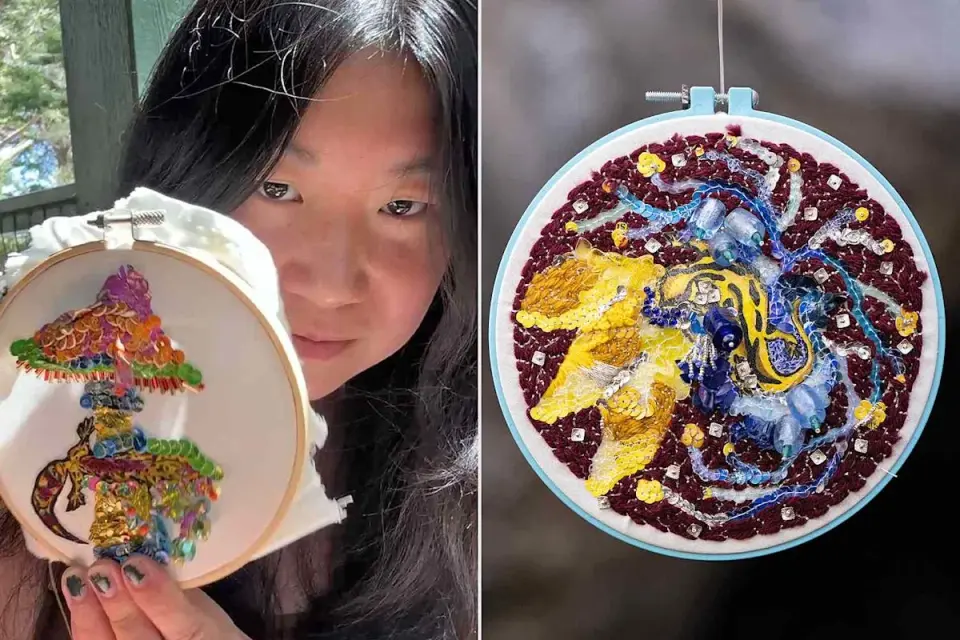
Kaitlyn Kraybill-Voth, a 31-year-old high school physics teacher in San Francisco, has developed a unique artistic practice using repurposed household waste. After failing to find a specific green sequin online, she realized she could create the exact shade and texture using a LaCroix can and hole punches. This accidental discovery led to a broader hobby where she transforms trash, such as cereal boxes, wrappers, and old credit cards, into intricate embroidery pieces. Her work often depicts plants and animals, emphasizing themes of nature and sustainability. Kraybill-Voth documents this process on social media, where she shares techniques for safely cutting materials and explains her philosophy that creation is a political act against mass production. She also integrates these artistic concepts into her physics teaching, aiming to provide students with diverse modalities for demonstrating understanding.
Key points
- Kraybill-Voth creates sequins from discarded items like cans and credit cards using hole punches.
- Her embroidery pieces typically feature natural scenes, plants, and animals.
- She avoids buying new materials, instead scavenging her pantry for specific colors and textures.
- The artist views her work as a political statement against disposability and rapid mass production.
- She incorporates art into her physics curriculum to help students express their learning in different ways.
Background
This story follows a trend of creative reuse in urban environments, similar to the recent reopening of Aperture on the Upper West Side, which emphasizes accessible public art spaces. While unrelated to the tech industry's recent push for branded apparel to mitigate controversy, Kraybill-Voth’s work contrasts sharply with commercial branding by focusing on anti-consumerist, slow-craft aesthetics. Her approach aligns with broader cultural discussions about the environmental impact of waste, distinct from the scientific explanations of natural phenomena like rainbows covered in recent local features.
Why it matters
Kraybill-Voth’s practice offers a practical model for sustainable art, demonstrating how everyday waste can be transformed into intricate textiles. By framing creation as a resistance to capitalist speed and disposability, she provides a tangible example of how individual actions can challenge broader economic systems. Her integration of art into physics education also highlights the value of interdisciplinary learning in modern classrooms.
What to watch
Kraybill-Voth continues to expand her material collection and share tutorials on social media. She may further develop her use of number six plastic as a substitute for Shrinky Dinks in future projects. Her ongoing work aims to refine the safety and aesthetic aspects of using metal and plastic waste in embroidery.
Want the full story? Read the original reporting
Read on Yahoo Lifestyle Canada