Patagonia is selling its Downdrift Vest at a 50% discount, dropping the price from $239 to $119. The vest features a recycled nylon shell and 600-fill-power recycled down, designed for shoulder-season layering. Available in four earthy colors, the item offers durable water repellency without PFAS and includes double-entry pockets. Multiple outlets highlight the deal as a significant value for consumers seeking sustainable outerwear.
eBay’s 2026 Recommerce Report indicates that secondhand shopping is becoming a staple of US consumer behavior, with 81% of Americans buying used goods in the past year, a rate higher than the global average. Affordability and sustainability are the primary drivers, while younger generations lead the trend. The report highlights that resale is not just a budgeting tool but a significant source of supplemental income for many sellers.
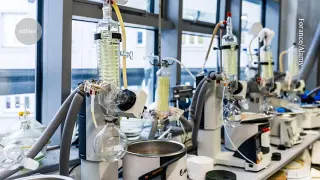
Dirk G. Kurth argues that chemistry is undergoing a fundamental transformation from manual experimentation to automated, data-driven discovery. This shift, which integrates sustainability and other disciplines, is outpacing current educational models. Kurth warns that if universities do not adapt their curricula to reflect these industrial and societal changes, the pipeline of new chemists will continue to decline, threatening the future of the scientific workforce.
The Associated Press reports that a growing number of pickup services are making it easier for households to compost food scraps weekly. These services address the logistical challenges of traditional composting by collecting organic waste directly from homes, thereby increasing participation in sustainable waste management practices.
Miranda Kerr made a surprise runway appearance for Stella McCartney’s Spring/Summer 2027 show in Paris on September 30, 2026, marking her first catwalk walk in nearly nine years. She wore a seafoam green cutout dress with oversized shoulder pads, complementing the collection’s ocean conservation theme. The event featured other veteran models, including Karlie Kloss and Amber Valletta, and highlighted McCartney’s push for sustainable supply chains.
Stella McCartney presented her Spring 2027 ready-to-wear collection in Paris, focusing on ocean conservation and animal welfare. The show featured sea-life motifs and zero-wool materials, while McCartney announced a new industry coalition to scale sustainable fabrics. Jennifer Lopez and Juliette Binoche attended the front row.
Oris has released a new special edition of its iconic Big Crown Pointer Date pilot watch, featuring a burgundy dial and a sustainably sourced deer hide strap from Cervo Volante. Priced at CHF 2,250, the 40mm stainless steel timepiece uses the Oris 754 automatic movement and is part of the brand's 'Change for the Better' sustainability initiative.
A comprehensive analysis of 1.3 million chemical reactions in patents from 1976 to 2016 reveals that the use of hazardous solvents has increased rather than decreased over the past four decades. Despite nearly 30 years of efforts to promote greener alternatives, dangerous liquids like dichloromethane remain the preferred choice for over 70% of reactions in recent years. The study highlights a persistent reliance on petrochemical-derived solvents, even when regulations restrict specific toxic substances, often leading chemists to switch to other hazardous options rather than safer ones.
Google is set to launch its first experimental satellite, part of Project Suncatcher, on October 1 via a SpaceX Falcon 9. The refrigerator-sized device, built by Planet Labs, aims to test if AI hardware can operate in orbit using solar power. While the prototype will only run for 15 minutes at a time, it marks the start of a long-term effort to move data centers into space by the mid-2030s.
General Motors has begun installing battery cells containing recycled materials into new electric vehicles, marking the first time the automaker has used recovered cathode active material in customer-ready cars. The pilot program, conducted with recycling partner Cirba Solutions, processed 80 end-of-life battery packs to produce 12 metric tons of new cathode material composed of 100% recycled nickel, cobalt, and manganese. These cells, validated to meet the same safety and performance standards as virgin materials, are now powering models including the Cadillac Lyriq, Vistiq, and Escalade IQ, as well as the Chevrolet Silverado EV and GMC Sierra EV. GM states that current recycling technologies can recover up to 95% of nickel, cobalt, and manganese, and 80% of lithium, though the pilot specifically focused on the former three metals. This initiative aims to reduce reliance on new mineral extraction, lower battery costs, and support supply chain resilience. While GM’s cells are already in production vehicles, competitors like Porsche are still testing similar recycled materials and plan to integrate them by 2028. The move represents a significant step toward a closed-loop battery lifecycle, complementing GM’s existing second-life energy storage programs with Redwood Materials.
A Frontiers in Space Technologies study estimates that even with optimistic water reserves (about 1 billion tons) and high recycling (around 98%), a city of 1 million on the Moon would exhaust its usable water in about 2.5 years, unless extremely efficient reuse is maintained. A 100,000-person town could last roughly 1,000 years, while the Moon might need water imports from other solar-system sources to support larger populations. The research also warns against a 'gold rush' for lunar ice and emphasizes protecting scientifically valuable polar ices and establishing governance to manage lunar water resources.
Solar power on the Moon could support a million residents, but water is the bottleneck: with optimistic water supplies and high recycling, a 1-million-person Moon city might last a bit over 100 years; given current estimates of far less lunar water, that timescale collapses to only a few years for a large city, while smaller settlements could endure for centuries. Solutions include improved recycling, reduced water use (e.g., vertical farming), importing water, or locating more water beneath the surface.
Fairphone 6 Plus offers a near‑stock Android experience with a newer midrange Snapdragon, 12GB RAM, and a five‑year software lifecycle, all wrapped in highly serviceable hardware with modular back panels and DIY repairability. At $649 in the US, it trades top‑tier performance for longevity, ethical sourcing, and easy part replacements (battery, screen, USB‑C, cameras). It has decent cameras, IP55 dust/water resistance, no wireless charging, and battery life that’s adequate for typical use, making it a compelling value for repair‑minded buyers.
Fairphone’s Gen 6+ is a $650 Android phone built for long life and easy self-repair, featuring around 12 user-replaceable parts, a fully replaceable 6.31-inch OLED display, and a removable battery that staff say should be swapped around year three. The design trades some solidity (it’s thicker and lacks IP6X water resistance and a headphone jack) for maintainability, retaining a microSD slot and physical SIM. RAM is boosted to 12GB, software updates are planned through 2033, and Fairphone emphasizes keeping parts in stock and reducing e-waste over a glamorous but less repairable build. Aimed at DIY users and sustainability-minded buyers, the Gen 6+ is available direct and on Amazon.
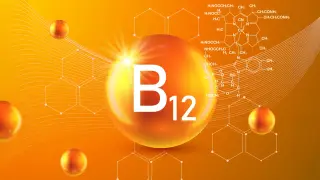
A multinational team used photonic management to grow Spirulina that contains biologically active vitamin B12 at 1.64 µg per 100 g, a level comparable to beef, in carbon-neutral biomass, offering a scalable, sustainable way to address global B12 deficiency, though real‑world scaling and integration remain to be tested.