
BougeRV’s DuneRover: A Motorized Wagon That Conquers Sand and Hills
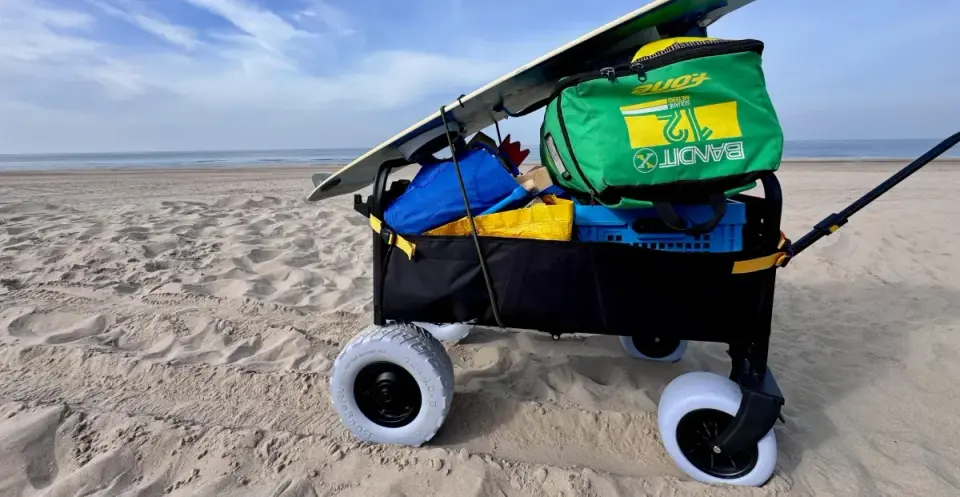
BougeRV’s DuneRover is a remote-controlled, motorized wagon designed for hauling heavy gear over difficult terrain. It features dual 400W motors with 33Nm of torque, allowing it to pull over 200 pounds up hills and through soft sand. While the Kickstarter prototype includes unnecessary animated LED lights and a remote control, the core utility is strong. Early-bird pricing is $467, with production units shipping in February 2027.
Key points
- The DuneRover uses two brushless geared motors, each delivering up to 400W of power and 33Nm of torque.
- It can carry loads exceeding 200 pounds and traverse soft sand that typically stops conventional wagons.
- The wagon includes a handle trigger for speed control and a remote control for wireless operation.
- Animated LED light bars are on by default but can be disabled via an app, though they reset upon restart.
- Kickstarter early-bird pricing is $467, compared to an eventual retail price of $899.
- Production units are scheduled to ship in February 2027.
Background
The Verge’s Thomas Ricker tested a Kickstarter prototype of the DuneRover, noting that while the device is absurd in its remote-control and lighting features, it excels in practical utility. The article frames the product as a risk assessment for backers rather than a final review, given the prototype status. No prior archive articles cover this specific product, but the broader context of outdoor gear and electric mobility remains relevant.
Why it matters
The DuneRover addresses a niche but real problem for outdoor enthusiasts: hauling heavy gear over uneven terrain. By combining motorized assist with remote control, it offers a solution that traditional wagons cannot. Its high price point and prototype status require careful consideration, but its performance in sand and on hills demonstrates significant utility for camping and beach trips.
What to watch
Backers can secure early-bird pricing of $467 through the Kickstarter campaign. Production units are expected to ship in February 2027. The Verge will likely provide a full review once production models are available, offering a more definitive assessment of the product’s long-term reliability and design refinements.
Want the full story? Read the original reporting
Read on The Verge