
gadgets21.655 min read
Prime Day Discounts Offset Recent Hikes on Amazon’s 2024 Kindle Paperwhite
1 day ago•Source: The Verge

The latest gadgets stories, each synthesized from multiple sources with added background and context.
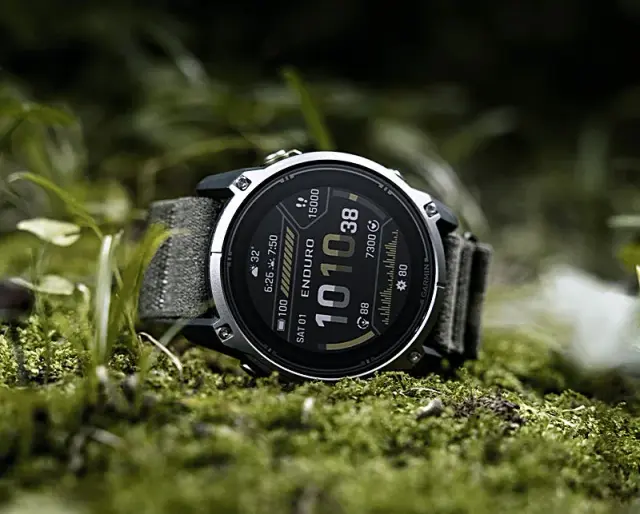
The Garmin Enduro 4 is a new rugged smartwatch that shares core training and navigation features with the Fenix 9 Pro Solar but offers significantly longer battery life and a lighter weight. It costs less but lacks phone call, voice command, and dive computer features found on the Fenix 9 Pro Solar.

The Verge•2 days ago
The Verge•3 days ago

The OhSnap Wallet 2 is a modular, lever-action card wallet that attaches magnetically to phones. It features a spring-loaded lever to fan out cards and a tool-free compliant mechanism for swapping cores and plates. Available on Kickstarter, it offers 3, 5, or 7-card configurations but faces criticism for weight and price.

Samsung announced the Galaxy SmartTag 3, a compact item tracker that is 35% smaller and 33% lighter than its predecessor. Priced at $29.99, it features a CR2032 battery lasting up to 790 days in power-saving mode. The device introduces cross-OS compatibility, working with both Samsung Android and iOS devices, and utilizes Bluetooth 6.0 for detection up to 60 meters away. It launches in South Korea on October 7, 2026, with a US release in November.

Cricut has launched the StickerPix Print and StickerPix Print + Cut, two compact devices designed to print, laminate, and cut custom stickers and photos. Priced at $169 and $299 respectively, the machines use dye-sublimation technology to produce water-resistant, scratch-proof outputs. The larger model features a built-in cutter for custom shapes, while the smaller model relies on pre-cut sheets. Both integrate with the free Cricut Design Space app, targeting hobbyists, small business owners, and Etsy sellers looking for an affordable, space-saving alternative to professional print shops.

Vivo unveils the X500 trio in China, led by the X500 Pro Max with Sony’s LOFIC-based LYTIA L910 sensor delivering 17 EV of dynamic range, plus a 200MP X300 Ultra telephoto and a 400mm teleconverter; powered by MediaTek’s 2nm Dimensity 9600 Pro, it records 4K at 240fps slow-motion and runs OriginOS 7 on OLED displays from 6.36" to 6.85" with 6510–8000mAh batteries; a global launch is planned later.

Beats’ 360 over-ear wireless headphones are gym-focused, IPX4 sweat resistant, lighter than AirPods Max 2, and highly customizable with swappable headband and cushions. Priced at $349, they weigh about 260g and promise up to 32 hours of battery with ANC. They use Beats’ own audio platform with dual neodymium drivers and nine mics, include ANC, Transparency, hands-free Siri, fast device switching, adaptive EQ, and spatial audio support, and launch on Sept. 24 with over 250 customization combos. Early hands-on impressions are positive, but real gym testing will determine performance.

Oppo today announced the Find X10 Pro Max in China, the first phone to use 200-megapixel sensors on all three rear cameras, with Oppo’s DeepPix sensor technology delivering a 17-stop dynamic range for the main camera. The triple camera array sits in a square module with Hasselblad branding, while the regular Find X10 uses a similar design but with a 50MP ultrawide. The Pro Max is powered by MediaTek’s Dimensity 9600 Pro (9600M in the base Find X10), has an 8,000mAh battery, IP69 ratings, and customizable photography profiles, and Oppo says the Find X10 Pro Max will eventually launch internationally.

After the iPhone 18 Pro lineup hits shelves, leaks suggest the iPhone 20 Pro and 20 Pro Max will feature a quad‑curved glass design with slimmer bezels and slightly larger displays (6.4" and 6.96"), a smaller Dynamic Island, and a continued push toward an all‑screen aesthetic. Pricing is anticipated to sit above today’s 18 Pro/Pro Max but below the rumored iPhone Duo, with notes on under‑display components remaining uncertain and no iPhone 19 Pro expected, echoing Apple’s skip of iPhone 9 in the past.

A small round of layoffs at Apple Fitness+ affecting Time to Walk and Time to Run fuels rumors that Fitness+ features could be consolidated into the Health app, as part of broader health-strategy changes led by Eddy Cue. Apple has reportedly revisited plans for an AI-powered health coach codenamed Mulberry, and the Health app has been revamped in the iOS 27.2 beta, suggesting a shift toward integrating fitness guidance within Health.

Bose is returning to open-ear wireless buds with two new models: the Ultra Open Earbuds (2nd Gen) at $299 featuring a new driver for deeper bass and higher volume, plus SpeechClarity, Auto Volume, Cinema mode, a refreshed metal design, a wireless‑charging case, and a 9‑hour battery; and the Sport Open Earbuds at $199, a sport-focused variant with IP54, a snug C-shaped fit, 7‑hour battery, and the same SpeechClarity and Auto Volume. Preorders begin Sept 19 with availability on Oct 1; color options include limited editions (Ultra: cherry chocolate, olive green, sky pink) and Sport (eucalyptus green) alongside black or white smoke.

Apple’s M6 Mac mini launches at $900 with three Thunderbolt 4 ports and built‑in neural accelerators that Apple says deliver up to five times the AI throughput of the M4, but real on‑device AI may still require the pricier M5 Pro (three Thunderbolt 5 ports, from $1,700) and even clustering Macs to pool memory. Rival mini PCs from Asus, Lenovo, and Acer tout bigger AI hardware and higher price tags, signaling a new, costly arms race for local AI.