
Remedy’s Control: Resonant Rejects Yellow Paint to Force Player Autonomy
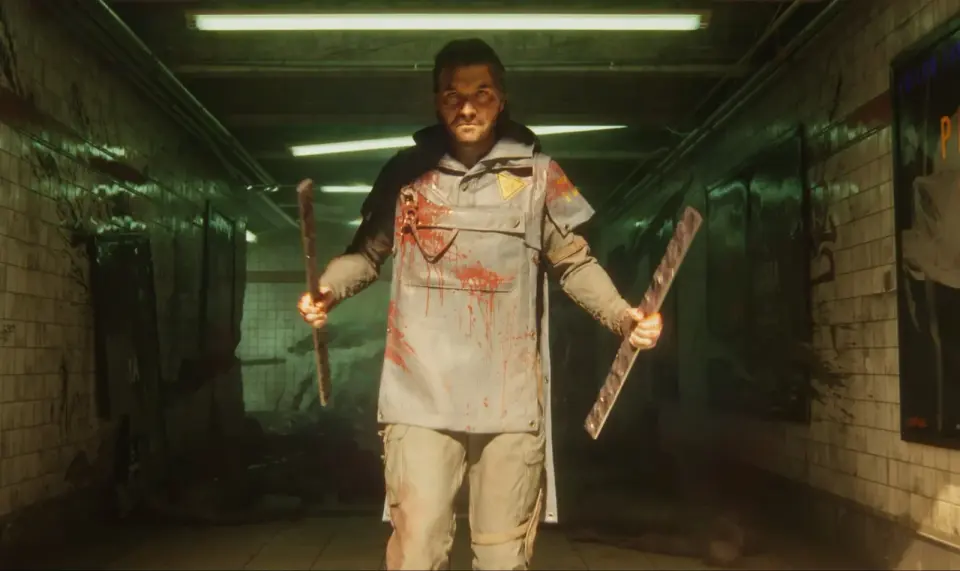
Remedy Entertainment’s director Mikael Kasurinen confirmed that the absence of yellow paint markers in Control: Resonant was a deliberate design choice. The game avoids traditional visual cues for climbable areas and objectives to prioritize player autonomy, forcing users to actively interpret the environment rather than following explicit instructions. Kasurinen argues that this approach, while risky, creates a more engaging experience where players feel responsible for their own navigation decisions.
Key points
- Director Mikael Kasurinen stated on the Dropping Frames podcast that avoiding yellow paint was a 'conscious decision' to preserve player autonomy.
- The game uses lighting and in-world props instead of bright markers to guide players through its open-world Manhattan setting.
- Kasurinen believes explicit markers remove decision-making from the player, whereas ambiguity encourages active participation and exploration.
- The design philosophy aims to make players question their choices and return to check for missed content, enhancing long-term engagement.
- This approach contrasts with the industry trend of using yellow paint to reduce frustration, though Kasurinen acknowledges it may initially alienate some players.
Background
Control: Resonant launched on September 24, 2026, as an open-world action RPG sequel to the 2019 title Control. The game received strong critical reviews, with Metacritic scores of 84 on PS5 and 83 on PC. Following launch, Remedy addressed combat balance issues with a day-one hotfix and announced a post-launch roadmap including a New Game++ mode in October and a photo mode in November. The game features a protagonist switch to Dylan Faden and utilizes gravity anomalies in a warped Manhattan setting.
How outlets are covering it
Kotaku highlights Kasurinen’s emphasis on player autonomy and the desire for players to feel like they are 'figuring out' the world, noting that this approach may make the game feel 'impenetrable' to some. Game Developer frames the decision within the broader context of the 'yellow paint' controversy, noting that while the practice is often criticized, many players have come to rely on it for navigation. Game Developer also points out that Remedy uses consistent gravity cues and environmental storytelling to replace traditional signposting, ensuring the world remains navigable without explicit markers. Both sources agree that the decision was deliberate, but Game Developer provides more context on the industry-wide debate surrounding the technique.
Why it matters
The decision to avoid yellow paint in a major open-world title reflects a growing tension in game design between accessibility and player agency. As open-world games become more complex, developers must balance guiding players with allowing them to explore freely. Remedy’s approach challenges the industry norm, suggesting that ambiguity and active participation can lead to a more satisfying and memorable experience, even if it risks frustrating some players.
What to watch
Remedy Entertainment has announced a post-launch roadmap for Control: Resonant, including a New Game++ mode in October and a photo mode in November. The studio will likely monitor player feedback regarding navigation and difficulty, potentially adjusting guidance systems in future updates if the lack of yellow paint proves too alienating for a significant portion of the player base.
Want the full story? Read the original reporting
Read on Kotaku