
WiCi One: A Wireless eGPU Using Wi-Fi 7 for Local AI and Gaming
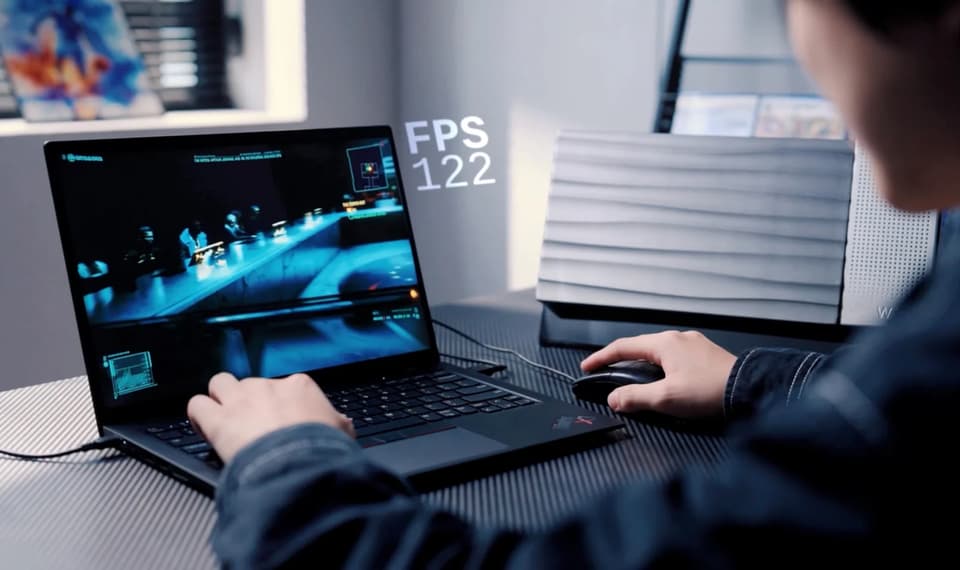
California-based WiCi has launched the WiCi One, a wireless external GPU (eGPU) enclosure that connects to host devices via Wi-Fi 7 rather than traditional cables like Thunderbolt or OCuLink. The device features an NVIDIA RTX 5060 Ti, an Intel Core Ultra 7 255H processor, and 4TB of NVMe storage. While marketed for high-framerate gaming, WiCi emphasizes its utility for local AI inference and 3D rendering, where latency is less critical. The RTX 5060 Ti version is priced at $2,599, with an early sign-up rate of $1,999, while a more powerful RTX 5090 variant is planned but lacks a set price. A developer preview is expected in Q4 2026.
Key points
- The WiCi One uses Wi-Fi 7 with a 4x4 MIMO radio, 320 MHz channel width, and 4096-QAM, offering a theoretical maximum throughput of 11.5 Gbps, significantly lower than Wi-Fi 7's peak of 46.1 Gbps.
- The base model includes an NVIDIA RTX 5060 Ti with 16GB GDDR7, an Intel Core Ultra 7 255H CPU, and 4TB of PCIe 5.0 NVMe storage to support local AI model weights.
- WiCi claims the device can achieve 80 FPS in Cyberpunk 2077 at 4K Ultra with DLSS 4 and 60 FPS in Black Myth: Wukong at 4K Cinematic, though no latency metrics were provided.
- The system presents the remote GPU to the host as a local device via a virtual GPU driver, supporting Windows, macOS, and Linux, rather than streaming video.
- The RTX 5060 Ti version is priced at $2,599 (early sign-up: $1,999), while the RTX 5090 version is unpriced and expected later.
- A developer preview is scheduled for Q4 2026, with no confirmed final release date or international pricing.
Background
The eGPU market has recently seen advancements in wired connectivity standards such as Thunderbolt 5, OCuLink, and MCIO 8i, which offer higher bandwidth than previous generations. WiCi’s approach diverges from these by eliminating physical data cables entirely, relying on Wi-Fi 7. This contrasts with traditional eGPUs that suffer from performance penalties due to bandwidth limitations, even with high-speed cables. The move aligns with a broader trend of integrating Wi-Fi 7 into consumer electronics, as seen in recent Apple TV refreshes, but applies it to a niche, high-bandwidth use case.
How outlets are covering it
TechPowerUp highlights the technical limitations of Wi-Fi 7 for eGPUs, noting that the 4x4 radio configuration caps throughput at 11.5 Gbps, which may bottleneck the RTX 5060 Ti. PCMag questions the practicality of wireless gaming due to latency and range issues, suggesting the device is better suited for AI inference where only prompts and responses are transmitted. Tom’s Hardware emphasizes the virtual GPU driver that makes the remote card appear local to the host, while tbreak.com notes the lack of UAE pricing and the Q4 2026 developer preview. Commenters on TechPowerUp express skepticism, arguing that Wi-Fi is half-duplex and that the Intel Core Ultra 7 255H may bottleneck the RTX 5090 in the higher-end model.
Why it matters
The WiCi One challenges the traditional eGPU paradigm by removing the need for physical data cables, potentially making high-end GPU performance accessible to thin laptops and tablets without the hassle of Thunderbolt or OCuLink connections. While gaming performance may be limited by Wi-Fi 7’s bandwidth and latency, the device’s focus on local AI and 3D rendering could make it a viable solution for users who need GPU acceleration for non-latency-sensitive tasks. The high price point and unproven real-world performance, however, remain significant barriers to adoption.
What to watch
Watch for the Q4 2026 developer preview to assess real-world latency and performance. Monitor the release of the RTX 5090 variant and its pricing. Track whether WiCi expands availability beyond the US and if the virtual GPU driver gains traction in the developer community.
- Wici Wireless eGPU Promises RTX 5060 Ti and 5090 Performance Over Wi-Fi 7 TechPowerUp
- First Wireless eGPU Could Turn Any Wi-Fi 7 PC Into a Gaming Laptop PCMag
- New wireless Wi-Fi 7 external GPU enclosure comes with a built-in 4TB SSD for local AI — $1,999 box leverages WiFi 7 to present a remote card as local Tom's Hardware
- WiCi One wireless eGPU uses Wi-Fi 7 for laptops tbreak.com
- First wireless eGPU with RTX 5060 Ti set to ship this year, Cyberpunk 2077 demo shown VideoCardz.com
Want the full story? Read the original reporting
Read on TechPowerUp