
Akai Teases SampleKey: A Keyboard Sampler with Open Firmware to Counter Behringer
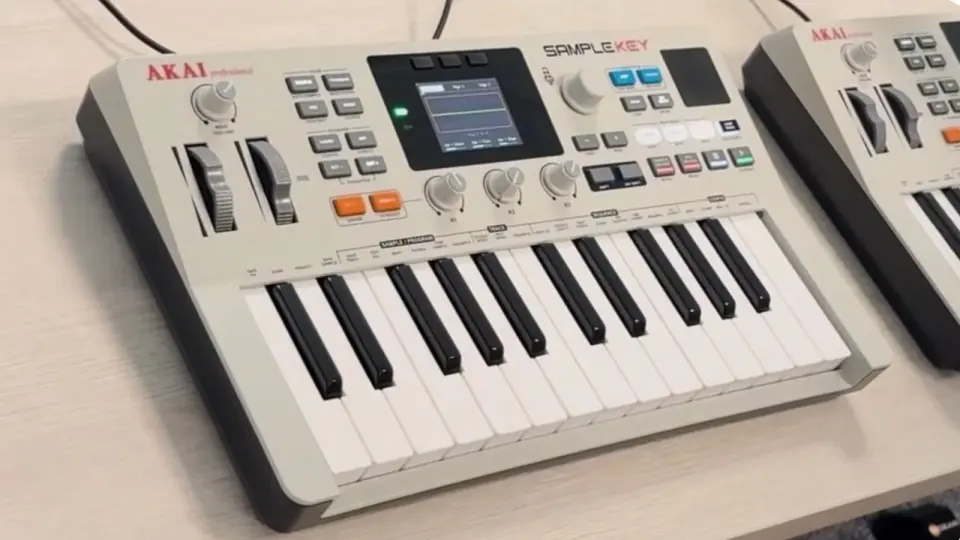
Akai has teased the SampleKey, a compact keyboard sampler that serves as a sibling to the MPC Sample. The device features a two-octave keyboard, pitch and mod wheels, and a central display, but notably lacks the MPC’s performance pads. Its defining feature is open firmware, allowing users to modify the system via AI-assisted 'vibe coding' to create custom synthesizers or samplers. Akai confirmed that the existing MPC Sample will also receive open firmware updates. This move follows the recent announcement of Behringer’s Kick, a low-cost sampler with open-source firmware, suggesting a broader industry shift toward community-driven hardware customization.
Key points
- The Akai SampleKey is a keyboard-based sampler with a two-octave keybed, pitch/mod wheels, and a central screen, replacing the MPC Sample’s pad grid.
- Akai is opening the firmware for both the SampleKey and the MPC Sample, allowing users to install custom sound engines like FM, wavetable, and virtual analog synths.
- The company is embracing 'vibe coding,' where users use AI tools to write custom code for the hardware, potentially turning the device into a granular sampler or groovebox.
- No official price or release date has been announced, though the device is expected to be similarly priced to the MPC Sample.
- The announcement follows the release of Behringer’s Kick, a $150 sampler with open-source firmware, which some view as a direct competitor to Akai’s MPC line.
Background
In October 2026, the music hardware industry saw a surge in custom firmware development, driven by AI coding tools. This trend began with budget devices like the M-Vave FM-1 and expanded to higher-end gear. Akai’s move to open its firmware aligns with this shift, following earlier leaks of MPC firmware updates and the recent launch of Behringer’s open-source Kick sampler.
How outlets are covering it
Synth Anatomy and Gearnews.com emphasize the SampleKey as a direct response to Behringer’s Kick, highlighting the competitive tension between the two companies. MusicRadar notes that while Akai is opening firmware, it is unclear if the source code will be fully public or if modding will be limited to provided tools. The Verge reports that inMusic CEO Jack O’Donnell confirmed plans to seed early devices to developers and provide an SDK, suggesting a more structured approach to community involvement. Commenters on Synth Anatomy and Gearnews.com express excitement about the potential for custom synths but raise concerns about the lack of step sequencer buttons and the practicality of keyboard-only sampling for certain genres.
Why it matters
Akai’s decision to open its firmware marks a significant shift in the music hardware industry, moving away from closed, manufacturer-controlled systems toward community-driven customization. This could democratize hardware development, allowing users to tailor devices to their specific needs, and may influence other manufacturers to adopt similar open-source strategies. It also highlights the growing role of AI in music technology, enabling users to create complex software without traditional programming skills.
What to watch
Akai is expected to release more details on the SampleKey, including pricing, release date, and the extent of firmware openness. The company may also announce plans for open firmware on other MPC products. The music tech industry will likely see further adoption of open-source and AI-assisted firmware as manufacturers compete to attract the modding community.
- Akai SampleKey: the keyboard sampler sibling of the MPC Sample with open firmware synth anatomy
- Akai kicks back? Sample Key teaser lands a day after Behringer's open-source Kick MusicRadar
- Akai is embracing vibe-coded mods with an open-source MPC The Verge
- Akai opens its MPC Sample sampler to the community for custom firmwares synth anatomy
- AKAI Sample Key: The MPC Sample Gets a Keyboard and Surprise! It’s Open Source! Gearnews.com
Want the full story? Read the original reporting
Read on synth anatomy