
Citizen Scientist Captures Rare Risso’s Dolphin Feeding on Octopus Off Devon
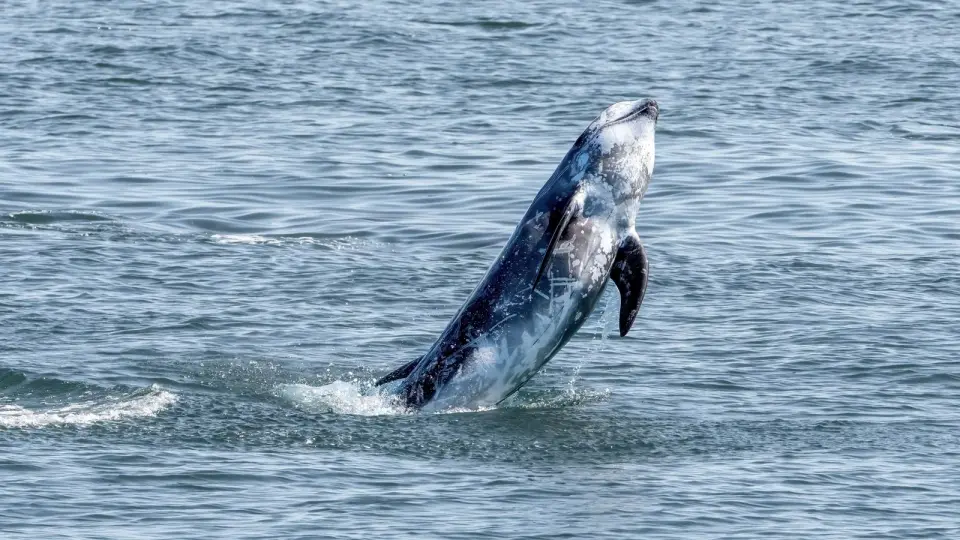
A UK photographer documented a Risso’s dolphin consuming an octopus off Devon, providing critical data for research into local marine ecosystem changes.
Key points
- Bill Coulson, a volunteer with the University of Exeter’s Risso’s Dolphin Project South West, photographed a Risso’s dolphin (Grampus griseus) feeding on an octopus near Berry Head, Devon.
- The images show the octopus straddling the dolphin’s dorsal fin, a behavior that offers insight into the species’ feeding ecology.
- The Marine Biological Association is using these photos as evidence to study an ongoing octopus bloom and its impact on marine life in Devon and Cornwall.
- Risso’s dolphins are identified by their bulbous foreheads, lack of beaks, and scarred skin that turns white with age; they are more common in Scotland but occasionally seen in South West England.
- University of Exeter researcher Josh Symes noted that such citizen science observations help build a clearer picture of marine wildlife across the region.
Background
This incident highlights the growing role of amateur photographers in marine conservation. While our archive notes unrelated wildlife photography events, such as the 2026 capture of a staged Air Force One exit or rare bird behaviors, this specific case focuses on data collection for ecological research rather than news or sports. The focus here is on the scientific value of citizen science in tracking changes in marine environments, specifically the octopus population dynamics in the UK’s South West.
Why it matters
The images provide tangible evidence for researchers studying the impact of an octopus bloom on local marine ecosystems. By documenting the feeding habits of a rarely seen species like the Risso’s dolphin, citizen scientists contribute to a broader understanding of how changing marine environments affect predator-prey dynamics in the UK’s South West.
What to watch
Researchers will continue to analyze the photographic evidence to assess the scale of the octopus bloom and its effects on marine life in Devon and Cornwall. The University of Exeter’s Risso’s Dolphin Project South West will likely use these findings to inform conservation strategies and further study the feeding ecology of the species in the region.
Want the full story? Read the original reporting
Read on Digital Camera World