Tag

Citizen Science

All articles tagged with #citizen science

Humpbacks perform rare 'gape' display as migration begins
science15 days ago

Humpbacks perform rare 'gape' display as migration begins

Off Western Australia, a humpback was filmed performing a rare 'gape' display—jaw wide, fins sweeping—likely a social signal or calf-stretch rather than feeding. Macquarie University researchers, drawing on 66 crowd-sourced videos, suggest gaping is a distinct behavior revealed through citizen science, not a feeding move. As humpbacks begin their annual migration, experts urge observers to keep distance to protect whales amid increased coastal activity and risks like entanglements.

Volunteer-Powered Search Doubles Brown Dwarf Census with 3,000 New Discoveries
science20 days ago

Volunteer-Powered Search Doubles Brown Dwarf Census with 3,000 New Discoveries

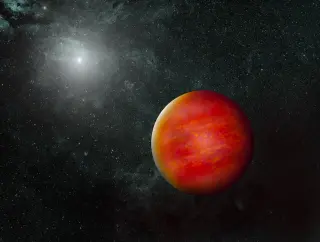
NASA’s Backyard Worlds: Planet 9 volunteers have essentially doubled the known population of brown dwarfs, adding more than 3,000 discoveries over the last decade from WISE/NEOWISE data via the Zooniverse platform. About 200,000 volunteers contributed, with 61 co-authors among the 75 authors, uncovering rare objects such as extreme T subdwarfs and possible aurorae, improving maps of the galaxy’s mass distribution while the search continues through billions more sources.

Public Invited to Map the Cosmos by Finding Gravitational Lenses in Euclid Data
science29 days ago

Public Invited to Map the Cosmos by Finding Gravitational Lenses in Euclid Data

The European Space Agency’s Euclid survey has released a massive data set (about 72 million galaxies, roughly 30 times larger than earlier) and invites the public to help identify gravitational lenses via the Space Warps citizen-science project. AI has pre-selected around 300,000 candidate images, but human inspection remains key to spotting the subtle arcs and rings. The goal is to discover more than 10,000 new lenses, with early results from just 0.04% of the data yielding 500 lenses, enabling scientists to measure total mass (including dark matter) and study cosmic expansion. No physics degree is required—just curiosity.

Euclid Lens Hunt Invites the Public to Map Dark Matter with Space Warps
space-science1 month ago

Euclid Lens Hunt Invites the Public to Map Dark Matter with Space Warps

The European Space Agency’s Euclid telescope is powering a new citizen-science project on Zooniverse called Space Warps, enlisting volunteers to identify strong gravitational lenses in Euclid’s high‑quality images. This work helps study dark matter, dark energy, and cosmic expansion, with around 300,000 AI‑preselected images guiding the search and the team expecting to uncover more than 10,000 new lens candidates from Euclid Data Release 1.

Koblenz Fireball Triggers Meteorite Hunt Across Germany
science2 months ago

Koblenz Fireball Triggers Meteorite Hunt Across Germany

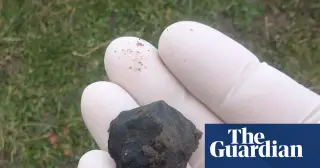
A bright fireball over western Germany near Koblenz exploded and showered space rocks; scientists and citizen scientists pieced together the meteorite's likely trajectory using hundreds of eyewitness reports and KIT seismic data, while German law generally lets you keep meteorites unless they’re of special value; NASA estimates around 44,000 kg of meteoritic material reaches Earth daily, mostly micrometeorites.

Milky Way Runaway: 1-Million-MPH Hypervelocity Object Identified by Citizen Scientists
space2 months ago

Milky Way Runaway: 1-Million-MPH Hypervelocity Object Identified by Citizen Scientists

Citizen scientists in NASA's Backyard Worlds project identified CWISE J124909.08+362116.0 traveling at about 1 million miles per hour, fast enough to escape the Milky Way. Its nature is unclear, likely a brown dwarf or low-mass star, possibly ejected by a white-dwarf supernova or a close encounter in a globular cluster. The discovery, reported in Astrophysical Journal Letters, underscores the power of crowdsourced science using NASA's WISE data.

Rolling-meadow giant: citizen scientists uncover one of the reef's largest coral colonies
science2 months ago

Rolling-meadow giant: citizen scientists uncover one of the reef's largest coral colonies

Citizen scientists identify a Pavona clavus coral off Cairns spanning about 111 meters and covering roughly 3,973 square meters, potentially making it one of the reef’s largest colonies. Genetic testing is needed to confirm if it is a single organism or multiple close colonies, with size mapped via photogrammetry and implications for reef resilience.

Citizen scientists uncover world’s largest coral colony off Australia
science3 months ago

Citizen scientists uncover world’s largest coral colony off Australia

A mother-daughter team with Citizens of the Reef identified the world’s largest known coral colony on the Great Barrier Reef—a Pavona clavus spanning about 111 meters and covering roughly 3,973 square meters—verified by underwater measurements and a 3D model; the exact location isn’t released to protect the site, and the find underscores the value of citizen science in reef monitoring amid ongoing bleaching.

Citizen Scientist Discovers Earth-sized Exoplanet, Paving Way for Next-Gen Telescopes to Study It
science3 months ago

Citizen Scientist Discovers Earth-sized Exoplanet, Paving Way for Next-Gen Telescopes to Study It

A citizen scientist analyzing Kepler data identified an Earth-sized exoplanet, HD 137010b, orbiting a nearby K-dwarf star HD 137010 (about 146 light-years away). The discovery, made by Alexander Venner, was noted for having been missed by automated searches and will guide upcoming telescope campaigns (ESA’s PLATO and Terra Hunting Experiment) to scrutinize a potentially habitable world.

Scientists Discover the Most Powerful and Distant Odd Radio Circle Yet
science7 months ago

Scientists Discover the Most Powerful and Distant Odd Radio Circle Yet

Astronomers have discovered the most powerful and distant odd radio circle, RAD J131346.9+500320, which features two overlapping rings spanning a million light-years, likely caused by black hole activity or galactic mergers. This discovery highlights the importance of human pattern recognition in analyzing vast astronomical data, with citizen scientists playing a key role. Future telescopes like SKA aim to uncover more such structures, deepening our understanding of galaxy evolution.