
FAA clears Dream Chaser for 2027 debut after environmental review
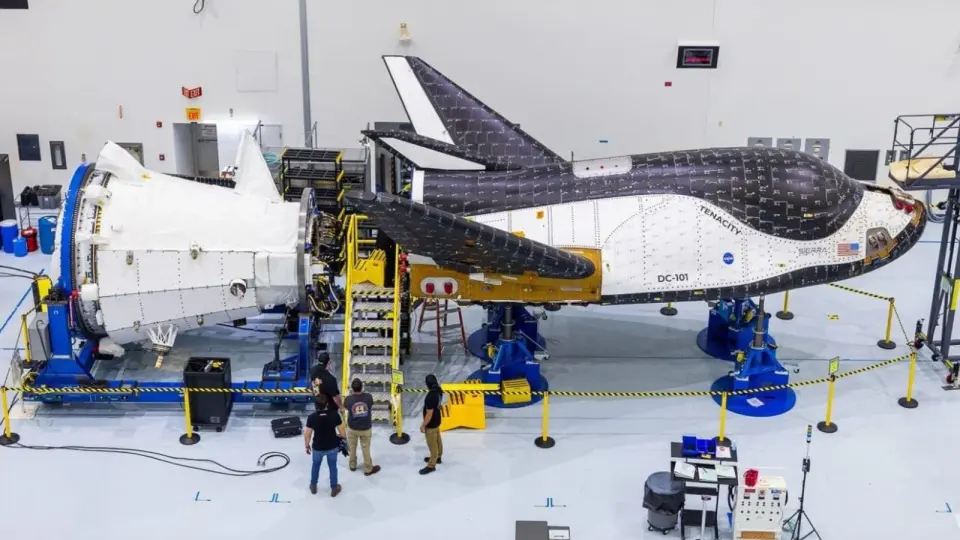
Sierra Space’s Dream Chaser spaceplane has received Federal Aviation Administration (FAA) approval to land at Vandenberg Space Force Base and NASA’s Kennedy Space Center. This regulatory milestone paves the way for the vehicle’s first orbital mission, a free-flying test in low Earth orbit, targeted for spring 2027. The approval follows an environmental assessment confirming that sonic booms from reentry would be temporary and limited in intensity. The 30-foot-long spacecraft, named 'Tenacity,' has been in development for over two decades and previously missed its scheduled launch on the Vulcan Centaur rocket in October 2024 due to readiness delays.
Key points
- FAA approved Dream Chaser for reentry and landing at Vandenberg Space Force Base and Kennedy Space Center.
- The first orbital mission is a free-flying test in low Earth orbit scheduled for spring 2027.
- Environmental review found no significant impact, noting sonic booms would be brief and comparable to thunder.
- The vehicle, named 'Tenacity,' can carry 12,100 pounds of cargo to orbit and return 4,080 pounds.
- Sierra Space is pursuing contracts with NASA, the U.S. military, and private commercial space station partners.
Background
Dream Chaser was originally part of NASA’s Commercial Crew program but was not selected for crewed missions in 2014, leading to a pivot toward cargo delivery. In 2016, NASA selected the program for uncrewed resupply flights to the International Space Station, but development delays repeatedly pushed these missions back. The vehicle transitioned from the Atlas V to the Vulcan Centaur rocket. A previous attempt to launch on Vulcan’s second mission in October 2024 failed due to the spaceplane’s lack of readiness. Our archive notes that the FAA recently issued a five-year vehicle operator license, confirming Vandenberg as the primary landing site and replacing earlier plans to use Kennedy Space Center exclusively.
How outlets are covering it
Space.com and UA.News emphasize the regulatory and environmental aspects of the FAA approval, highlighting the 'no significant impact' finding and the specific metrics for sonic booms. Yahoo focuses on the engineering capabilities of the spaceplane, specifically its ability to return experiments intact via runway landing rather than ocean recovery. SpaceNews provides a brief confirmation of the reentry license. All sources agree on the spring 2027 timeline for the debut mission, though Space.com and UA.News provide more detail on the historical delays and the switch to the Vulcan Centaur rocket. The outlets differ in emphasis, with Yahoo focusing on technical specs and Space.com/UA.News on the regulatory and historical context.
Why it matters
This approval is a critical step for Sierra Space’s commercial spaceflight ambitions, allowing Dream Chaser to serve NASA, the U.S. military, and private companies like the Orbital Reef consortium. It demonstrates the FAA’s continued support for commercial space innovation despite recent political pressures to bypass environmental laws. The successful debut in 2027 would validate the spaceplane’s design after two decades of development and missed opportunities, potentially opening new markets for cargo delivery and scientific experiments in low Earth orbit.
What to watch
Sierra Space is targeting spring 2027 for the first free-flying test mission in low Earth orbit. The company is actively pursuing contracts with various entities, including NASA and private commercial space station developers. The FAA’s approval allows for up to four reentries annually, facilitating a potential increase in mission frequency once the vehicle is operational. Future missions will likely involve a mix of government and commercial payloads, leveraging the spaceplane’s ability to return large amounts of cargo to Earth.
- Dream Chaser space plane gets landing approval for debut mission in 2027 Space
- Sierra Space gets FAA reentry license for Dream Chaser SpaceNews
- This Spaceplane Could Bring Experiments Back From Space in One Piece Yahoo
- US FAA approves Dream Chaser’s return to Earth in 2027 — Space.com UA.NEWS
- FAA approves Dream Chaser spaceplane for landing heise online
Want the full story? Read the original reporting
Read on Space