
space-exploration6.23 min read
Juice Slingshots Past Earth, Gaining Speed for Jupiter Mission
4 days ago•Source: The Times of India

The latest space exploration stories, each synthesized from multiple sources with added background and context.
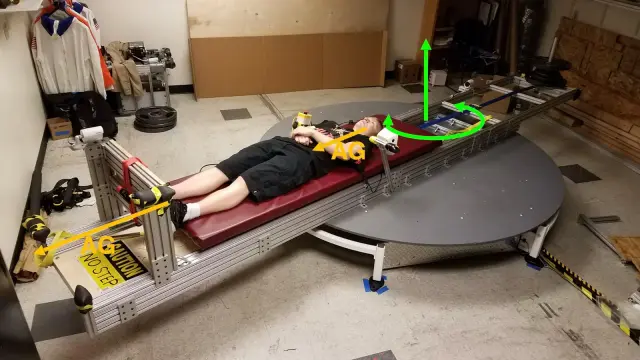
While microgravity poses severe health risks for astronauts, creating artificial gravity on spacecraft remains technically feasible but historically hindered by budget cuts. Experts note that while the engineering is possible, sustained funding is the primary barrier to implementation.

Space•8 days ago
Live Science•14 days ago

NASA’s Curiosity rover has completed its 5,000th Martian day, or sol, after landing in August 2012. To mark the milestone, the rover captured a panoramic 'postcard' from the 'Chocolatal' ridge near Mount Sharp, combining morning and evening images. The rover has traveled over 23.6 miles, climbed 1 kilometer up the mountain, and collected 42 rock samples. Recent findings include rare elemental sulfur crystals, an iron-nickel meteorite named 'Cacao,' and evidence of ancient habitable environments, though definitive proof of life requires sample return.
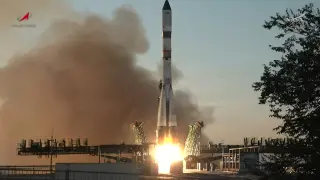
Russia launched the Progress 96 cargo freighter atop a Soyuz rocket from Baikonur today, delivering roughly 3 tons of food, propellant, and supplies to the International Space Station. The three-day rendezvous is expected to bring the freighter to the ISS within about 72 hours, after which it will stay docked for roughly five months before being deorbited over the Pacific. Progress 96 joins other ISS cargo vehicles in ongoing resupply and trash-collection missions.
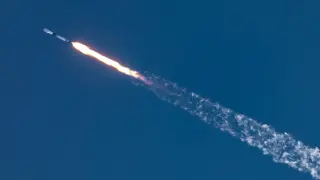
SpaceX will launch a classified US Space Force mission (USSF-153) from Vandenberg with a Falcon 9; the payload is undisclosed and may include Starshield satellites; the booster is expected to land on a drone ship in the Pacific about 8.5 minutes after liftoff. This flight marks SpaceX’s 104th Falcon 9 launch in 2026 and the 27th flight for this particular booster, while Starlink continues to grow with more than 11,000 active satellites.
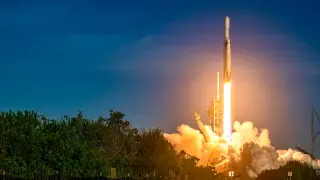
NASA’s Nancy Grace Roman Space Telescope has kicked off its mission commissioning at the sun–Earth L2 point after a Aug. 30 launch aboard SpaceX’s Falcon Heavy. The spacecraft has deployed its solar panels and high-gain antenna, and teams have begun powering on and calibrating the Coronagraph Instrument as the system checks continue, with first science operations expected to start after weeks of checkout and first images anticipated in January 2027 to study dark energy and discover exoplanets.
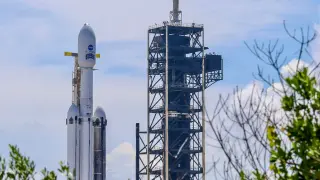
Space.com provides live updates as NASA's Nancy Grace Roman Space Telescope is scheduled to launch on Aug. 30 at 7:26 a.m. EDT atop SpaceX's Falcon Heavy from Cape Canaveral's LC‑39A, aiming to study dark energy and exoplanets and to reach the Sun–Earth L2 point, with prelaunch briefings and weather reviews underway ahead of liftoff and subsequent checkout.
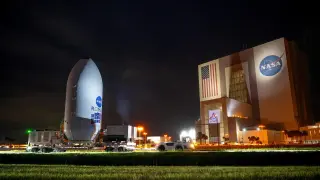
Space.com reports NASA’s Nancy Grace Roman Space Telescope is on track for an Aug. 30 liftoff at 7:26 a.m. EDT atop SpaceX’s Falcon Heavy from Kennedy Space Center’s LC-39A. The observatory has been delivered to SpaceX, will undergo final checks after a Flight Readiness Review, and is set for prelaunch briefings with live coverage. If weather delays occur, a back-up window opens Aug. 31. Once launched, Roman will travel to the Earth–Sun L2 point to study dark energy, search for exoplanets, and advance our understanding of the cosmos.

SpaceX aims to lift NASA’s Nancy Grace Roman Space Telescope into orbit on Aug. 30 at 7:26 a.m. EDT from Kennedy Space Center’s Launch Complex 39A aboard a Falcon Heavy, with a live webcast starting about an hour before liftoff. If weather or other issues delay, a backup window is available on Aug. 31 at 7:22 a.m. EDT. The flight is expected to last about 31 minutes and 31 seconds, with Roman deploying around the 31:31 mark and then unfurling its systems en route to a stable point near Lagrange Point 2 for the mission’s deep-sky surveys.
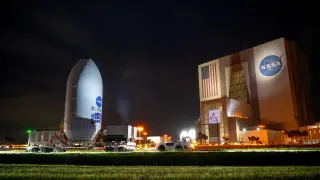
NASA’s Nancy Grace Roman Space Telescope is go for Aug. 30, 2026, launch atop SpaceX’s Falcon Heavy from Kennedy Space Center (LC-39A) at 7:26 a.m. EDT, after a mission Flight Readiness Review. The observatory will travel to Earth–Sun L2 (~930,000 miles away) with a multistage checkout to follow. Weather looks favorable with a small chance of showers; a backup window exists for Aug. 31 if needed. after launch, it will spend about 30 days reaching L2 and ~3 months on checkout before starting exoplanet, dark energy and distant-star science.
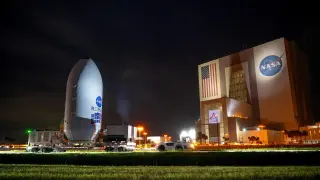
NASA's Nancy Grace Roman Space Telescope is on track for Aug. 30 launch from Kennedy Space Center atop SpaceX's Falcon Heavy, with live updates as the observatory moves toward the Sun-Earth L2 to study dark energy and exoplanets.
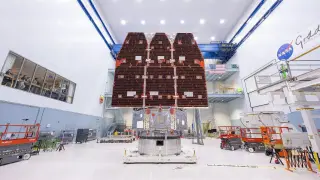
NASA’s Nancy Grace Roman Space Telescope is on track for an Aug. 30 liftoff from Kennedy Space Center aboard SpaceX’s Falcon Heavy. The observatory will spend about 30 days en route to the sun–Earth L2 point (roughly 1.5 million km from Earth), followed by a multi‑month checkout before it begins surveys for exoplanets and dark energy and investigates distant stars.