
South Africa to deploy 'BALLS' radio array on Moon via China's 2029 Chang'e-8 mission
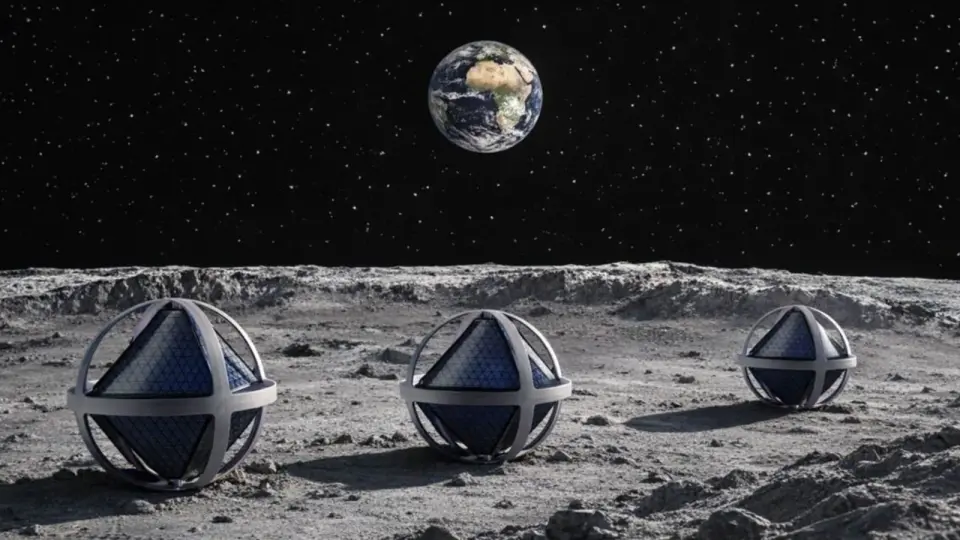
China’s Chang'e-8 lunar lander, scheduled for 2029, will carry Africa’s first space science payload: the Africa2Moon 'BALLS' experiment. This technology demonstrator consists of three spherical probes designed to form a low-frequency radio telescope array at the Moon’s south pole. The mission aims to detect radio signals below 20 MHz, a frequency range blocked by Earth’s ionosphere, allowing scientists to study the early universe. Developed by South African institutions, the project was selected by the Chinese National Space Administration in April 2025 as one of 11 international payloads. If successful, it could pave the way for a future array of 55 antennas, one for each African nation, on the lunar surface.
Key points
- The Africa2Moon 'BALLS' (Bounced African Low Lunar Spheres) experiment is a technology demonstrator comprising three spherical probes with low-frequency radio antennas.
- The mission will launch aboard China’s Chang'e-8 lander in 2029, targeting the Moon’s south pole region.
- The primary goal is to observe radio signals below 20 MHz, which are inaccessible from Earth due to ionospheric distortion and radio interference.
- The electronics and communication systems were developed by Stellenbosch University’s Electronic Systems Laboratory, with structural support from the South African Radio Astronomy Observatory (SARAO) and the University of KwaZulu-Natal.
- The demonstrator is due to be shipped to China by mid-2026 for integration testing and approval by the Chinese space agency.
- Long-term ambitions include deploying 55 'BALLS' antennas on the Moon, representing each African nation, to create a distributed radio telescope network.
Background
This mission aligns with the broader international push for lunar exploration, including China’s goal to land astronauts on the Moon by 2030 and the U.S. Artemis program’s 2028 landing target. Chang'e-8 is part of China’s plan to establish an International Lunar Research Station, which will host various international payloads, including a Pakistani rover and an Italian laser reflector array. The Africa2Moon project builds on South Africa’s 35-year history in space engineering, including the Sunsat and SumbandilaSat satellites, and highlights the growing role of African universities and agencies in global space science.
How outlets are covering it
Space.com and Inside Outer Space emphasize the scientific potential of the 'BALLS' array to detect low-frequency radio signals from the early universe, highlighting the Moon’s radio-quiet environment. TechCentral provides deeper technical detail, noting that the electronics were developed by Stellenbosch University students and engineers, and that the mission is a technology demonstrator to prove radio astronomy below 20 MHz is feasible from the lunar surface. Pondoland Times focuses on the collaborative effort between South African institutions (Stellenbosch, UKZN, SARAO, SANSA) and the Foundation for Space Development Africa, framing the mission as a milestone for African space science and engineering. All sources agree on the 2029 launch date and the mission’s significance as Africa’s first lunar science experiment, but TechCentral uniquely details the mid-2026 shipping timeline and the long-term vision of 55 antennas.
Why it matters
The Africa2Moon mission represents a significant step for African participation in global space exploration, demonstrating the continent’s capability to develop and deploy advanced space technology. By accessing radio frequencies blocked by Earth’s atmosphere, the 'BALLS' array could unlock new insights into the early universe and cosmic evolution. The mission also positions South Africa as a key player in international lunar cooperation, alongside other nations contributing to China’s International Lunar Research Station. Success could lead to a larger, continent-wide radio telescope network on the Moon, enhancing global scientific capabilities and fostering international collaboration in space science.
What to watch
The 'BALLS' demonstrator is expected to be shipped to China by mid-2026 for assessment by the Chinese space agency. If approved, a flight model will be built using space-grade components. The mission is scheduled to launch aboard Chang'e-8 in 2029, with the goal of deploying the three probes at the Moon’s south pole. Long-term plans include expanding the array to 55 antennas, one for each African nation, to create a distributed radio telescope network on the lunar surface.
- BALLS on the moon: China set to launch Africa's 1st lunar science mission in 2029 Space
- AFRICA2MOON: South Africa to Help Place Africa’s First Lunar Experiment on the Moon Pondoland Times
- Africa’s First Moonshot: Technology Demonstrator for Radio Astronomy Inside Outer Space
- From Stellies to the stars: Students build telescope tech bound for China’s moon mission News24
- Why South Africa is sending spheres to the moon TechCentral
Want the full story? Read the original reporting
Read on Space