space121.48 min read
SpaceX Delays Military Satellite Launch by Five Days After Stage Two Anomaly
1 day ago•Source: Space

The latest space stories, each synthesized from multiple sources with added background and context.
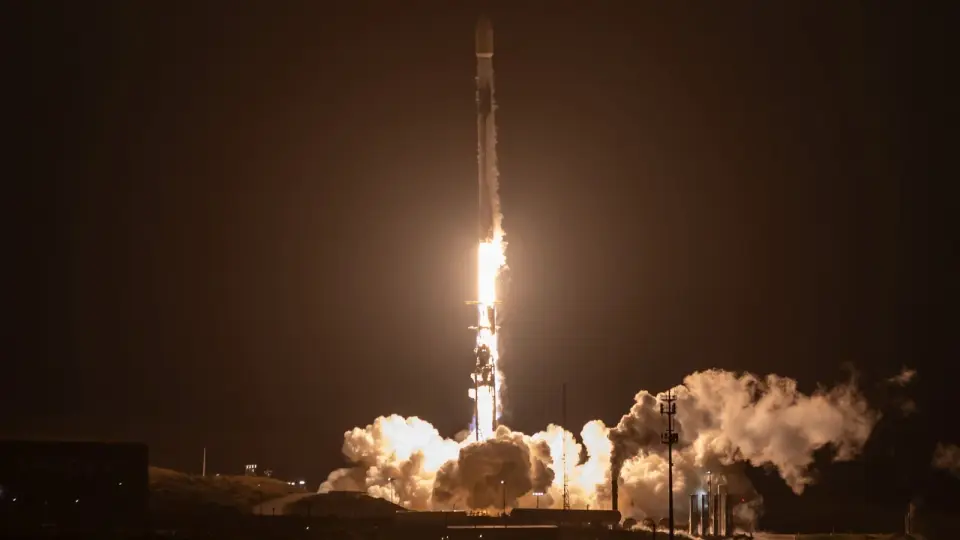
SpaceX successfully launched 21 military data satellites for the Space Development Agency (SDA) on October 9, 2026, from Vandenberg Space Force Base. The mission, designated Tranche 1 Transport Layer A (T1TL-A), followed a five-day delay caused by an auto-abort on October 5 due to 'off-nominal data' on the rocket's second stage. The launch utilized Falcon 9 booster B1103, which landed at Landing Zone 4 approximately 7.5 minutes after liftoff. This is the fourth SDA Tranche 1 mission, adding to a constellation of 63 satellites already in orbit. The satellites, manufactured by Northrop Grumman, are part of the Proliferated Warfighter Space Architecture (PWSA), designed to provide secure communications and missile tracking for the U.S. military and allies by 2027.

Ars Technica•2 days ago

NASA’s Curiosity rover has released a new panoramic image of wind-carved cliffs known as yardangs on Mount Sharp, captured during Martian dawn on August 11, 2026. The image, processed without white balancing to preserve the early morning light, highlights a geological layer that scientists find puzzling due to its color and angle. The rover, which has climbed over 1 kilometer since landing in 2012, aims to reach this specific layer by 2027 or 2028 for detailed analysis.

SpaceX successfully returned the Crew-12 astronauts to Earth on October 8, 2026, after a 237-day mission aboard the International Space Station. The crew, comprising NASA’s Jessica Meir and Jack Hathaway, ESA’s Sophie Adenot, and Roscosmos’ Andrey Fedyaev, splashed down in the Pacific Ocean off Los Angeles. The mission concluded a period of intensive scientific research and spacewalks, with Adenot setting a new European record for the longest single spaceflight. A post-flight briefing is scheduled for October 15 at NASA’s Johnson Space Center.

The Soviet-era Meteor 2-7 weather satellite, launched in 1981, has fragmented for the second time in low Earth orbit. Detected by LeoLabs in October 2026, the event produced tens of new debris pieces at an altitude of 530 miles. Experts warn this is part of a worrying trend, as tracked orbital debris has increased by 180% since 2005, raising collision risks for active spacecraft.

SpaceX executive Michael Nicolls urged global satellite operators to share trajectory data at the International Astronautical Congress, citing 164,000 potential collisions in six months. The company argues that undisclosed maneuvers by rivals, particularly from China, create unacceptable risks in low-Earth orbit, where Starlink now accounts for two-thirds of active satellites.
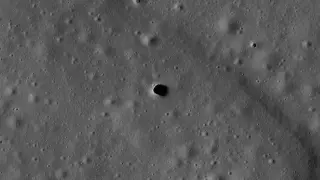
NASA has selected the GIMLI project to investigate the Marius Hill Pit on the Moon, aiming to confirm the existence of underground lava tubes that could serve as natural shelters for future astronauts. Led by the Planetary Science Institute and partnered with Honeybee Robotics, the mission will use ground-penetrating radar and seismic sensors to scan beneath the surface. If a large cave is found, it could provide protection from radiation and extreme temperatures, supporting NASA’s long-term goals for a sustained lunar presence.

Four astronauts returned to Earth on October 8, 2026, after a 237-day mission aboard the International Space Station. The crew, consisting of Jessica Meir, Jack Hathaway, Sophie Adenot, and Andrey Fedyaev, splashed down in the Pacific Ocean off Los Angeles. Their mission included significant scientific research and multiple spacewalks, concluding a period that began with an emergency medical evacuation.

NASA released 800 GB of Artemis II data, including images and audio, on October 7, 2026. The dataset documents human observations of the Moon, such as color variations and micrometeorite impacts, to aid future landing missions.

NASA released the first batch of Artemis II lunar science data on October 7, 2026, comprising 814 GB of observations, 996 new images, and 521 minutes of crew audio. The dataset, captured during the April 2026 flyby, includes the first human-observed micrometeorite impact flashes on the Moon’s far side. These findings, along with detailed color analysis of lunar geology, are now informing safety assessments and landing site selection for future Artemis missions.

NASA and SpaceX confirmed the safe return of the Crew-12 astronauts, including Jessica Meir, Jack Hathaway, Sophie Adenot, and Andrey Fedyaev, who splashed down in the Pacific Ocean off California on October 8, 2026. The four-person team completed a 237-day mission aboard the International Space Station, concluding with a deorbit burn and recovery by a ship. This marks the end of Expedition 74 for this crew, as they are replaced by Crew-13, which arrived earlier in October. The return concludes a period of significant spacewalks and scientific research, with Adenot setting a European record for the longest single spaceflight.

SpaceX is nearing the completion of infrastructure upgrades at NASA’s Kennedy Space Center to enable the first launch of its Starship megarocket from Florida. According to SpaceX, the historic Pad 39A is currently undergoing final acceptance and operational testing, with the new launch tower nearly complete. This move marks a significant expansion of Starship operations beyond its primary Texas base, aiming to increase launch frequency and support future missions to the Moon and Mars.