Tag

Space

All articles tagged with #space

Cygnus XL Delivers 5-Ton Payload to ISS on SpaceX NG-24 Mission
space1 hour ago

Cygnus XL Delivers 5-Ton Payload to ISS on SpaceX NG-24 Mission

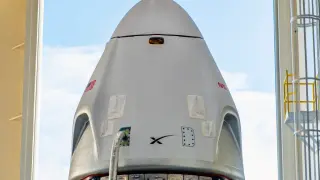
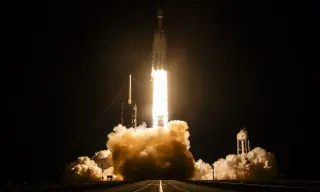
SpaceX launched Northrop Grumman's Cygnus XL cargo ship NG-24 atop a Falcon 9 from Cape Canaveral, delivering about 11,000 pounds (4,990 kg) of science gear and supplies to the International Space Station. The Cygnus XL, named S.S. Steven R. Nagel, will be grappled by Canadarm2 on April 13, marking the second Cygnus XL flight, while the booster returned to a Cape Canaveral landing about eight minutes after liftoff.

Artemis II’s Nikon D5 Buzz: Old DSLR Still Delivers Stunning Space Photography
space4 hours ago

Artemis II’s Nikon D5 Buzz: Old DSLR Still Delivers Stunning Space Photography

NASA’s Artemis II carried multiple cameras, including a Nikon D5 DSLR, a Nikon Z9, an iPhone 17 Pro and action cams, prompting buzz about the D5’s enduring relevance. Photographers say newer gear isn’t everything and that lens quality and technique often matter more than the body, with the mission’s images showing older cameras can still produce spectacular Earth–Moon views during the lunar flyby and observations.

Artemis II returns as NASA lines up Artemis III's 2027 moon mission
space10 hours ago

Artemis II returns as NASA lines up Artemis III's 2027 moon mission

Artemis II has safely splashed down in the Pacific after a 10-day lunar orbit, with NASA confirming the crew is happy and healthy and headed to Houston for medical checks. NASA says it will use what it learned to inform Artemis III, targeted for 2027 to test a lunar lander in Earth orbit (with SpaceX/Blue Origin involvement), and Artemis IV for an early-2028 lunar surface landing. The agency plans to reuse hundreds of Orion components and continues to advance a sustainable lunar program, applying lessons from Artemis II to flight operations and control rooms.

Artemis II Returns After Record-Setting Lunar Flyby
space10 hours ago

Artemis II Returns After Record-Setting Lunar Flyby

NASA's Artemis II crew—Reid Wiseman, Victor Glover, Christina Koch, and Jeremy Hansen—completed a nearly 10-day mission that included a record-breaking lunar flyby, reaching a farthest distance of 252,756 miles from Earth before splashing down off the California coast at 5:07 p.m. PDT. The voyage tested Orion’s life-support and control systems, demonstrated manual piloting, and gathered data to inform Artemis III and a sustained lunar presence, while NASA documented thousands of lunar images and conducted scientific investigations.

Global night glow up 16% since 2014, with pockets of dimming from conflict and policy
space15 hours ago

Global night glow up 16% since 2014, with pockets of dimming from conflict and policy

A Nature-published study using NASA’s VIIRS satellite data finds Earth’s night-time artificial lighting brightened by about 16% from 2014 to 2022, driven mainly by developing regions such as India, China and parts of Africa, indicating rising electricity access and activity. Yet some regions dimmed due to wars, disasters, or effective energy-saving policies (e.g., Ukraine, France), producing a flickering pattern rather than uniform brightening. The results highlight regional variability and note LED lighting can affect satellite measurements, with dimming areas expanding in certain regions even as overall brightness rises.

NASA speeds Artemis 3 toward a sustained Moon presence with overlapping missions
space17 hours ago

NASA speeds Artemis 3 toward a sustained Moon presence with overlapping missions

NASA is accelerating Artemis 3 while Artemis 2 returns home, adopting overlapping mission phases and small, incremental changes rather than major redesigns to shorten timelines. By leveraging real‑time data, multiple Human Landing System providers, and an increased launch cadence, the agency aims for a mid‑2027 Artemis 3 lunar landing to dock Orion with Starship and/or Blue Moon HLS and test the AxEMU spacesuit, all as part of a broader move toward a sustainable, reusable lunar presence.

Artemis II heat shield confidence grows as NASA opts direct reentry
space19 hours ago

Artemis II heat shield confidence grows as NASA opts direct reentry

Live Science talks with Ed Macaulay about Artemis II’s heat shield: NASA is sticking with the same shield as Artemis I but changing to a direct reentry at roughly 25,000 mph to reduce stress, after Artemis I’s shield damage. Macaulay says there are reasons for confidence due to safety margins and improved modeling, though heat and g-forces remain a risk in crewed spaceflight. The mission has been technically successful so far and aims for a nominal, safe return as astronauts prepare to complete the lunar journey.

Artemis II crew trains for lunar EVA with post-landing obstacle course
space20 hours ago

Artemis II crew trains for lunar EVA with post-landing obstacle course

NASA will subject Artemis II astronauts to a roughly 1.5‑hour post‑splashdown obstacle course at Johnson Space Center, using the ARGOS gravity‑offload system to simulate lunar gravity. The crew will perform a capsule‑escape drill, don heavy EVA suits, and complete tasks such as electrical/fluid connections, geology drills, rock sampling, trenching, and a treadmill ascent, with testing repeated over three days to measure effort, heart rate, and performance and to guide how soon and how ambitiously future lunar activities might begin after weightlessness.

Artemis II Returns Home After Record Moon Flyby
space21 hours ago

Artemis II Returns Home After Record Moon Flyby

NASA’s Artemis II mission ends with the Orion capsule splashing down in the Pacific off San Diego after a 10-day lunar flyby, bringing the crew of four—Reid Wiseman, Victor Glover, Christina Koch and Jeremy Hansen—home and making them the latest to travel beyond low Earth orbit. The mission set a distance record of about 252,756 miles from Earth, tested life support, radiation detectors and future deep-space gear, and included moments of emotion and teamwork as the crew prepared for a 2028 crewed Moon landing while NASA plans the next steps at Johnson Space Center before a Houston reunion with families.

Artemis II's Orion: Comfort and Control in Deep-Space Design
space23 hours ago

Artemis II's Orion: Comfort and Control in Deep-Space Design

NASA's Artemis II interior design centers on safety and human factors in Orion: adaptive seats for nearly all astronauts, configurable layouts, alternative control devices for limited movement, acoustics and odor control for privacy, and flexible crew quarters. Information displays are organized to show the right data at the right time, with software handling many flight tasks while preserving crew override. Designers treat comfort and autonomy as essential to enable calm, productive operation during reentry and longer missions.

Artemis II returns: crew awakens for record-speed Earth splashdown
space23 hours ago

Artemis II returns: crew awakens for record-speed Earth splashdown

Artemis II’s four astronauts wake for the mission’s final phase, prepping for a high-speed return from a 10‑day lunar cruise. They’re set to reenter at about 25,000 mph and splash down off San Diego around 8:07 p.m. EDT, with NASA’s live coverage starting at 6:30 p.m. EDT. The heat shield—nearly the same as Artemis I’s and a known risk—will be closely watched as commander Reid Wiseman, pilot Victor Glover, and mission specialists Christina Koch and Jeremy Hansen bring the crew home, potentially making them the fastest humans to splash down in the Pacific, recovered by the USS John Murtha.

Artemis II heat shield concerns eased by redesigned reentry, NASA says safety intact
space1 day ago

Artemis II heat shield concerns eased by redesigned reentry, NASA says safety intact

NASA says Artemis II’s heat-shield issue is under control: after Artemis I revealed char loss in the Avcoat shield, NASA adjusted the reentry profile to a steeper angle and shorter exposure to heat, and independent reviews backed the plan. The Orion capsule’s heat shield is built to erode safely, and engineers concluded the crew can be protected even if parts of the shield underperform. Artemis II will carry four astronauts (Reid Wiseman, Victor Glover, Christina Koch, Jeremy Hansen) on a crewed lunar flyby with a splashdown in the Pacific, and while some experts remain skeptical, NASA maintains confidence that the root cause has been addressed and safety margins are in place.