
Ford Unveils GT41 Hypercar Ahead of 2027 Le Mans Return
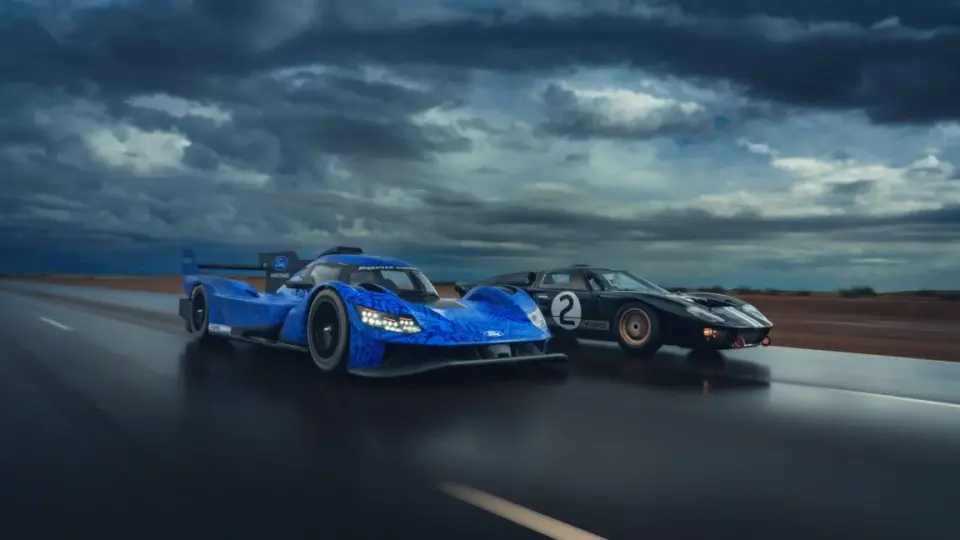
Ford officially revealed its new GT41 Hypercar on Thanksgiving Day, 2026, during a halftime presentation at the Detroit Lions-Chicago Bears game. The car, which stands 41.7 inches tall, is built on an Oreca LMDh chassis and powered by a 670-horsepower, 5.4-liter V8 engine based on the Mustang Coyote. Ford plans to compete in the FIA World Endurance Championship starting in March 2027, with its first race in Qatar, before targeting the 24 Hours of Le Mans in June. The launch was accompanied by a 'Go Like Hell' ad campaign directed by Zack Snyder and narrated by Matt Damon, echoing Ford's 1966-1969 Le Mans victories.
Key points
- Ford unveiled the GT41 Hypercar on November 26, 2026, at Ford Field in Detroit during the Lions-Bears game, with a 90-second 'Go Like Hell' ad directed by Zack Snyder and narrated by Matt Damon.
- The GT41 is built on an Oreca LMDh chassis, uses a standard hybrid system and transmission, and features a 5.4-liter naturally aspirated Coyote V8 engine developed in-house by Ford Racing.
- Ford plans to debut the GT41 in the 2027 FIA World Endurance Championship, starting with the Qatar race in March and culminating in the 24 Hours of Le Mans in June.
- The car's testing livery includes hidden American symbols, and the final racing livery will be revealed closer to the 2027 season opener.
- Ford has assembled a driver lineup including Logan Sargeant, Tom Blomqvist, Matt Campbell, Sebastian Priaulx, Mike Rockenfeller, and Nick Yelloly, with Tom Dillmann as reserve.
Background
Ford's return to top-class sportscar racing follows a long absence; its last top-class Le Mans attempt was in 1982, and the GT40 won four consecutive Le Mans titles from 1966 to 1969. Ford had previously focused on Mustang GT3, GT4, and Dark Horse R programs before committing to the LMDh Hypercar program in January 2026. The company partnered with Oreca for the chassis, one of four approved LMDh suppliers, and emphasized that the GT41 would not resemble the Mustang, calling such styling 'fake marketing.' Ford's Hypercar program is part of a broader motorsport portfolio that includes its Red Bull F1 partnership and Mustang GT3 racing.
How outlets are covering it
Ars Technica highlights the technical details of the GT41, including its LMDh chassis, hybrid system, and Coyote V8 engine, and notes Ford's decision not to enter IMSA's WeatherTech championship. Variety focuses on the 'Go Like Hell' ad campaign, emphasizing Matt Damon's narration and Zack Snyder's direction, and connects the ad to the 2019 film 'Ford v Ferrari.' The Detroit News provides a detailed account of the unveiling, including quotes from Ford executives and driver lineup details, and emphasizes the competitive landscape at Le Mans, noting Ferrari's recent dominance and Cadillac's strong performance. Car and Driver notes the car's height and the in-house development of the Coyote V8, while also highlighting Ford's reluctance to race in IMSA.
Why it matters
Ford's return to the top class of the FIA World Endurance Championship marks a significant moment for the automaker, as it aims to reclaim the overall Le Mans title it last won in 1969. The GT41 represents a major investment in motorsport technology and engineering, with implications for Ford's production vehicle development, particularly in electrification and hybrid systems. The competitive field includes strong rivals like Ferrari, Cadillac, and Toyota, making the 2027 season a critical test for Ford's new program.
What to watch
Ford will reveal the final racing livery for the GT41 closer to the 2027 WEC season opener in Qatar in March. The car will compete in the 24 Hours of Le Mans in June 2027, with the U.S. stop at Circuit of the Americas in Austin, Texas, scheduled for September 12, 2027. Ford will also continue development of its Mustang GT3 program and integrate lessons from the Hypercar program into production vehicle electrification systems.
- Ford unveils the GT41 as it hopes to win Le Mans again Ars Technica
- Matt Damon Narrates Ford Racing’s ‘Go Like Hell’ Thanksgiving Day Ad Directed by Zack Snyder Variety
- Ford GT41 Hypercar gets big-ticket launch in Detroit RACER - Racing News
- Ford v Ferrari 2. GT41 Hypercar debuts at Lions Thanksgiving game The Detroit News
- Ford’s Next Le Mans Dream Is Finally Here: Meet the Ford GT41, the Brand’s New Counter to Ferrari Car and Driver
Want the full story? Read the original reporting
Read on Ars Technica