
New Website Allows Public Tracking of Satellite Surveillance Over Any Global Location
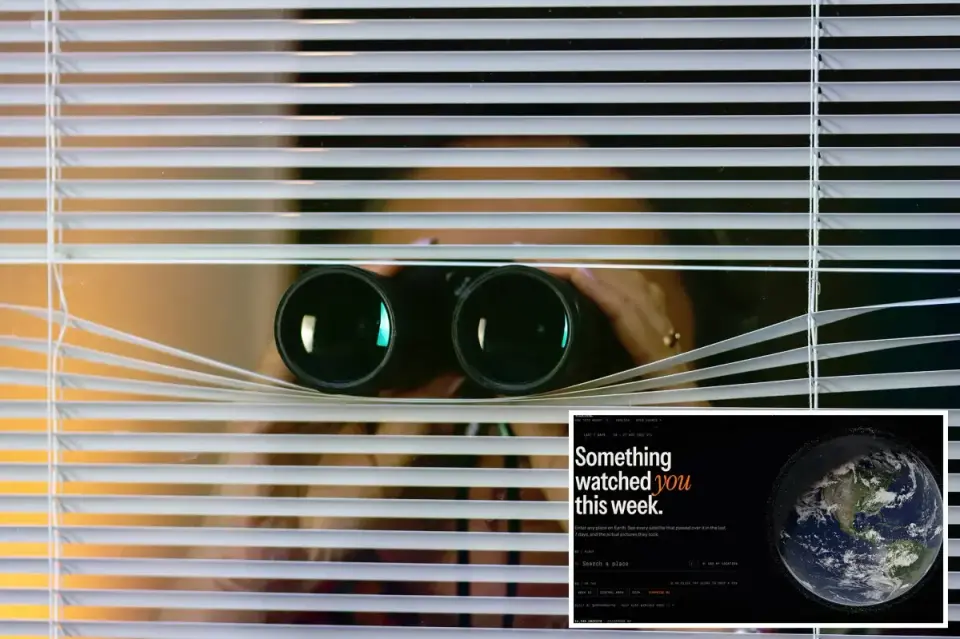
A new free website called Watched allows users to check if satellites have photographed any location on Earth in the past week. The tool tracks about 400 satellites and categorizes surveillance levels, though public imagery resolution is too low to identify individuals.
Key points
- The website Watched.earth is free, requires no sign-up, and runs entirely in the browser.
- It tracks approximately 400 imaging, weather, radar, and crewed satellites over a seven-day window.
- The tool categorizes surveillance into four levels: Watched, Likely watched, Could have pointed here, and Passed overhead.
- Publicly available imagery has a resolution of about 10 meters per pixel, meaning individual people and cars cannot be identified.
- The New York Post tested the tool with its own address and found it had been watched 225 times in the last seven days.
Background
This development follows increasing public interest in space-based surveillance and data transparency. Recent missions like ESA’s Hera have highlighted the capabilities of orbital technology, though those focused on planetary defense rather than commercial or public data access. The availability of tools like Watched contrasts with the historical opacity of satellite operations, making orbital activity more tangible for the general public.
Why it matters
The tool makes the concept of orbital surveillance tangible for the public, raising privacy concerns while also providing transparency about satellite activity. Although the resolution is too low to identify individuals, the ability to check if a location has been imaged could influence public perception of privacy and security.
What to watch
Users can continue to use the free tool to check surveillance levels for any location. The developer, identified as @armaangupt0, may update the tool or expand its features, though no specific future developments were mentioned in the source.
Want the full story? Read the original reporting
Read on New York Post