
Apple Watch Audio Intelligence: New Features Offer Convenience but Raise Privacy and Accuracy Concerns
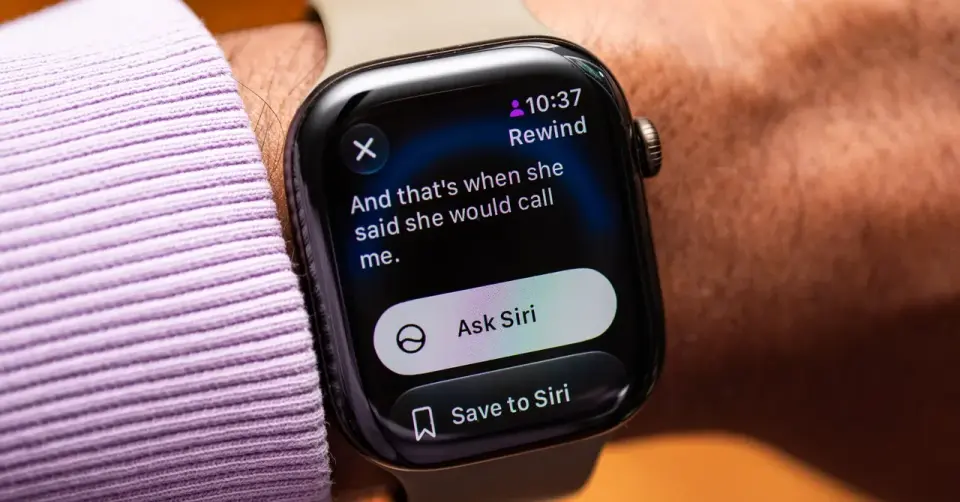
Apple has introduced 'Audio Intelligence' features, Siri Recap and Live Rewind, to the Apple Watch Series 12 and Ultra 4 via the watchOS 27.3 beta. These tools allow users to transcribe recent conversations and generate daily summaries, but early reviews highlight significant accuracy issues, social awkwardness, and privacy concerns regarding non-consensual recording.
Key points
- Apple’s new Audio Intelligence suite, available in the watchOS 27.3 beta, includes Siri Recap for daily conversation summaries and Live Rewind for transcribing the last 15 seconds of audio.
- The features are opt-in and processed on-device or via Private Cloud Compute, with no audio storage, but critics note the lack of visible indicators for bystanders.
- Reviewers report mixed results: while Siri Recap performs well in structured meetings, it often fails in casual or chaotic conversations, sometimes conflating unrelated topics or misidentifying names.
- Live Rewind is frequently described as impractical due to the difficulty of triggering it in real-time, though it may be useful for presentations or lectures.
- The features are currently unavailable in the European Union due to privacy laws, with a full public rollout expected later in 2026.
Background
Apple first unveiled these controversial AI audio features in September alongside the Apple Watch Series 12 and Ultra 4. Early beta tests in November 2026 revealed mixed utility and privacy concerns, with critics arguing that silent recording of bystanders could violate privacy laws. Apple emphasizes that audio is processed on-device and not stored, but legal experts warn of potential surveillance implications.
How outlets are covering it
WIRED’s Julian Chokkattu describes the features as 'pretty awkward,' noting that while they can be useful, they often lead to social clumsiness, such as replaying hurtful words during arguments. Bloomberg’s Natalie Lung found that Apple’s tools delivered less value than competitors like Amazon Bee or Granola, with results rarely justifying the privacy trade-offs. CNET’s Vanessa Hand Orellana tested the features for two weeks, finding them 'mundane' and often inaccurate, particularly in casual settings. She noted that while the features are optional, the lack of visible indicators for bystanders remains a significant privacy concern. All three outlets agree that the features are not yet reliable enough for critical information, with CNET suggesting users should manually enable them only for specific meetings.
Why it matters
The introduction of Audio Intelligence marks a significant step for Apple into the AI wearable market, but it also highlights the tension between convenience and privacy. As AI-powered recording devices become more common, questions about consent, accuracy, and social norms will become increasingly important. The features’ current limitations suggest that while they may be useful in specific contexts, they are not yet ready for widespread, everyday use.
What to watch
Apple is expected to release a full public rollout of Audio Intelligence later in 2026, potentially with improvements to accuracy and privacy safeguards. The features are currently unavailable in the European Union due to privacy laws, but their availability may expand as regulations evolve. Users should continue to monitor updates and consider the privacy implications before enabling these features in sensitive or public settings.
- The Apple Watch Can Record and Rewind Spoken Conversations Now. It’s Pretty Awkward WIRED
- Apple Watch’s New AI Features Hear Your Conversations But Miss the Point Bloomberg.com
- Your Apple Watch Can Listen In on Conversations. Is That Useful or Creepy? WSJ
- I Let My Apple Watch Eavesdrop on My Conversations for 2 Weeks CNET
- Apple releases beta 2 for iPadOS 27.3, watchOS 27.3, and more 9to5Mac
Want the full story? Read the original reporting
Read on WIRED