
James Webb Telescope Uncovers 'Teenage' Galaxies and Their Mysterious Elements
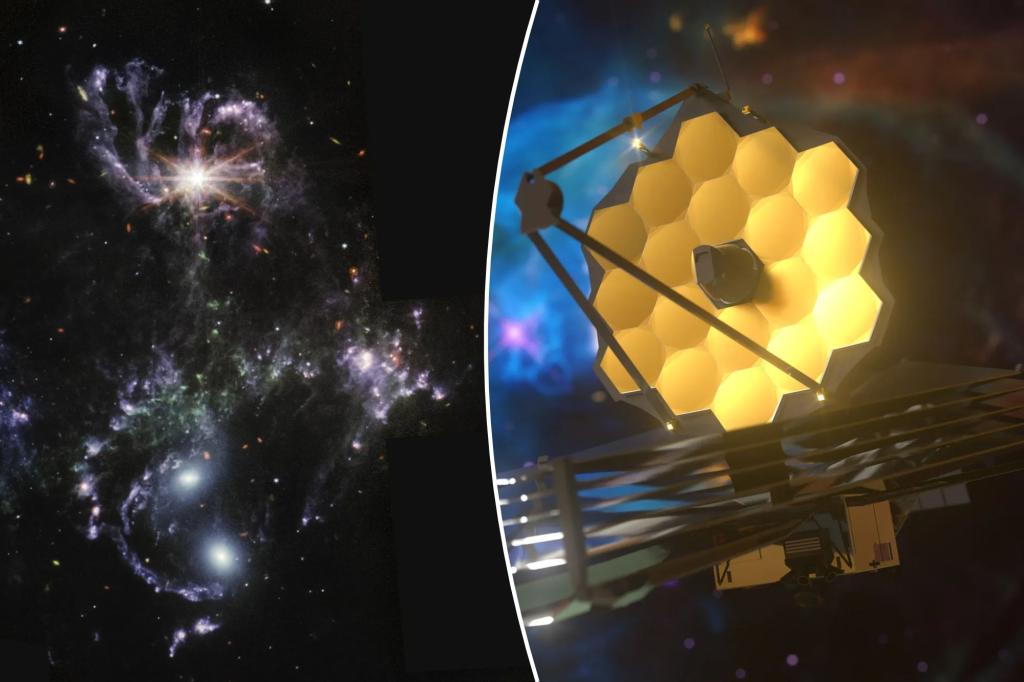
The James Webb Space Telescope has made groundbreaking observations of galaxies in their early stages of development, referred to as "galactic infants." However, new research using data from the telescope has now focused on galaxies that are a bit further along in their development, known as "galactic teenagers." These teenage galaxies display growth spurts and immaturity, resembling human teenagers. The study analyzed the "chemical DNA" of 23 galaxies formed 2-3 billion years after the Big Bang, revealing unique characteristics and high temperatures in their star-forming regions. The findings suggest that these galaxies are still chemically immature and are forming rapidly. The James Webb Telescope has reshaped our understanding of the early universe and the CECILIA Survey, which examines the chemistry of distant galaxies, presents the first results from Webb's observations.
- James Webb Telescope discovers 'galactic infants' and 'teenage' galaxies New York Post
- 'Teenage' galaxies from the early universe contain mysterious heavy elements, James Webb telescope reveals Livescience.com
- Peering Into the Past: How James Webb Is Rewriting Our Understanding of Early Galaxies SciTechDaily
- Adolescent Galaxies are Incandescent and Contain Unexpected Elements Universe Today
- James Webb Space Telescope Uncovers “Teenage” Galaxies in Cosmic Adolescence GKToday
Reading Insights
0
11
3 min
vs 4 min read
81%
667 → 130 words
Want the full story? Read the original article
Read on New York Post