astronomy120.985 min read
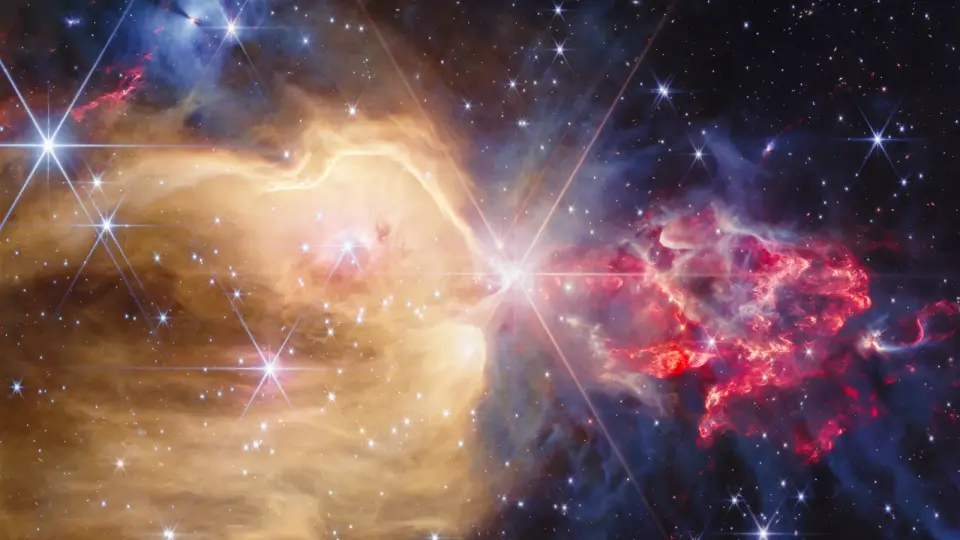
JWST Captures New Infrared View of NGC 7129 Stellar Nursery
2 days ago•Source: Space

The latest astronomy stories, each synthesized from multiple sources with added background and context.
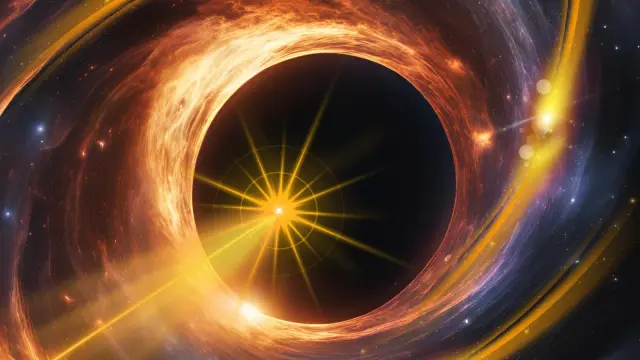
Astronomers have identified Blazar OP 313 as the most distant and earliest blazar ever detected, providing a rare glimpse into the universe's high-activity phase. This object features a supermassive black hole emitting plasma jets directly toward Earth, with light that has traveled for 8 billion years. The discovery offers critical insights into the 'cosmic noon' era, a period of intense galaxy formation that occurred roughly 5 billion years after the Big Bang.
Live Science•3 days ago
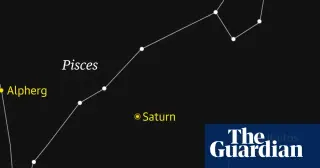
Saturn reached opposition on October 4, 2026, offering the planet's closest approach to Earth this year and optimal visibility for naked-eye and telescopic observation. The event coincides with a brightening of the rings due to the Seeliger effect and new Hubble observations of a strengthening ten-sided atmospheric wave at Saturn's south pole. While Saturn dominates early October, the Orionid meteor shower peaks on October 21-22, though moonlight may obscure fainter meteors. The Moon also passes near the Pleiades star cluster on October 27-28.
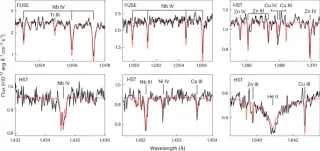
Astronomers have identified a white dwarf, HS 0209+0832, that is accreting material from a 'second-generation' planet. This planet likely formed from the ejected envelope of the star's progenitor after it died, rather than from the original protoplanetary disk. The discovery, published in Nature, marks the first evidence of such post-stellar planetary formation around a white dwarf.
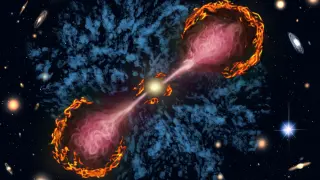
A new study reveals that supermassive black holes suppress star formation in their host galaxies by launching plasma jets that heat and disrupt the circumgalactic medium (CGM). This gas reservoir, which extends 10-20 times beyond the visible galaxy, provides the raw material for new stars. By ionizing this gas along specific paths, black holes prevent it from cooling and collapsing into stars, effectively 'killing' the galaxy's growth. The findings, published in the Astrophysical Journal Letters, solve a long-standing mystery regarding why large galaxies do not produce more stars despite being surrounded by vast amounts of potential fuel.
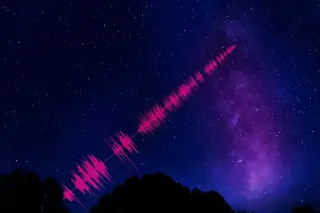
An international team using South Africa’s MeerKAT radio telescope array has detected variable radio bursts originating directly from Beta Pictoris b, a gas giant located 63 light-years from Earth. This marks the first confirmed instance of radio signals attributed to a single exoplanet rather than its entire star system. The discovery, which is not evidence of extraterrestrial life, allows scientists to study the magnetic fields of Jupiter-like planets, a factor critical for protecting atmospheres and assessing habitability.
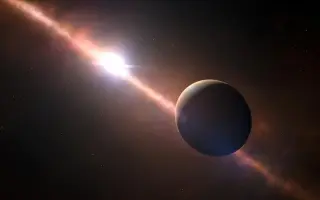
Astronomers using the MeerKAT radio telescope in South Africa have detected the first unambiguous radio signal originating from an exoplanet, Beta Pictoris b. Located 205 light-years away, this young gas giant exhibits auroral activity driven by a magnetic field estimated at over 1,000 gauss, thousands of times stronger than Earth's. This discovery marks a milestone in exoplanetology by allowing direct characterization of planetary magnetism without relying on host star signals.
October 2026 offers prime viewing for Saturn at opposition on Oct. 4, the Orionid meteor shower peak on Oct. 21-22, and a lunar conjunction with the Pleiades on Oct. 27-28. Saturn’s rings are visible again after a 2025 edge-on crossing, with a 7-degree tilt. The Orionids may be dimmed by a waxing gibbous moon, requiring pre-dawn observation. The Pleiades conjunction is visible to the naked eye, with binoculars revealing more detail.

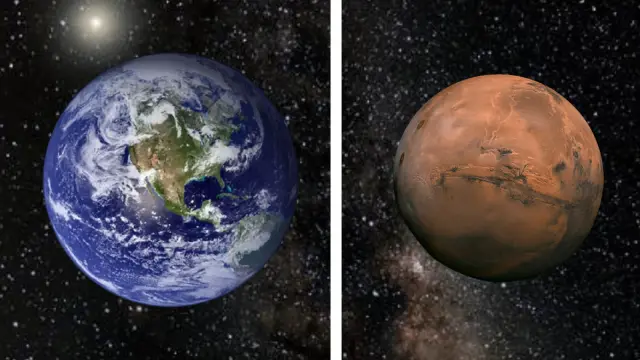
Mars began a new year on September 30, 2026, at 4:16 a.m. EDT, marking the start of its 687-Earth-day orbit. This date corresponds to the northern equinox, initiating spring in the north and autumn in the south. A Martian year consists of 668 sols, each lasting 24 hours and 39 minutes. Due to Mars' elliptical orbit, its seasons are unequal in length, with the northern hemisphere receiving more sunlight during its summer.
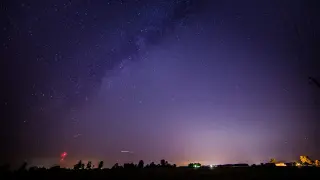
October 2026 offers exceptional meteor shower viewing, with the Draconids peaking Oct 8-9 under moonless skies and the Orionids peaking Oct 21-22. The Taurids provide slow, bright fireballs from late September through November. Clear skies and dark locations are essential for optimal observation.
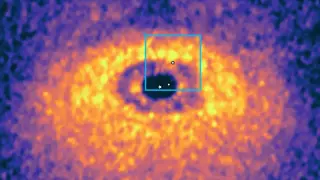
Astronomers have produced the clearest image yet of two forming planets interacting with their birth disk. Using the Atacama Large Millimeter/submillimeter Array (ALMA), researchers observed the WISPIT 2 system, located 430 light-years away. The data reveals how the twin planets, WISPIT 2b and 2c, carve gaps and cavities in the surrounding gas and dust. This marks the first time gas velocity distortions, or 'spiral wakes,' have been directly linked to a confirmed planet, providing a crucial calibration point for future exoplanet detection.
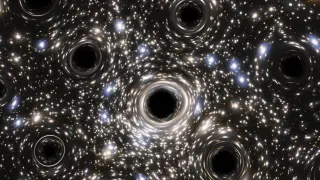
New research suggests that black holes ejected from their home galaxies during mergers act as 'cosmic archivists,' retaining records of their origin. These 'rogue' black holes, which can travel for billions of years, may help resolve debates about whether early black holes formed from collapsing stars or dense gas clouds. The findings indicate that studying wandering black holes is crucial for understanding the formation and dynamics of massive black holes in the early universe.