
COP31 ends in historic deadlock as oil states block fossil fuel language
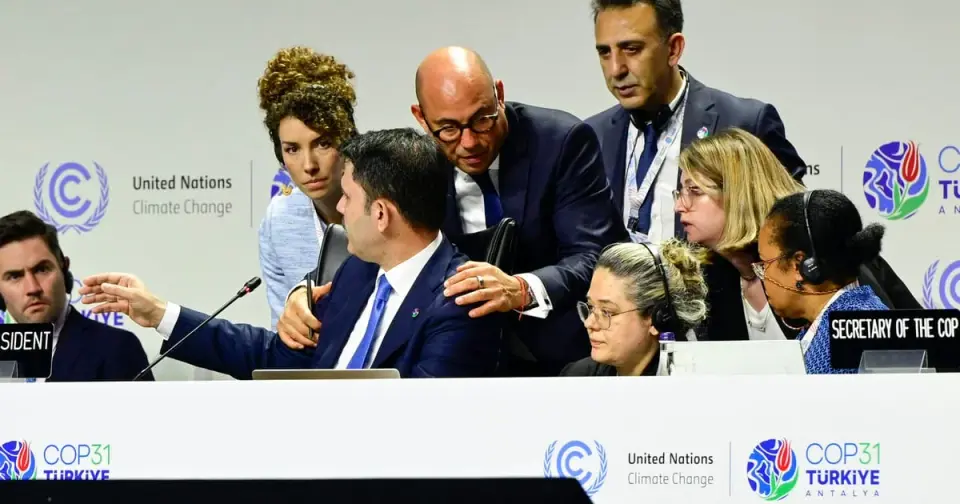
The 2026 UN climate summit in Antalya, Turkey, concluded without a final consensus agreement, marking the first failure to reach a deal since Copenhagen in 2009. The breakdown occurred after the EU, the UK, and several small island states rejected a draft text that omitted any mention of fossil fuels. While the draft included a target for 35% global electrification by 2035, it failed to address the phase-down of oil, gas, and coal, which the EU called 'greenwashing.' The talks, co-hosted by Turkey and Australia, became the longest in history, ending with deep divisions over energy policy and climate finance.
Key points
- COP31 failed to adopt a final consensus decision, the first such failure in 17 years since the 2009 Copenhagen summit.
- The EU, UK, Panama, and small island states rejected the final draft because it did not mention fossil fuels or their phase-down.
- The rejected text proposed that 35% of global energy use be electrified by 2035, up from the current 23%, but did not specify that this electrification must be 'clean.'
- Saudi Arabia and Russia blocked language regarding fossil fuel phase-outs, with Saudi Arabia blaming developed nations for historical emissions and lack of finance.
- China accepted the draft despite raising concerns, while the US was absent from the negotiations.
- UN Secretary-General Antonio Guterres criticized 'powerful fossil fuel interests' for blocking action, comparing their tactics to those of Big Tobacco.
Background
This failure follows a series of drafts at COP31 that progressively removed explicit language on fossil fuel phase-downs. Previous coverage noted that while the 2023 Dubai agreement established a consensus to transition away from fossil fuels, the 2026 draft sought to replace this with a focus on electrification and carbon capture. The UN had recently warned that the world would exceed 1.5°C of warming, making the omission of fossil fuel language particularly contentious. The summit also faced challenges from energy price shocks, inflation, and geopolitical tensions, which complicated negotiations on climate finance for developing nations.
How outlets are covering it
The EU and small island states, such as the Marshall Islands, viewed the draft as a 'betrayal' and 'greenwashing' that ignored the primary driver of climate change. They argued that omitting fossil fuels undermined security and future stability. In contrast, Saudi Arabia and Russia defended the text, with Russia arguing that a rapid phase-out would cause 'fuel poverty' and that even ambitious IPCC scenarios do not require the total disappearance of fossil fuels. Saudi Arabia blamed developed nations for historical emissions and insufficient financial support. China accepted the deal but raised concerns, reflecting its dual role as a major emitter and a leader in renewable energy. The UK and Australia expressed disappointment, with Australian co-president Chris Bowen describing the geopolitical environment as the 'most complicated in living memory' and noting that 'red lines' were unbridgeable. UNFCCC chief Simon Stiell acknowledged the consensus system 'fell short' but noted that many technical decisions were still adopted. Climate activists and scientists, including Prof. Mark Maslin, called it the 'worst COP ever,' while others like Lord Nicholas Stern suggested the failure might force a necessary reset in the multilateral process.
Why it matters
The collapse of COP31 signals a potential fracture in the global climate consensus, occurring just as the UN warned that 1.5°C warming is likely to be exceeded. The inability to agree on even mentioning fossil fuels highlights the growing gap between scientific urgency and political reality. This failure may delay critical transitions to clean energy and adaptation finance for vulnerable nations, potentially exacerbating climate impacts. It also raises questions about the effectiveness of the UNFCCC consensus-based process in a polarized geopolitical landscape, where major emitters and fossil fuel producers are blocking ambitious language. The outcome could set the tone for future negotiations, including the 2027 summit in Ethiopia, and may influence national policies on energy and climate finance.
What to watch
The next COP summit is scheduled for 2027 in Ethiopia. In the interim, countries are expected to continue bilateral and multilateral discussions on climate finance and energy transitions. The UNFCCC is engaging with parties on potential reforms to the negotiation process to address the consensus deadlock. China has indicated it will continue to support multilateralism and has advanced clean technology deals, such as a $15 billion renewable energy agreement with Turkey. The EU and other rejecting nations are likely to push for stronger language in future drafts, while fossil fuel-producing states may continue to resist explicit phase-down commitments. The absence of a cover decision means that many technical decisions from COP31 will need to be revisited or implemented through other channels in the coming year.
- Climate deal collapses amid fossil fuel rows POLITICO.eu
- U.N. Climate Talks Collapse in a Bitter Clash Over Fossil Fuels The New York Times
- COP31 negotiations break down as countries fail to agree on climate deal The Washington Post
- COP31 climate talks in Antalya, Turkey fail to agree deal after fossil fuels row - follow live BBC
- Cop31 live: EU and others reject deal as longest climate summit ever faces collapse The Guardian
Want the full story? Read the original reporting
Read on POLITICO.eu