Tag

Global Warming

All articles tagged with #global warming

Weak Atlantic Conveyor Could Cool Europe While Accelerating Global Warming
science6 days ago

Weak Atlantic Conveyor Could Cool Europe While Accelerating Global Warming

A new Nature Geoscience study finds the Atlantic Meridional Overturning Circulation is weakening; if it collapses, Northern Europe could cool by about 5–15°C (9–27°F), but the global climate may warm overall as heat builds up in the ocean when the circulation slows. Greenland ice melt adds freshwater that further slows the current, and past weak periods tend to redistribute heat rather than reduce total planetary heat, suggesting a potential net increase in global warming as temperatures rise.

Super El Niño May Make 2027 the Hottest Year on Record
science10 days ago

Super El Niño May Make 2027 the Hottest Year on Record

NOAA now expects a 90% chance of a “very strong” El Niño, with models predicting the strongest on record and enough heat to push 2027 toward the hottest year in global history—roughly 1.7–1.85°C (3–3.33°F) above preindustrial levels—potentially fast-forwarding the current warming trend by about 13 years. The heat spike is temporary as El Niño fades, but ongoing greenhouse gas emissions keep the long-term temperature trajectory rising.

Warming Accelerates: Study Warns 1.5°C Limit Could Be Breached by 2030
climate-change20 days ago

Warming Accelerates: Study Warns 1.5°C Limit Could Be Breached by 2030

A Geophysical Research Letters study, with 98% confidence, finds global warming has accelerated since 2015, rising about 0.63°F per decade compared with 0.36°F per decade from 1970–2015. If this pace continues, the 1.5°C Paris limit could be breached before 2030, risking climate tipping points such as ocean circulation breakdown, permafrost thaw, and coral reef loss, and leading to more extreme weather; meeting zero CO2 emissions is needed to stop warming, but current politics may allow the pace to continue unless major polluters—especially the U.S.—act decisively.

Climate Warming Quickens: New Study Finds Accelerating Rates Threatening 1.5°C Target
environment20 days ago

Climate Warming Quickens: New Study Finds Accelerating Rates Threatening 1.5°C Target

A Geophysical Research Letters study finds global warming is accelerating: 0.35°C per decade from 2015–2025 versus about 0.2°C per decade from 1970–2015 after filtering out El Niño, solar, and volcanic influences, with 98% statistical certainty. If this pace continues, the 1.5°C limit could be exceeded before 2030, underscoring the urgency of reducing fossil-fuel CO2 emissions to zero to slow warming.

El Niño heads toward record strength, but effects won’t be uniform
world21 days ago

El Niño heads toward record strength, but effects won’t be uniform

Forecasters project the current El Niño to become the strongest on record, intensifying the global heat signal and making regional weather shifts more predictable. Impacts will vary by location and season, with potential droughts or floods in different regions, a milder US winter in the north and wetter fall/winter in the south, and likely record warmth in 2026–27.

South Korea records hottest day as world faces rising heatwaves
world23 days ago

South Korea records hottest day as world faces rising heatwaves

South Korea registered its hottest day on record, with Yangsan hitting 42.5°C as a multi-day heatwave grips the country; emergency heatwave alerts cover more than 20 localities, and the Korea Meteorological Administration notes the annual number of heatwave days has more than doubled in recent years. The record comes amid a global pattern of extreme heat linked to climate change, with heat warnings across Japan, wildfires in Europe and North Africa, and dangerous heat in parts of the United States.

Global warming accelerates as long-term warming speeds up since 2015
environment23 days ago

Global warming accelerates as long-term warming speeds up since 2015

An analysis of five global temperature datasets, after removing natural variability (El Niño, volcanic activity, and solar cycles), finds a statistically significant acceleration in long-term warming since around 2015, with temperatures rising about 0.35°C per decade over the past decade versus ~0.2°C per decade from 1970–2015; the pattern is consistent across datasets with >98% confidence, though a specific cause is not identified and future emissions will determine whether targets like 1.5°C are exceeded.

Record-Breaking El Niño Expected to Push Global Temperatures Higher
science28 days ago

Record-Breaking El Niño Expected to Push Global Temperatures Higher

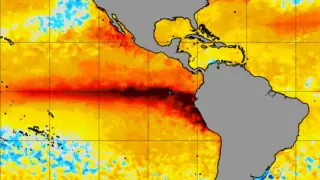
Forecast models suggest this El Niño could become the strongest on record, with peak tropical Pacific temperatures about 6.5°F (3.6°C) above average—roughly 1.4°F hotter than the 2015–2016 event—potentially driving global temperatures to as high as 3°F above pre-industrial in 2027. NOAA declared El Niño in June; the peak typically arrives Nov–Feb. If realized, it could bring hotter years and more extreme weather, with researchers warning of up to about $10 trillion in potential economic losses by 2032, though such an unprecedented 6.5°F event remains unverified and uncertain.

El Niño ramps up toward record strength, likely fueling global extreme weather
science2 months ago

El Niño ramps up toward record strength, likely fueling global extreme weather

El Niño has formed in the Pacific and is forecast to intensify toward a near-record peak, likely amplifying heatwaves, floods, droughts and wildfires around the world. NOAA says there’s about a 63% chance it could be among the largest on record, with regional impacts varying—from heavier winter storms in the US South to drier Pacific Northwest and more intense heat in places like India and Australia—while lagging effects could push 2027 to the hottest year on record.

El Niño Set to Push World Into Record Heat by 2030, WMO Warns
climate2 months ago

El Niño Set to Push World Into Record Heat by 2030, WMO Warns

The UN's World Meteorological Organization warns a record-hot year is almost certain by 2030 as an El Niño is expected to lift temperatures; there is an 86% chance at least one year between 2026–2030 will surpass 2024 as the hottest on record and a 75% chance the five-year average will be more than 1.5C above pre-industrial levels. Fossil-fuel emissions continue to rise, fueling deadly heatwaves and rising costs, with urgent action needed to meet the 1.5C goal; 2027 could become the next record year. The Arctic winters are projected to be about 2.8C hotter than recent averages, and rainfall is forecast to be wetter in northern Europe, the Sahel, Alaska and Siberia, but drier in the Amazon.

Atmospheric microplastics may be warming the planet more than they cool
climate-change3 months ago

Atmospheric microplastics may be warming the planet more than they cool

A Nature Climate Change study finds microplastics and nanoplastics in the air absorb sunlight and radiation, producing a net warming effect that outweighs their cooling. The warming is estimated to be a few percent of CO2’s warming—roughly five times the cooling impact from scattering—though the overall contribution is small compared with fossil fuels and depends on uncertain atmospheric levels of plastic.

Arctic Winter Sea Ice Nears Record-Low Max as Global Heat Pushes Extreme Records
environment5 months ago

Arctic Winter Sea Ice Nears Record-Low Max as Global Heat Pushes Extreme Records

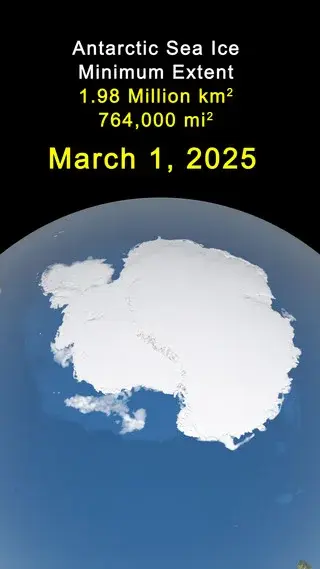
Arctic sea ice reached its lowest winter maximum on record, essentially tying last year at about 5.52 million square miles; this diminished winter growth could hasten the summer melt, influencing climate patterns, shipping routes, and wildlife. Meanwhile, March heat records broke across the U.S., Mexico, Australia, Northern Africa, and Northern Europe, with Antarctica logging a record-cold day, underscoring a planet-wide pattern of extreme temperatures tied to warming.

Arctic winter sea ice near record low as global heat records surge
environment5 months ago

Arctic winter sea ice near record low as global heat records surge

Arctic sea ice reached its winter maximum at about 5.52 million square miles, roughly tying the lowest on record and about 525,000 square miles below the 1981-2010 winter average, signaling a steady decline as warming continues. The smaller ice pack means less sunlight reflected, allowing more heat to enter the oceans and potentially affect the summer melt and weather patterns. Antarctica meanwhile posted its coldest March day on record; melting sea ice does not raise sea levels, but the broader loss signals climate disruption with implications for ecosystems and shipping routes.